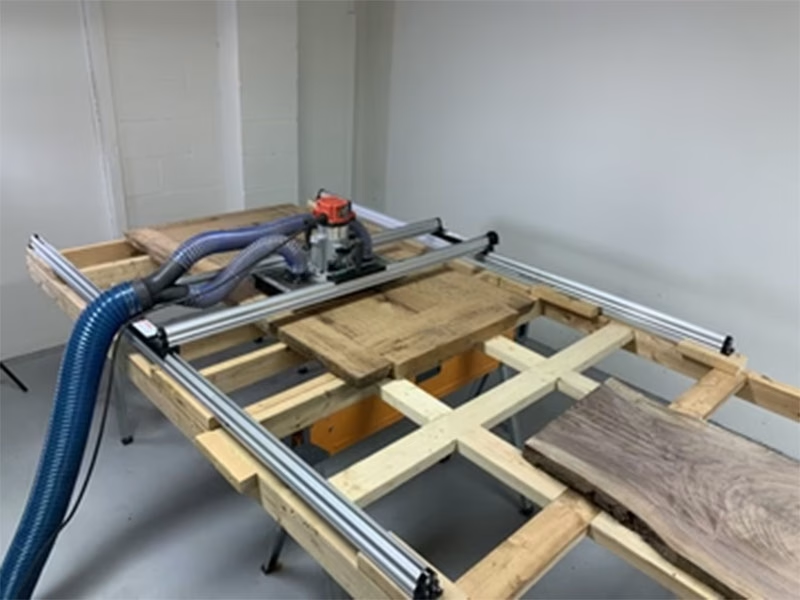
If you need to flatten large boards, slabs, or glued panels, a handheld planer is not enough. That is where router-based flattening systems come in. The two most common options are a router sled and a router gantry system.
While they solve the same problem, they work very differently. This guide explains the real differences so you can choose the right system for your shop.
What Problem These Systems Solve
Wide or uneven stock cannot fit through most planers. Drum sanders are expensive and slow. Router flattening systems let you remove material evenly across a large surface using tools most woodworkers already own.
Both systems:
- Flatten slabs and panels
- Level glue-ups
- Correct warped or twisted stock
The difference is how they guide the router.
What Is a Router Sled
A router sled is a simple jig. It uses two parallel rails and a sliding carriage that holds the router. The router moves left and right while the sled moves forward across the workpiece.
Key traits:
- Can be shop-built or purchased as a kit
- Rails are usually supported on blocks or a frame
- Router height is adjusted manually
Strengths:
- Low cost
- Easy to customize
- Works for very large slabs
Limitations:
- More setup time
- Less rigid than gantry systems
- Requires careful leveling
What Is a Router Gantry System
A router gantry system uses a fixed frame with linear motion components. The router moves on tracks, often with bearings or extrusions, above the work surface.
Key traits:
- Rigid frame
- Controlled movement in multiple directions
- Often modular or expandable
Strengths:
- Higher accuracy
- Faster workflow
- Better repeatability
Limitations:
- Higher cost
- Takes up permanent space
- Less portable
Design and Structural Differences
| Feature | Router Sled | Router Gantry System |
| Frame rigidity | Low to moderate | High |
| Motion control | Manual sliding | Guided rails |
| Adjustability | Manual shims | Built-in adjustments |
| Build complexity | Simple | Moderate to complex |
A sled relies on careful setup. A gantry relies on structure.
Accuracy and Surface Finish
Router gantry systems generally produce a more consistent surface. The rigid frame reduces flex and vibration. This leads to:
- More even passes
- Less tear-out
- Reduced sanding time
Router sleds can achieve good results, but accuracy depends heavily on:
- Rail straightness
- Level setup
- Operator consistency
Size Capacity and Scalability
Router sleds excel with oversized slabs. You can extend the rails as needed. There is almost no upper size limit.
Router gantry systems have fixed dimensions. Some are expandable, but they still have practical limits.
Choose a sled if:
- You work with live-edge slabs
- Projects vary in size
Choose a gantry if:
- You flatten similar-sized panels
- Repeatability matters
Speed and Workflow Efficiency
Gantry systems are faster. Setup is usually one-time. After that, flattening becomes a repeatable process.
Router sleds take longer because:
- Each setup is custom
- Leveling takes time
- Adjustments are manual
If time matters, gantry wins.
Setup, Skill Level, and Learning Curve
Router sleds are beginner-friendly. They use basic materials and simple concepts. Mistakes are easy to fix.
Router gantry systems require:
- Precise assembly
- Alignment
- Understanding of motion systems
They are not difficult, but they demand more care.
Space, Portability, and Shop Fit
Router sleds break down easily. You can store them on a wall or shelf.
Router gantry systems are usually permanent fixtures. They need dedicated floor or bench space.
Small shop owners often prefer sleds for this reason.
Cost Breakdown and Value
| Cost Factor | Router Sled | Router Gantry |
| Materials | Low | Medium to high |
| Hardware | Minimal | Bearings, rails |
| Time investment | Higher | Lower |
| Long-term value | Moderate | High |
Budget often decides this comparison.
Common Use Cases by Project Type
Router sled is best for:
- Live-edge slabs
- One-off projects
- Small shops
- Tight budgets
Router gantry system is best for:
- Furniture panels
- Production work
- Repeatable thicknessing
- Professional shops
Router Sled vs Router Gantry System: Quick Decision Guide
Choose a router sled if:
- You want the lowest cost
- You need maximum size flexibility
- Portability matters
Choose a router gantry system if:
- You want speed and precision
- You repeat the same tasks
- You have dedicated shop space
Common Mistakes to Avoid
- Using uneven rails on a sled
- Rushing setup and skipping leveling
- Underestimating space needs for a gantry
- Using dull router bits
Both systems only work as well as the setup.
Which System Should You Choose
There is no universal winner in the router sled vs router gantry system debate. The right choice depends on your projects, space, and budget.
Many woodworkers start with a sled and upgrade later. Others invest in a gantry to save time long term.
If you flatten wood often, structure matters. If you flatten wood occasionally, simplicity wins.
Final Thoughts
Both systems solve the same problem. They just approach it differently.
If flexibility and cost matter most, a router sled is hard to beat. If speed, accuracy, and workflow matter more, a router gantry system is worth the investment.
Choose the system that fits how you actually work, not how you hope to work later.
Frequently Asked Questions
Is a router gantry more accurate than a router sled?
Yes. Gantry systems are more rigid and repeatable.
Can I build both myself?
Yes. Router sleds are easier to build. Gantry systems require more precision.
Do I need a powerful router?
Both systems work best with a mid-to-high horsepower router.
Which system is better for slabs?
Router sleds handle very large slabs more easily.