Today’s focus on speed, efficiency, and sustainability is reshaping how construction projects are planned and completed. In response to changing demands, contractors and developers are increasingly turning to shipping containers as a practical and adaptable solution.
From simple on-site storage to a modular medium used to build offices, retail spaces, housing projects, and commercial buildings, shipping containers have become an innovative component of modern construction.
Shipping Containers as Essential Jobsite Storage
For years, shipping containers were primarily used on construction sites for storage. Built from heavy-duty Corten steel, shipping containers are designed to withstand extreme weather, harsh conditions, and the pressure of stacked cargo loads. Those same qualities make them ideal for use in demanding construction environments.
Security is one of the biggest reasons contractors rely on shipping containers for equipment and materials storage. Theft and vandalism can quickly disrupt schedules and increase costs. With their heavy steel construction and reinforced locking systems, shipping containers offer a level of security that’s hard to bypass.
Weather protection is another major advantage. Materials and equipment stored outdoors are constantly exposed to rain, humidity, dust, and temperature swings. Shipping containers create a controlled environment that helps protect valuable supplies from damage.
Their mobility also improves efficiency on active jobsites. Containers can be delivered, relocated, or removed as project phases change. On large sites, positioning storage closer to active work areas reduces unnecessary travel time and helps crews work more efficiently throughout the day.
Temporary Offices and Workforce Facilities
Over time, what started as a simple storage solution developed into a much more versatile tool on modern construction sites. Contractors now use them as temporary offices, break rooms, locker facilities, and crew support spaces.
Instead of building temporary structures from scratch, companies can have the containers modified off-site. Once delivered, the unit can often be operational within hours. This approach saves time and reduces labor costs, allowing the crew to focus on the construction project itself instead of building support infrastructure.
These spaces are especially valuable on urban construction sites where available land is limited. Containers can be stacked vertically, allowing contractors to combine offices, storage, and crew facilities within a compact footprint. A shipping container on the ground can support an office or meeting space above it, maximizing every square foot of the site.
The Growth of Modular Container Construction
One of the biggest changes in the industry is the shift from using containers as temporary support structures to using them as permanent building components.
Modular construction using shipping containers has grown significantly in both residential and commercial development. Their standardized dimensions make them well-suited for prefabrication, while their structural strength allows them to support multi-story construction.
Developers are now using shipping containers for student housing, apartment complexes, office spaces, retail centers, hospitality projects, and mixed-use developments. The industrial appearance of exposed steel has also become a popular architectural feature, especially in urban redevelopment projects.
Structural Strength and Engineering Considerations
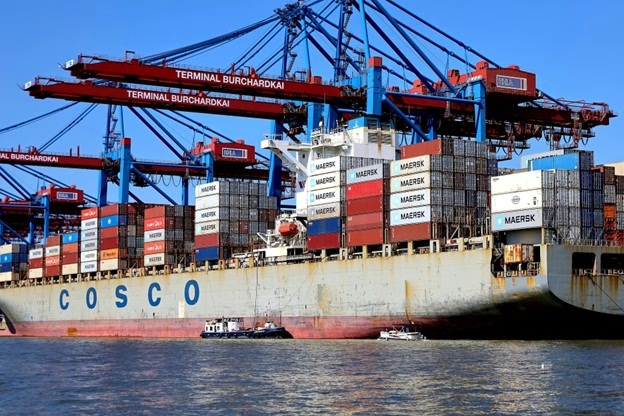
Shipping containers are incredibly durable by design. During international transport, they are stacked on cargo ships and exposed to harsh weather conditions for years at a time. That structural integrity works well for construction applications.
Still, container-based buildings require proper engineering and code compliance. Cutting openings for windows, doors, or connected spaces changes how loads are distributed across the structure. Reinforcement is often necessary to maintain strength and stability.
Thermal performance is another consideration. Steel transfers heat and cold quickly, which means insulation is critical. Without proper insulation, shipping container buildings can become uncomfortable and inefficient. Many builders use closed-cell spray foam insulation or rigid insulation systems to improve energy performance and prevent condensation. These methods help shipping container structures meet modern energy codes and provide comfortable indoor environments year-round.
As container construction becomes more common, building codes have continued evolving to address these requirements. The International Building Code now includes guidance for using shipping containers as structural elements, helping standardize safety practices across the industry.
Sustainability Benefits of Shipping Container Construction
The environmental benefits are equally important. Reusing a single 40-foot shipping container preserves thousands of pounds of steel that might otherwise need to be recycled or replaced. That reduction in material consumption contributes to a lower overall carbon footprint.
As sustainable construction practices become more important across the industry, container projects can support green building goals and certifications. Many developers see container reuse as both a practical and marketable sustainability strategy.
Real-World Applications Across Industries
Shipping containers are now being used across nearly every sector of construction and development.
Infrastructure projects often rely on containers for mobile control rooms, equipment storage, and utility stations. In retail development, they are frequently used for pop-up stores, food service spaces, and temporary commercial installations.
Healthcare organizations and emergency response teams have also embraced container-based construction. Mobile clinics, testing facilities, and laboratory units can be fabricated off-site and transported wherever they are needed most.
Their portability makes them especially valuable in remote locations or disaster response situations where permanent infrastructure may not yet exist.
Challenges Still Facing Container Construction
Despite the advantages, shipping container construction is not without challenges. Zoning laws and permitting requirements vary widely by location, and some municipalities are slower to approve non-traditional building methods.
Transportation logistics can also become complicated, especially in crowded urban environments. Delivering the containers can require specialized equipment, careful scheduling, and coordination around overhead utilities or narrow roadways.
Container pricing is another variable. Costs can fluctuate depending on global shipping demand, which means availability and pricing may change unexpectedly.
Still, most of these challenges can be managed through proper planning, experienced engineering, and realistic budgeting.
The Future of Shipping Containers in Construction
The role of shipping containers in construction will likely continue to grow as modular building techniques become more advanced. Digital design tools are making it easier for architects and engineers to create complex container-based structures with precision.
While labor shortages and rising construction costs are pushing developers toward faster and more efficient building methods, shipping containers have arisen as a practical solution.
From secure jobsite storage to multi-story modular buildings, they’re helping reshape how modern projects are designed, built, and delivered.