Construction projects fail for many reasons. Design errors, permit delays, labour shortages, bad weather. But one of the most preventable causes of disruption is also one of the most common: the wrong material arriving at the wrong time, or not arriving at all.
In an industry where every week of delay has a measurable cost — in crane hire, idle crews, contractual penalties and lost revenue — the reliability of the steel supply chain deserves far more strategic attention than it typically receives. Too often, material procurement is treated as a transactional afterthought rather than a critical path activity.
Construction is not manufacturing
This distinction matters more than it might seem. A factory orders the same steel grades in similar quantities on a predictable schedule. A construction project orders a constantly changing mix of products, in varying quantities, delivered to a site that may not even have permanent road access yet — and needs it all sequenced to match an installation programme that changes every time the crane schedule shifts.
Steel distributors like Tibnor that primarily serve manufacturing clients sometimes underestimate how different construction logistics actually are. The site needs beams delivered on Tuesday because the steel erectors are booked for Wednesday. If those beams arrive on Thursday, the erectors have moved to another job and the programme slips by a week. That kind of sensitivity to timing is the reality of construction procurement.
Distributors with genuine construction experience — companies like Tibnor and others with established presence across the Baltic building sector — understand that delivering to a construction site is a service, not just a shipment.
Phased delivery and site logistics
Large construction projects rarely need all their steel at once. A multi-storey commercial building might require structural columns and primary beams first, followed by secondary steelwork, then cladding rails and miscellaneous fixings — spread across weeks or months. Delivering everything in one load means the site needs storage space it probably does not have, and materials sit exposed to weather and potential damage.
Phased delivery — where steel supply is released from the warehouse in packages matched to the erection sequence — solves this problem. It requires coordination between the supplier, the main contractor and the steel erector, but when it works well, material arrives just before it is needed and goes almost directly from the truck to its final position.
This approach demands a supplier with strong inventory management and the flexibility to hold, stage and release material according to a schedule that will inevitably change. It also requires good communication — the kind that comes from dedicated project contacts rather than a rotating call centre.
The specification maze
Anyone who has priced steel for a construction project knows that the specification process can be surprisingly complex. The structural engineer specifies a steel grade. The architect has a preference for a particular finish. The building regulations require CE marking and specific documentation. The main contractor needs everything to comply with their quality management system. And the client’s sustainability consultant wants to know the recycled content and carbon footprint of every tonne.
Navigating these overlapping and sometimes contradictory requirements is part of the daily reality of construction procurement. A supplier that simply fills orders without understanding the broader context of a building project will eventually deliver something that meets the purchase order but fails one of the other requirements — and that failure usually surfaces at the worst possible moment.
Technical support that helps buyers match the right product to the full set of project requirements — not just the structural specification — adds genuine value in a construction context.
Structural sections and plates – the backbone of every project
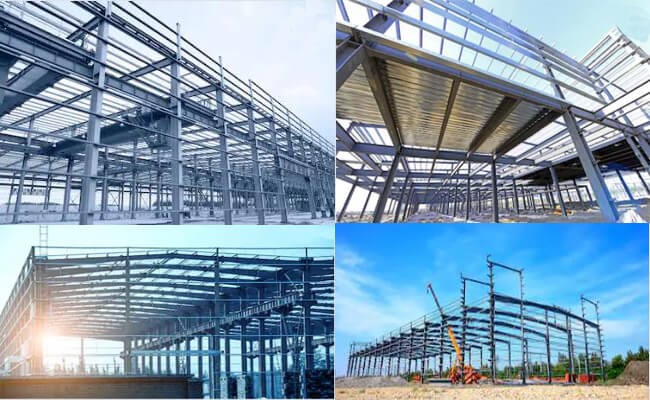
The bulk of steel used in construction falls into two broad categories: structural sections and plates. I-beams, H-sections and channels form the primary and secondary framework of steel-framed buildings. Plates serve as base plates, connection elements, stiffeners and, in heavier structures, as primary load-bearing components in their own right.
Getting these basics right — correct grade, correct dimensions, correct documentation — sounds simple, but the volume of unique items on a typical construction project is enormous. A mid-sized commercial building might require hundreds of different section sizes, lengths and connection details, each one specified to match a particular location in the structure.
This is where the breadth of a supplier’s product range matters. A distributor that stocks a comprehensive selection of standard sections and plate thicknesses can fulfil most requirements from inventory, which means shorter lead times and fewer costly special orders. When non-standard items are unavoidable, a supplier with strong relationships to European mills can source them efficiently without the delays that come from ad-hoc purchasing.
Processing that reduces time on site
Every operation that can be completed in a workshop rather than on a construction site is an operation that goes faster, costs less and produces a better result. Steel supply that arrives already cut to length, with bolt holes drilled, end plates welded and a primer coat applied is steel that goes straight into the structure with minimal on-site labour.
For steel erectors working at height in variable weather conditions, the difference between assembling pre-processed components and fabricating from raw material on site is not just a matter of efficiency — it is a safety consideration. Less cutting and welding at height means fewer hazards and a safer working environment. For applications involving heavy wear — loading bays, concrete plant equipment or material handling surfaces — specifying a wear-resistant steel like Hardox at the processing stage means components arrive ready to withstand punishing conditions from day one, rather than requiring early replacement or costly on-site reinforcement. (source: https://www.alytausnaujienos.lt/hardox-dilimui-atsparus-plienas-pramones-projektams )
Pre-processing also improves dimensional accuracy, which matters enormously when you are bolting together a structure that needs to be plumb, level and within tolerance across its full extent. Workshop-processed steel achieves tighter tolerances than site-processed material, which reduces the accumulated fit-up errors that cause problems during erection.
Documentation is not paperwork — it is project insurance
In construction, documentation serves a very specific purpose: it provides evidence that what was built matches what was designed and approved. Material certificates, test reports, declarations of performance and CE marking documentation are not bureaucratic overhead — they are the paper trail that protects everyone involved in the project, from the client to the contractor to the supplier.
When a building inspector asks to see the mill certificate for the steel in a particular beam, the answer needs to be available quickly and unambiguously. Digital documentation systems that link certificates to specific deliveries and make them accessible online have turned what used to be a filing headache into a non-issue.
For contractors working on public buildings, infrastructure projects or any structure subject to regulatory inspection, the quality and accessibility of supply chain documentation is a factor that should influence supplier selection — and increasingly does.
Building better by choosing better
The steel in a building is only as reliable as the supply chain that delivered it. Material quality, delivery timing, processing accuracy and documentation completeness all contribute to whether a construction project runs smoothly or stumbles over avoidable problems.
Choosing a steel supplier for a construction project is not just a procurement decision — it is a project management decision. The right partner brings product knowledge, logistical capability, processing capacity and a genuine understanding of how buildings actually get built. That combination does not just deliver steel. It delivers confidence that one critical element of the project is under control.