Small construction firms face a persistent challenge that shows no signs of easing. Supply chain disruptions and unpredictable costs have become the industry’s new normal. Gone are the days of stable pricing and reliable lead times for materials and heavy equipment. Firms are responding by rethinking equipment acquisition strategies, adjusting project timelines and building stronger partnerships with suppliers and rental providers.
The New Normal: Understanding Modern Construction Supply Chains
The construction industry has entered an era where supply chain stability is a thing of the past. What once seemed like temporary disruptions has settled into an ongoing state of volatility driven by geopolitical tensions, shipping bottlenecks and the lingering effects of global events that reshaped manufacturing and distribution networks. These challenges affect firms of all sizes, but small contractors feel the impact most acutely.
According to the Associated General Contractors of America, firms carry dampened expectations for 2026 amid mounting concerns about market conditions. An economic slowdown or recession ranks as the top concern for many of the firms surveyed. Firms also reported feeling the impact of tariffs on their operations, adding another layer of cost unpredictability to already challenging conditions.
These pressures compound daily operational challenges that small contractors face. Small firms operate with thinner margins than large contractors and have less purchasing power to weather price swings. A single delayed equipment delivery or an unexpected increase in material costs can derail project schedules and eliminate profit margins. The question is no longer if disruptions will occur but how firms will adapt when they do.
How Cost Volatility and Component Shortages Impact Small Firms
Unpredictable pricing has made accurate project bidding increasingly difficult for small construction companies. Material costs that seemed stable during the estimating phase can surge by the time work begins. Producer Price Index data from the Bureau of Labor Statistics show continued fluctuations in construction material prices, making it highly difficult to lock in firm costs months in advance.
The equipment side of the equation presents its own set of challenges. Heavy machinery has become increasingly sophisticated, incorporating advanced electronics and computer systems that improve efficiency and safety. This technological evolution comes with a vulnerability that few contractors anticipated. Electronic component shortages have created bottlenecks in heavy equipment manufacturing, extending lead times for new machines and complicating repairs for existing fleets.
Simcona, a semiconductor and electronics supplier, notes that “supply chain disruptions, shifting demand, and unpredictable lead times are still challenging manufacturers and procurement teams (Lacona, 2025),” underscoring how these issues have continued affecting the construction equipment sector in recent years. Industry lead times for critical components jumped from 8–12 weeks in early 2020 to an entire year by late 2022.
Small firms face a particular bind when equipment needs arise. Ordering new machines can mean waiting months or longer for delivery. Maintenance and repairs take longer when replacement parts are on backorder. These delays force difficult decisions about whether to push back project start dates, rent equipment at premium rates or turn down work entirely.
Stephenson Equipment, a heavy equipment provider offering services ranging from loader rentals to excavator rental in Northern Virginia and the surrounding region, emphasizes the growing importance of equipment longevity for small construction businesses. The company notes that “investing in parts that can withstand the work and fluids that will minimize grease and oil buildup (Stephenson Equipment,n.d.-a), ” can save money and trouble in the long run, highlighting how proactive maintenance strategies become more critical when replacement equipment faces extended delays.
Key Adaptive Strategies for a Volatile Market
Two approaches have emerged as particularly effective for small contractors navigating the current landscape and building resilience against future disruptions.
Rethinking Equipment Acquisition: The Rise of Renting
Equipment rental has shifted from a stopgap solution to a core business strategy for many small construction firms. Rather than committing capital to purchases with uncertain delivery timelines, contractors are turning to rental fleets for reliable access to the machines they need when they need them. This shift reflects a broader change in how firms think about equipment assets and operational flexibility.
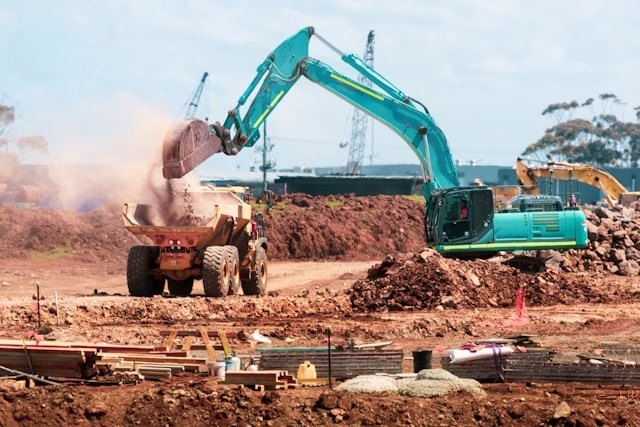
The financial case for renting extends beyond avoiding acquisition delays. Stephenson Equipment describes renting as a “cost-effective alternative when you are unsure regarding delivery time frames (Stephenson Equipment, n.d.-b),” highlighting how rental strategies help firms navigate unpredictable equipment availability. These savings add up quickly for small operators working to preserve cash flow during uncertain economic conditions.
Rental arrangements allow firms to scale equipment access up or down based on actual demand rather than projected needs made months in advance. This flexibility has become essential as project timelines grow more unpredictable.
Building Stronger, More Collaborative Vendor Relationships
The days of transactional vendor interactions have given way to a new emphasis on partnership and communication. Small firms that maintain strong relationships with equipment dealers gain advantages that extend far beyond favorable pricing. These partnerships create strategic value in an environment where information and access matter as much as cost.
Open communication with dealers provides visibility into equipment availability and service schedules that would otherwise remain opaque. RMS Equipment, a heavy equipment dealer, emphasizes evaluating “operations both now and into the future to try to determine future equipment needs (Road Machinery & Supplies Co., 2026),” reflecting the importance of long-term planning in vendor relationships. This intelligence allows for better project planning and helps firms avoid committing to schedules they can’t meet.
Strong vendor partnerships also create flexibility when unexpected needs arise. Dealers who know a contractor’s business and track record are more likely to prioritize that firm when equipment becomes available or when emergency service needs emerge. These relationships serve as insurance against the unpredictability that now defines the construction supply chain.
Building a More Resilient Construction Business
Resilience in today’s construction market requires understanding that supply chain volatility is here to stay. Small firms that adapt their equipment strategies and build strong vendor partnerships position themselves to maintain operations even during disruptions. The firms that will thrive are those that view flexibility and relationship-building as a permanent competitive advantage.
Sources Cited
- Iacona, M. (2025, March 20). “Electronic Component Shortage 2025: Supply Outlook & Survival Plan.” Simcona Learning Center Blog. simcona.com [1]
- Road Machinery & Supplies Co. (2026). “How Supply Chain Disruptions are Still Impacting Heavy Equipment.” RMS Construction Industry Outlook Blog. rmsequipment.com [1]
- Stephenson Equipment. (n.d.-a). “Heavy Equipment Maintenance Tips: Longevity and Proactive Care for Fleets.” SEI News & Posts. stephensonequipment.com
- Stephenson Equipment. (n.d.-b). “Buy or Rent Your Heavy Equipment: Navigating Volatile Timeframes.” SEI News & Posts. stephensonequipment.com