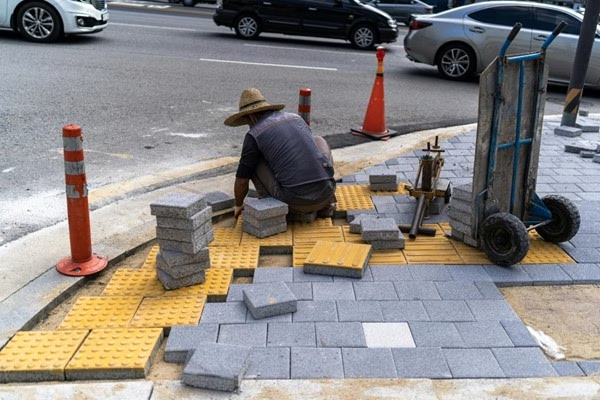
I remember when I used to walk to school along streets that seemed as though they hadn’t changed for decades. The neighborhoods in my hometown bore the marks of bygone years. Cracks marked the asphalt, and potholes decorated the roads like unwelcome art. But it wasn’t until a full-on street renovation happened that I began to really notice how technology was stepping in to change the landscape of our streets.
Materials That Promise Longevity
Have you ever noticed roads suddenly looking fresher and, for lack of a better word, smarter? The materials used these days provide better longevity compared to the past. Developing street materials that are weather-resistant and can withstand heavy traffic is a game-changer. My own town opted for a new blend that reduced road sound and radioed into the room that, finally, our pothole problems might be a thing of history.
It’s fascinating how technological advancements have enabled the creation of self-healing concrete, which can automatically repair its own minor cracks. Meanwhile, polymers integrated into asphalt give rise to surfaces that resist initial damage scenarios, such as freezing and thawing, far better than their predecessors. Roads have never been as resilient, maintaining their structural integrity for significantly longer periods.
Incorporating methods like Denver directional drilling service has further revolutionized street construction. It allows the installation of utility lines underground with minimal disruption to existing road structures, ensuring durable solutions without the usual environmental degradation associated with traditional methods.
High-Tech Machines on the Move
Picture this: instead of a noisy construction convoy creating heaps of dust and congestion, the renovations on my street introduced cutting-edge machinery. These marvels of engineering were quieter, faster, and more efficient. Gone were the days when street construction took weeks longer than planned. Technology, as I saw it, seemed to be on our side, making the whole process far less intrusive.
As the days rolled by, I couldn’t help but notice how these machines displayed an almost seamless coordination, almost like a well-rehearsed symphony in motion. Technology played a pivotal role, from intelligent rollers that adjusted pressure based on surface conditions to automated mixers producing consistent asphalt blends. This era of construction felt more akin to conducting a masterful piece of engineering art than merely laying down roads.
Data-Driven Street Planning
While most people shrug off data analytics as just a thing for tech companies, street planning has embraced it in surprising ways. Directed by data analytics, planning can now pinpoint exactly which streets need attention, reducing wasteful work and redirecting efforts where they matter the most. It’s like having a personal assistant for the city’s roads. A recent renovation in my area rerouted foot and car traffic based on data collected from past usage patterns. It made commuting smoother and relieved choke points previously thought to be unavoidable.
Data collection doesn’t just aid in planning; it also helps in sustainability efforts. Sensors installed in roads send back information about wear and tear, providing a panoramic view of their current state. This proactive approach means not only anticipating where repairs are needed, but also curbing unnecessary expenditures on streets that are still performing well, preserving resources for future projects.
Safer Techniques for Workers
One of the underrated heroes of technology in street construction is safety. The days when road workers stood inches from speeding cars have transformed—technology introduced remote-operated machinery, automated traffic signals, and AI systems monitoring work zones, alerting workers to potential hazards in real-time. It’s not just about the roads anymore; it’s also about the people working on them. This upgrade in safety measures made me appreciate how innovations aren’t just about convenience but humanity, too.
It’s heartening to see technological interventions that prioritize worker safety and elevate the human factor in such high-risk environments. Innovations such as GPS-controlled machinery ensure precision while keeping workers off the street during risky processes. Digital wearables track the movements and health vitals of workers, providing an additional layer of safety and reassurance to families back home.
Environmental Considerations
More folks are beginning to care about the environment these days, myself included. It’s reassuring to see construction projects that no longer blatantly disregard environmental impacts. Technology in street construction now focuses on reducing carbon footprints with eco-friendly materials and practices. My town adopted methods that lowered emissions during a recent construction, proving that embracing technology provides a win-win for both infrastructure and the environment.
The construction activities now aspire to a greener ethos with energy-efficient machinery and sustainable sourcing. This emphasis on environmental responsibility ensures that green practices aren’t just a temporary trend but rather a sustained movement towards preserving natural ecosystems. What’s exciting is the potential adoption of permeable pavements, which allow water to percolate through, mitigating urban flooding scenarios and nurturing surrounding plant life.
The Future of Streets
With each passing year, I get more excited about where technology can take us. Streets lined with solar panels, roads that charge electric cars, or even surfaces built with smart tech indicating when maintenance is needed might soon be more than just speculative tales. Walking around my neighborhood with smoother roads and fewer emissions paints a hopeful picture. We’ve come a long way from the cracked pavements of the past, and as we look ahead, the possibilities seem endless.