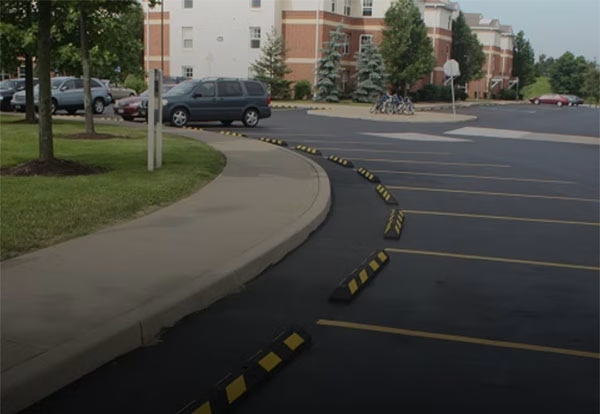
A well-designed parking lot is more than a place to leave a vehicle. For modern businesses, it is a first impression, a safety feature, and a core component of daily operations. A thoughtful layout can enhance traffic flow, improve accessibility, increase customer satisfaction, and reduce long-term maintenance costs. As businesses continue to evolve, so do expectations for safer, more efficient parking environments.
Understanding The Core Principles Of Effective Layouts
Every successful parking lot begins with clarity and structure. The fundamentals—stall dimensions, drive aisle width, turning radii, and pedestrian pathways—must work together to create a smooth and intuitive experience. Poorly planned layouts often lead to congestion, accidents, and confusion, especially during peak hours.
A recent CNN feature on urban development highlighted how customer behaviour is increasingly influenced by parking convenience, making layout optimisation a strategic advantage for businesses rather than just a compliance task.
Choosing between angled, perpendicular, or parallel parking configurations depends heavily on the customer base and property type. Retail centres often prefer angled stalls for easier manoeuvring, while offices and industrial sites lean toward perpendicular layouts to maximise space.
Incorporating ADA Standards And Modern Accessibility Needs
Accessibility is at the heart of any modern parking design. ADA-compliant spaces require specific dimensions, clear access aisles, proper signage, and an uninterrupted path to the building entrance. Accessibility considerations extend beyond designated stalls; accessible routes must be easy to follow, well-marked, and free from obstructions.
Businesses working with professional layout specialists often achieve better long-term compliance. For example, companies frequently turn to Compass Refresh for expert striping and layout planning that aligns closely with both current regulations and practical business needs.
Designing For Traffic Flow, Safety, And Visibility
A parking lot must accommodate predictable movement patterns while still allowing flexibility during high-traffic periods. This makes signage, lane markings, and lighting essential features rather than optional upgrades. Clear directional arrows guide vehicles safely through entry and exit points, while properly placed stop bars help reduce collisions at pedestrian crossings.
Lighting plays an equally important role. According to a recent piece from BBC News on commercial safety trends, improved exterior lighting significantly reduces both accidents and crime, contributing to a more secure environment for staff and customers.
Using reflective, long-lasting paint helps maintain visibility even in low-light conditions or adverse weather. Incorporating raised walkways or textured surfaces further enhances pedestrian safety and accessibility.
Maximising Space Without Sacrificing Function
Space optimisation is one of the most common challenges businesses face, especially in urban environments. Efficient layouts make full use of available square footage without introducing tight corners or awkward configurations that frustrate drivers. Larger vehicles—including delivery vans, SUVs and work trucks—must be considered, as they influence stall size and turning access.
Landscaping elements and green buffers are increasingly incorporated into modern designs to break up large expanses of pavement. These natural features enhance visual appeal while also improving stormwater management.
Choosing A Professional Partner For Long-Term Success
Parking lot design is a specialised skill that blends compliance, engineering and customer psychology. Businesses that invest in professional planning often benefit from improved traffic flow, reduced liability risks and a more polished overall appearance. Experienced contractors ensure that every detail—from line width to drainage slope—supports a functional and long-lasting layout.
For modern businesses, a parking lot is more than an afterthought—it is a strategic asset that shapes customer experience and operational efficiency. By following best practices and collaborating with skilled professionals, businesses can create layouts that are safe, accessible and visually appealing. The result is a facility that supports daily operations while conveying a sense of care and quality from the moment visitors arrive.