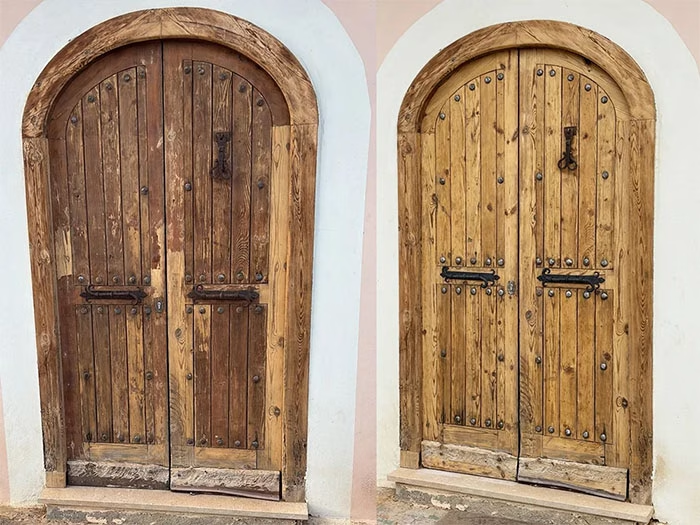
Laser wood stripping effectiveness is one of the biggest reasons why laser technology is becoming popular in restoration work today. Old methods are slowly disappearing. New laser methods are taking their place.
Restoration is no longer rough, dirty, or dangerous. Now it is clean, safe, and precise.
Laser technology is changing how we maintain wood and metal surfaces.
What Is Restoration?
Restoration means fixing old surfaces. It means making them look good again.
Restoration work removes:
- Old paint
- Rust
- Dirt
- Burn marks
- Oil and stains
It is used for:
- Old houses
- Wooden furniture
- Metal gates
- Tools
- Historical items
Good restoration keeps the original surface safe.
Old Restoration Methods and Their Problems
Before laser technology, people used traditional methods.
Sanding
Sanding removes material by force. It creates a lot of dust. It damages softwood.
Fine details are often lost.
Chemical Stripping
Chemicals are used to remove paint. They are potent and dangerous.
Problems include:
- Bad smell
- Health risks
- Harm to the environment
Grinding and Scraping
These methods are very rough. They remove too much material. They can permanently damage wood and metal.
Because of these problems, a better solution was needed.
What Is Laser Technology in Restoration?
Laser restoration uses focused light. The laser hits only the unwanted layer.
Paint, rust, and dirt absorb the laser energy. They break apart and disappear.
The main surface stays untouched.
There is:
- No pressure
- No contact
- No damage
That is why laser technology is perfect for restoration.
How Laser Technology Helps Wood Restoration
Wood is very sensitive. One mistake can ruin it forever.
Laser cleaning is gentle on wood. It removes paint and stains carefully.
This is where laser wood stripping effectiveness becomes very important.
Laser wood stripping:
- Keeps the natural wood texture
- Protects carvings and patterns
- Removes layers evenly
- Does not burn the wood
It is widely used for:
- Antique furniture
- Wooden doors
- Cabinets
- Ceiling beams
- Art pieces
Laser cleaning respects the beauty of wood.
How Laser Technology Improves Metal Maintenance
Metal often suffers from rust. Traditional cleaning weakens the metal.
Laser cleaning removes rust layer by layer. The metal stays strong.
Laser metal cleaning is used for:
- Iron gates
- Steel frames
- Machinery parts
- Tools
- Sculptures
It leaves a clean and smooth surface.
Why Laser Restoration Is Better Than Traditional Methods
1. No Surface Damage
Laser removes only unwanted material. The original surface stays safe.
This is very important for old and valuable items.
2. Clean and Dust-Free
Traditional methods create dust everywhere. Laser cleaning creates almost no dust.
Work areas stay clean.
3. No Chemicals
Laser restoration uses no chemicals. This makes it safe for workers.
It is also better for the environment.
4. Very Accurate
Laser machines are precise. They clean only where needed.
Perfect for detailed work.
5. Saves Time and Money
Laser restoration is fast. Less manual labor is needed.
This reduces the overall project cost.
Where Laser Restoration Is Used
Laser technology is now used in many areas.
Common applications include:
- Furniture restoration
- Building maintenance
- Factory equipment cleaning
- Art restoration
- Historical preservation
It works for both small and large projects.
Laser Technology in Historical Preservation
Old buildings and artifacts are very delicate. Any damage is permanent.
Laser cleaning is ideal for such work.
It:
- Protects original material
- Keeps fine details
- Removes dirt gently
Museums and restoration experts trust laser systems.
Is Laser Restoration Environment-Friendly?
Yes, it is very eco-friendly.
Laser restoration:
- Creates no chemical waste
- Uses no water
- Produces less noise
- Reduces pollution
It is a green solution for modern restoration.
Cost Benefits in the Long Run
Laser machines may cost more at first. But they save money over time.
They reduce:
- Material damage
- Health risks
- Cleanup costs
- Rework
In the long term, laser restoration is cost-effective.
The Future of Restoration
Laser technology is improving every year. Machines are becoming smaller and smarter.
In the future:
- More restorers will use lasers
- Traditional methods will fade
- Restoration quality will improve
Laser technology is setting new standards.
Conclusion
Restoration has evolved a lot over the years. Old methods are no longer enough for modern needs. They are slow, messy, and often damage the surface.
Laser technology offers a much better way. It is clean. It is safe. It is precise.
Laser cleaning removes only what is needed. The original wood or metal stays strong and beautiful. There is no dust, no chemicals, and no heavy damage.
Thanks to proven laser wood stripping effectiveness, laser restoration is now the top choice for wood and metal maintenance. It delivers consistent results. It protects fine details. It saves time and labor.
Laser technology is not just the future of restoration; it is the present. It is already here. And it is changing the way restoration work is done.