Construction sites are among the most legally complex environments in any industry. The physical risks are visible and well documented. The legal risks are harder to see, and they tend to surface at the worst possible time: after someone gets hurt.
For contractors and project managers, understanding where liability lives on a job site is not just a compliance exercise. It is a practical matter of protecting your workers, your business, and your ability to keep building. This piece breaks down the legal exposure that construction professionals face and what it looks like when things go wrong.
Why Construction Sites Generate So Much Legal Exposure
The construction environment is layered with overlapping responsibilities. On any given project, you have general contractors, subcontractors, equipment suppliers, property owners, and workers all sharing the same space with different roles and different obligations. When an accident happens, liability rarely falls cleanly on one party.
That complexity is exactly what makes construction injury claims difficult to resolve and expensive to fight. Multiple parties point at each other. Contracts get scrutinized. Insurance coverage limits get tested. The worker caught in the middle faces a claims process that is far more complicated than a standard workplace injury.
Arizona sees a significant volume of construction activity, and with it, a steady number of serious on-site injuries. When those cases go legal, having experienced legal representation, such as a Gallagher & Kennedy construction accident attorney, involved early can determine whether a claim gets resolved fairly or gets buried in disputes between insurers and contractors.
The Four Liability Categories That Come Up Most
Not all construction site injuries follow the same legal path. The nature of the accident, who was involved, and what safety measures were in place all shape where liability lands. These are the categories that generate the most legal exposure.
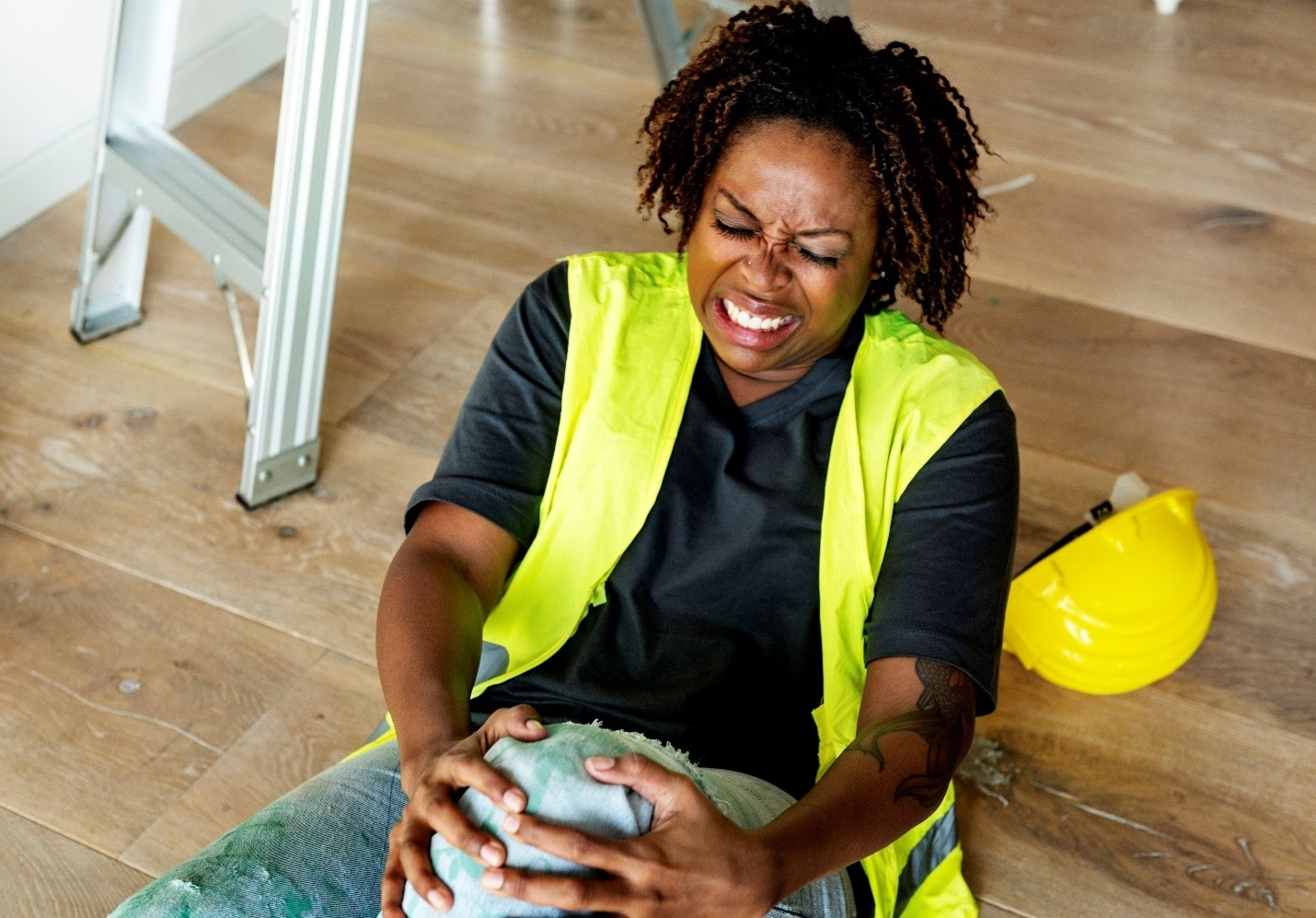
Falls from elevation. Falls remain the leading cause of construction fatalities. When a worker falls from scaffolding, a roof, or an elevated platform, OSHA violations, equipment failures, and inadequate fall protection all become part of the legal analysis. General contractors can be held liable even when the injured worker was employed by a subcontractor.
Struck-by incidents. Workers hit by vehicles, swinging equipment, or falling materials make up a significant portion of serious construction injuries. These cases examine operator training, site traffic management, and whether proper exclusion zones were established and enforced.
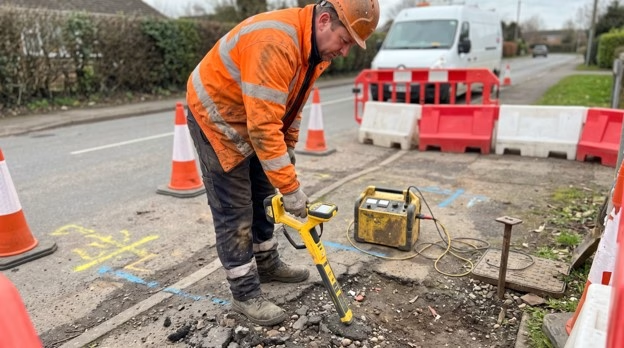
Electrocution and utility strikes. Unmarked utilities, improper lockout procedures, and inadequate electrical safety protocols put workers at serious risk. Liability in these cases often extends to utility companies and equipment manufacturers alongside the contractor.
Caught-in and caught-between incidents. These involve workers pulled into machinery, caught between equipment and structures, or buried in trench collapses. Trench cave-ins in particular carry significant contractor liability when proper shoring and sloping standards are not met.
What Contractors Often Get Wrong About Their Liability
The most common misconception among contractors is that workers’ compensation coverage ends their exposure. It does not. Workers’ comp covers employees of a specific employer, but construction sites involve multiple employers. An injured subcontractor’s worker can pursue a third-party claim against the general contractor. A worker injured by defective equipment can pursue the manufacturer. The web of potential defendants extends well beyond the company that cut the paycheck.
A few other liability gaps that catch contractors off guard:
- Assuming subcontractor agreements transfer all liability, when courts look at actual site control and safety oversight, not just contract language
- Believing that an injured worker who was partly at fault cannot recover, Arizona follows a comparative fault system where partial fault reduces but does not eliminate a claim
- Underestimating how OSHA citations affect civil litigation, a citation is not just a fine, it becomes evidence of negligence in a personal injury case
- Overlooking premises liability exposure when the construction site is on property owned by a third party who had control over site conditions
Understanding these gaps before an incident occurs is far less costly than discovering them during litigation.
OSHA Compliance Is a Legal Floor, Not a Ceiling
Meeting OSHA standards is required. It is not the same as being protected from liability. Courts do not treat OSHA compliance as a complete defense. A contractor can meet every regulatory requirement and still be found negligent if the circumstances of an injury reveal a hazard that a reasonable contractor should have identified and addressed.
That said, OSHA violations cut sharply in the other direction. When a contractor is cited for a condition that directly contributed to an injury, that citation becomes powerful evidence in a civil case. Plaintiffs’ attorneys routinely request OSHA inspection records, incident reports, and prior citations as part of discovery. A pattern of violations tells a story that is hard to overcome at trial.
The practical takeaway is this: compliance documentation matters. Signed safety training records, regular hazard assessments, equipment inspection logs, and incident reports all demonstrate that safety was treated seriously. When litigation comes, that paper trail is your best defense.
When a Worker Is Injured: The Claim Process Contractors Should Understand
When a serious injury occurs on your site, several processes start at once. Workers’ compensation claims, OSHA investigations, and potential civil litigation can all run in parallel. How you respond in the immediate aftermath affects all three.
Steps that matter from the contractor’s side:
- Secure the scene and preserve evidence before anything is moved or repaired
- Document conditions thoroughly with photographs and written records
- Report the incident to OSHA within the required timeframe, fatalities within 8 hours, hospitalizations within 24 hours
- Notify your insurance carrier promptly and provide accurate information
- Avoid making statements about fault or liability in the immediate aftermath
- Retain legal counsel before giving recorded statements to investigators or opposing attorneys
The decisions made in the hours after an incident shape how a claim develops. Contractors who treat the aftermath as a documentation and legal matter from the start are in a stronger position than those who focus only on getting the site back in operation.
Third-Party Claims and Why They Change Everything
Workers’ compensation provides injured workers with medical coverage and wage replacement, but it caps what they can recover and does not compensate for pain and suffering. When a third party, meaning someone other than the direct employer, contributed to the injury, workers have the right to pursue a separate civil claim.
For construction injuries, third-party defendants can include:
- General contractors overseeing the site where a subcontractor’s employee was hurt
- Equipment manufacturers when a defect contributed to the accident
- Property owners who maintained control over hazardous site conditions
- Other subcontractors whose work or conduct created the unsafe condition
These claims are not limited by workers’ compensation caps. They can include the full range of damages, which is why they tend to be vigorously contested. For contractors named as third-party defendants, the exposure is real and the legal process is adversarial. Having counsel who understands construction liability specifically is not optional in these situations.
What This Means for How You Run Your Sites
Legal awareness is not about fear. It is about running tighter operations. Contractors who understand their liability landscape tend to invest more consistently in safety programs, maintain better documentation, and respond more effectively when incidents do occur. That is not a coincidence.
The construction industry carries inherent risk. The legal system recognizes that, and it holds those who control job sites to a high standard. Meeting that standard is achievable. It requires treating safety and documentation as core business functions, not administrative burdens, and understanding that the decisions made long before an accident happens are often the ones that determine the outcome after one.
If you work in construction in Arizona and want to understand where your current practices leave you exposed, speaking with legal counsel who handles construction liability is a straightforward way to get clarity before a problem forces the conversation.