When industrial equipment fails outright, everyone notices. A compressor trips, product temperature climbs, and a team scrambles to respond. The more expensive problem in many refrigerated facilities is quieter and almost invisible: equipment that keeps running while performing below what it was designed to deliver. These assets do not set off alarms. They simply cost more to operate, hour after hour, than they should.
For facilities that run heavy refrigeration loads around the clock, the cumulative cost of that underperformance can rival or exceed the cost of the occasional breakdown. Because nothing has broken, it rarely gets the attention it deserves.
Underperformance Is Harder to See Than Failure
A failed machine is obvious. A machine operating at 85 percent of its rated efficiency looks identical to one operating at full capability. Both are running, both are holding temperature, and from the floor, both appear fine. The difference shows up only on the utility bill, spread across thousands of operating hours where it is easy to dismiss as the cost of doing business.
This is exactly the gap that energy benchmarking is designed to expose. The EPA’s ENERGY STAR performance score for warehouses, which applies to refrigerated warehouses, compares a facility’s predicted energy use against its actual consumption and ranks it on a scale of 1 to 100 relative to similar buildings. A low score does not mean the equipment is broken. It means the facility is using more energy than its peers to do the same job, which is the signature of underperformance.
Why Refrigerated Facilities Pay the Most for Underperformance
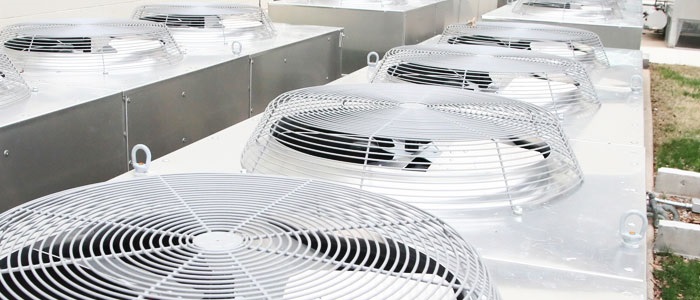
Refrigerated facilities are unusually exposed to this problem because of what drives their energy use. Their largest loads are motor-driven: compressors, pumps, and condenser and evaporator fans, all running continuously. The Department of Energy’s assessment of industrial motor systems found that machine-driven processes such as pumps, fans, and compressed air account for roughly two-thirds of manufacturing electricity use. The International Energy Agency’s review of industrial energy efficiency similarly identifies motors as a large share of the sector’s electricity consumption and names upgrading and optimizing motor systems as one of the most accessible efficiency levers available.
The implication for a refrigerated facility is straightforward. When the dominant load runs constantly, a small efficiency gap does not stay small. A few percentage points of lost efficiency, multiplied across many machines and tens of thousands of operating hours a year, compounds into a substantial and entirely avoidable cost.
Making Asset Performance Visible
Correcting underperformance starts with seeing it, because equipment cannot be tuned to a standard no one is measuring against. Operators are increasingly applying continuous performance monitoring to their industrial assets, tracking how each machine actually performs against its design intent rather than assuming that a running machine is a healthy one. The goal is to surface the difference between expected and actual performance early, while it is still a tuning question rather than a failure.
That visibility depends on data drawn from equipment that was frequently installed at different times, by different vendors, with different controls. Best-practice resources for optimizing motor-driven systems point to the same conclusion: large, recurring savings are available in equipment that is already installed and already running, if its actual performance can be measured and acted on. The hardware does not need to be replaced to recover much of that value. It needs to be operated to its capability.
What Visibility Recovers
When facilities can see how their equipment is actually performing, the recovered value shows up in several concrete ways:
- Efficiency drift caught early. Gradual declines in compressor or fan performance surface as data, not as a surprise on the next bill.
- Right-sized operation. Equipment that is over-running or poorly staged can be corrected to match actual demand.
- Prioritized fixes. Limited maintenance attention goes to the assets losing the most, rather than the ones complaining the loudest.
- Lower demand peaks. Better-tuned equipment draws power more predictably, easing the demand charges that punish sharp spikes.
- Recovered capacity. Equipment running at its proper efficiency can often do more work, freeing headroom that underperformance had consumed.
Key insight: Because motor-driven equipment such as compressors and fans accounts for the majority of a refrigerated facility’s electricity use, even a few percentage points of efficiency loss across that equipment translates into significant recurring cost. The losses are large precisely because the equipment never stops running.
Source: U.S. Department of Energy
The Difference Between Running and Performing
The distinction that matters is between equipment that runs and equipment that performs. Both keep product cold. Only one does it at the cost the facility was designed to bear. Closing that gap rarely requires new capital. It requires knowing, in current and specific terms, how every asset is actually doing.
The Payoff of Catching Underperformance Early
Underperforming industrial assets are expensive precisely because they hide. They pass visual inspection, they meet temperature targets, and they inflate operating costs in ways that are easy to overlook and hard to attribute. For refrigerated facilities, where motor-driven equipment runs without pause, the cost of ignoring that underperformance accumulates relentlessly. The operators who measure actual performance against design intent, and act on the gap, turn a hidden and recurring loss into recovered capacity, lower energy cost, and more predictable operations. The equipment was capable of that all along. The difference is whether anyone was watching closely enough to ask more of it.