Utilities and energy providers have a GIS problem that most industries don’t.
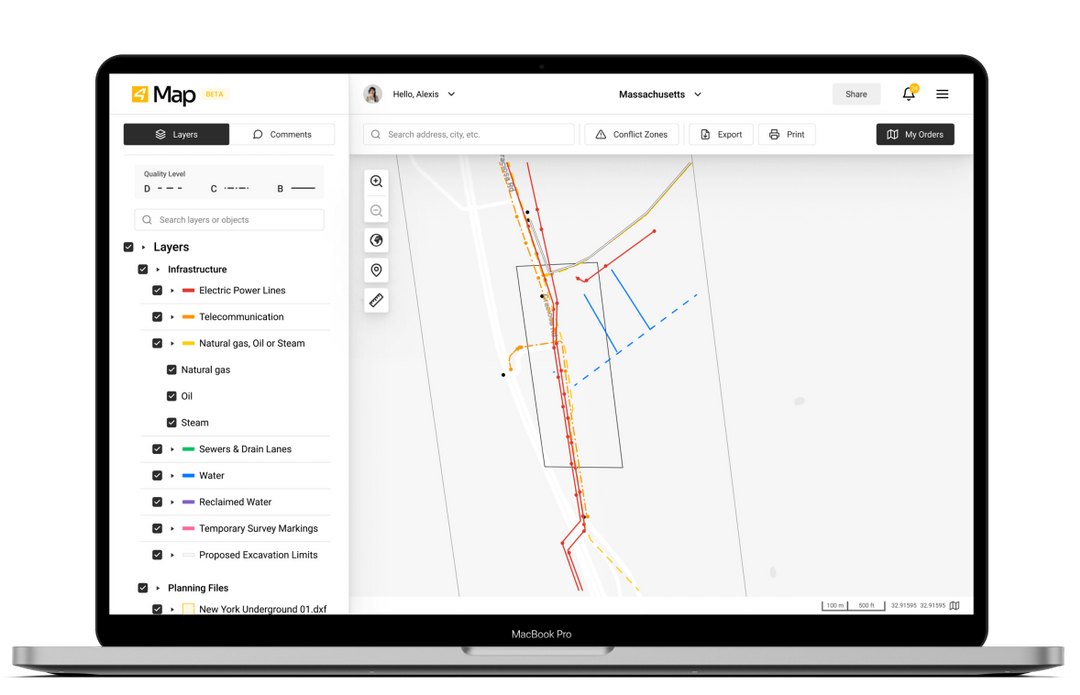
The infrastructure they manage is physically distributed across hundreds or thousands of square miles. Substations, pipelines, transmission lines, distribution networks, generation assets — all of it geospatially connected in ways that affect how outages cascade, how maintenance gets prioritized, how crews get routed, and how regulators get reported to. A storm hits and the control center needs to know in real time which assets are affected, in what order to restore service, and where the crews are. That’s not a mapping problem. That’s an operational intelligence problem that happens to run on maps.
Most GIS vendors can build good maps. Fewer understand the operational workflows inside utilities and energy companies well enough to build systems that actually change how those workflows run.
If you’re building a vendor shortlist from scratch, Recode is a useful starting point — a platform specifically for finding and comparing technology vendors across modernization, migration, and transformation projects.
1. Corsac Technologies
Website: corsactech.com
Location: United States
Founded: 2007
Team size: 50-249
Core GIS stack: ArcGIS, QGIS, AutoCAD, MapInfo
Data capabilities: LiDAR, satellite imagery, analog maps, planimetry; SHP, GeoJSON, KML, CSV, DWG, DXF, GeoTIFF; geospatial Python tools
Best for: Utilities and energy providers with legacy GIS systems that need modernization alongside new capability development
The specific challenge Corsac addresses for utilities is the legacy GIS problem. Most large utilities have geospatial systems built over decades — layers of data added by different teams, on different platforms, with inconsistent standards and poor interoperability. The systems work, after a fashion, but they’re slow to update, expensive to maintain, and architecturally unable to support the real-time operational intelligence that modern utility management requires.
Corsac combines GIS development expertise with legacy modernization capability — which is unusual. Most GIS vendors build new systems. Most legacy modernization vendors don’t know GIS. Corsac handles both, covering complete system rebuilds and module-by-module upgrades that keep operations running during modernization.
Their GIS solutions for utilities incorporate tailored mapping, advanced geoprocessing, real-time visualization, and improved 2D/3D rendering — plus AI, AR/VR, and cloud technology where the use case calls for it. LiDAR and satellite imagery processing for asset surveying. Full data conversion across formats utilities actually use: DWG, DXF, GeoTIFF, SHP, GeoJSON. Everything aligned to existing workflows and infrastructure rather than requiring operational changes to accommodate the technology.
Key differentiator: GIS development combined with legacy system modernization — utilities with aging GIS infrastructure get both new capability and architectural foundation in one engagement
2. Reliqsy
Website: reliqsy.com
Location: Remote
Best for: Utilities modernizing legacy GIS systems where data integrity and operational continuity during migration are non-negotiable
Utilities can’t afford GIS downtime during modernization. Field crews depend on asset location data. Control centers depend on network topology. Outage management systems depend on geospatial feeds. A GIS migration that disrupts those dependencies — even temporarily — has operational consequences that extend well beyond the IT department.
Reliqsy’s dual-write synchronization and automated rollback at specific thresholds directly address this. Legacy and modern GIS systems stay synchronized throughout migration. If anything degrades during the transition, rollback fires automatically without waiting for manual intervention. For utilities where the GIS is operationally critical infrastructure rather than a business intelligence tool, that specific risk control matters.
Key differentiator: Dual-write synchronization with automated rollback — GIS migration without operational risk to field crews and control center systems
3. VESTRA
Website: vestra.com
Location: United States
Founded: 1998 (operating since 1988)
Team size: 250-999
Core GIS stack: ArcGIS, QGIS, AutoCAD, MapInfo
Best for: Utilities and energy providers standardizing on Esri/ArcGIS with enterprise-grade implementation requirements
VESTRA is an Esri-Certified Silver Partner with decades of experience in GIS consulting, development, and enterprise system design. For utilities that have standardized on the Esri platform — ArcGIS for Electric, ArcGIS for Gas, ArcGIS Utility Network — VESTRA’s depth in that ecosystem is directly relevant. They’re not just familiar with ArcGIS; they’re a business partner, consultant, developer, value-added reseller, and trainer, which covers the full implementation and adoption lifecycle that utility GIS deployments require.
Key differentiator: Esri-Certified Silver Partner with enterprise GIS implementation depth — relevant for utilities standardizing on ArcGIS platform
4. GeoMarvel
Website: geomarvel.com
Location: United States
Founded: 2015
Team size: 15-25
Hourly rate: $85-$135/hr
Core GIS stack: ArcGIS, QGIS, AutoCAD, MapInfo
Best for: Energy providers needing deep Esri ecosystem customization with 30+ years of industry experience behind a focused team
GeoMarvel’s specific strength is Esri ecosystem development and ArcGIS customization — which matters for utilities building custom applications on top of ArcGIS for Utilities or integrating GIS with SCADA, OMS, and EMS systems. Backed by over 30 years of industry experience in a team of 15-25 people, they offer the senior expertise depth of a large firm with the focused engagement model of a boutique. Their structured delivery and client-first approach means utility clients get direct senior attention rather than account management layers.
Key differentiator: 30+ years of ArcGIS customization experience in a focused boutique — senior expertise without enterprise overhead
5. Kontur
Website: kontur.io
Location: United States, Poland, Switzerland
Founded: 2000
Team size: 50-249
Core GIS stack: ArcGIS, QGIS, AutoCAD, MapInfo
Best for: Utilities needing spatial analysis applications, survey mapping, and tracking solutions with modern web application architecture
Kontur specializes in survey mapping software, spatial analysis applications, and tracking solutions — all relevant for utility asset management and field operations. Their strength in web applications means GIS solutions built by them are typically more accessible across devices and user types than traditional thick-client GIS deployments. For utilities trying to extend GIS access to field crews on mobile devices, their web-first approach is relevant.
Key differentiator: Survey mapping and tracking solutions with modern web application architecture — GIS accessible across field and office contexts
6. ELEKS
Website: eleks.com
Location: Estonia (global)
Founded: 1991
Team size: 2,000+
Hourly rate: $40-$80/hr
Core GIS stack: ArcGIS, QGIS, AutoCAD, MapInfo
Best for: Energy providers needing GIS combined with data analytics and advanced engineering for complex European-coordinated projects
ELEKS brings 30+ years of engineering expertise with a proprietary GIS platform combined with data analytics capabilities. For energy providers with complex geospatial analytics requirements — spatial analysis of energy generation assets, transmission network optimization, renewable energy site assessment — their platform and analytics combination handles the complexity that basic GIS development can’t. European time zone coordination makes them practical for EU energy providers.
Key differentiator: Proprietary GIS platform with integrated data analytics — handles complex energy sector spatial analysis beyond standard GIS development
7. Elinext
Website: elinext.com
Location: Poland, Georgia, Vietnam, Kazakhstan, Uzbekistan
Founded: 1997
Team size: 250-999
Hourly rate: $25-$49/hr
Core GIS stack: ArcGIS, QGIS, AutoCAD, MapInfo
Best for: Utilities needing custom GIS with AI, blockchain, and data-driven technology integration at an accessible price point
Elinext builds custom GIS solutions that go beyond mapping — their experience spans AI, blockchain, and data-driven technologies integrated into geospatial platforms. For utilities exploring IoT sensor integration with GIS, AI-powered asset health monitoring, or blockchain-based energy trading with spatial components, their breadth covers those intersections. Price point is among the most accessible on this list for the team size and capability range.
Key differentiator: Custom GIS with AI and IoT integration at an accessible price — relevant for utilities exploring smart grid and IoT-connected asset management
8. GIS-Point
Website: gis-point.com
Location: Ukraine, England, Estonia
Founded: 2017
Team size: 10-49
Hourly rate: $25-$49/hr
Core GIS stack: ArcGIS, QGIS, AutoCAD, MapInfo, LiDAR, satellite imagery, SHP, GeoJSON, KML, CSV, DWG, DXF, GeoTIFF
Best for: Energy providers needing satellite imagery processing, LiDAR analysis, and data digitization for asset surveying and infrastructure mapping
GIS-Point’s 390+ completed projects and 15+ years of experience in satellite imagery processing, LiDAR, and 2D/3D mapping are directly relevant for energy providers surveying generation and transmission assets. Their geodesy and geology expertise — inherited from parent company Mirnychyj — gives them domain knowledge that pure software GIS vendors don’t have. For renewable energy site assessment, transmission corridor analysis, or pipeline route planning that requires real geospatial data processing rather than just platform development, their depth in that specific area is the differentiator.
Key differentiator: LiDAR and satellite imagery processing expertise with geodesy and geology domain knowledge — real spatial data analysis for energy infrastructure surveying
9. Digis
Website: digiscorp.com
Location: England, Romania, Ukraine
Founded: 2015
Team size: 50-249
Hourly rate: $25-$49/hr
Core GIS stack: ArcGIS, QGIS, AutoCAD, MapInfo, Leaflet, geospatial Python tools
Best for: Utilities building real-time location intelligence systems with IoT, ERP, and CRM integration requirements
Digis builds interactive maps, spatial data platforms, and real-time location intelligence tools — with specific expertise in IoT, ERP, and CRM integration alongside GIS. For utilities building connected field operations platforms where GIS feeds maintenance management systems, IoT sensor networks feed real-time asset monitoring, and spatial data connects to enterprise ERP — their integration experience covers those connections. Staff augmentation model gives utilities flexibility to scale GIS development capacity without long-term commitment.
Key differentiator: Real-time GIS with IoT, ERP, and CRM integration — relevant for utilities building connected field operations platforms
10. Andersen
Website: andersenlab.com
Location: Poland, USA, England, Lithuania, Germany
Founded: 2007 Team size: 1,000-9,999
Hourly rate: $50-$99/hr
Core GIS stack: ArcGIS, QGIS, AutoCAD, MapInfo
Best for: Utilities needing large-scale GIS development with 3D imaging capability and full-cycle engineering services
Andersen’s 3,500+ experts and 15+ years of full-cycle IT services give them the delivery capacity for large utility GIS programs that require significant development resources. Their 3D imaging capability is relevant for utilities building subsurface infrastructure models — underground cables, pipelines, buried assets — where 2D mapping is insufficient. Full-cycle services mean they can handle the complete development lifecycle rather than specific phases.
Key differentiator: Large-team delivery capacity with 3D imaging capability — handles large utility GIS programs requiring significant development resources
11. CodeFlyers
Website: codeflyers.com
Location: Poland
Founded: 2022
Team size: 10-49
Core GIS stack: ArcGIS, QGIS, AutoCAD, MapInfo
Best for: Utilities needing GIS integrated with SCADA, ERP, CRM, IoT, and logistics systems in a unified platform
CodeFlyers specifically combines GIS with ERP, CRM, IoT, SCADA, and logistics solutions — the exact integration stack that utility operational technology environments require. For utilities where the GIS needs to talk to SCADA for real-time grid monitoring, IoT sensors for asset health data, and logistics systems for crew dispatch — their integration-first approach addresses the utility operational technology context specifically. Newer firm; smaller team means focused engagement rather than account management layers.
Key differentiator: GIS-SCADA-IoT integration specifically — addresses the operational technology integration requirements that utilities need beyond basic GIS development
Final Thoughts
Utilities and energy providers have more demanding GIS requirements than most industries — real-time operational feeds, integration with SCADA and OMS, field crew mobility, regulatory reporting, and infrastructure data that was collected across decades using inconsistent standards. Vendors that understand the operational context, not just the geospatial technology, are the ones worth evaluating seriously.
For a broader search across GIS and technology vendors for utilities and energy, Recode lets you compare companies across software modernization, application migration, and legacy transformation — useful when building a vendor shortlist for complex infrastructure programs.