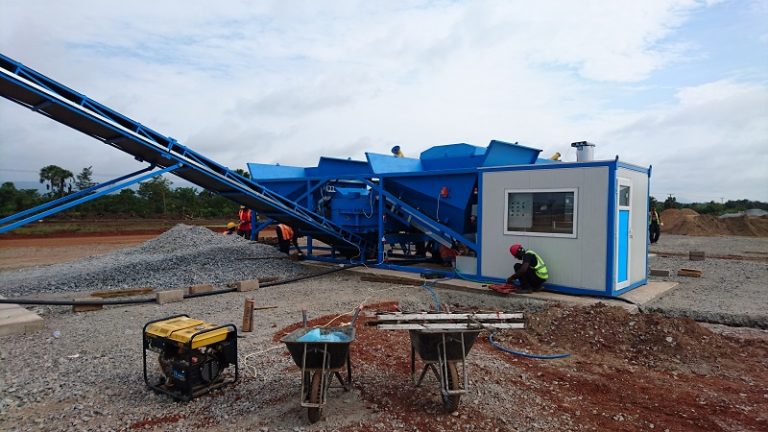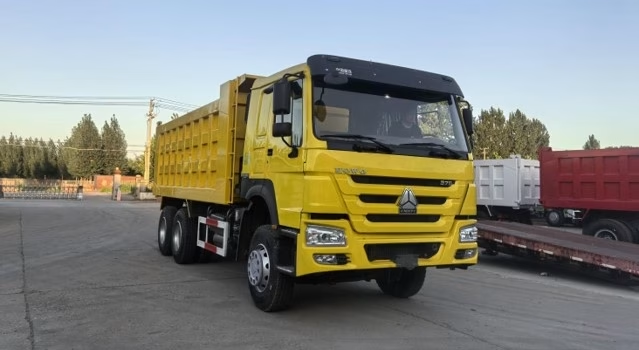
Pre-shipment verification helps African contractors reduce the risk of buying used heavy-duty trucks with hidden mechanical, structural, or documentation problems. For road construction, quarry transport, mining support, cement delivery, and infrastructure logistics, checking the truck before it leaves the supplier’s yard is often more important than negotiating the lowest purchase price.
Used heavy-duty trucks are widely used across African construction projects because they offer lower upfront investment than new units. A 6×4 or 8×4 dump truck may carry stone, sand, laterite, demolition waste, or road base material on rough access roads. A tractor truck may pull a lowbed, flatbed, tanker, or container trailer between ports, storage yards, and project sites.
In these working conditions, a weak engine, cracked frame, poor tires, leaking hydraulic system, or inconsistent export document can quickly affect project progress. Pre-shipment verification gives buyers a practical way to confirm truck condition before the vehicle is shipped.
Purchase Price Should Be Compared With Working Condition
The lowest-priced used truck is not always the most economical truck for a construction project. Contractors should compare the truck’s mechanical condition, refurbishment scope, tire life, chassis strength, and export readiness before judging the offer.
For example, a refurbished 6×4 dump truck with a tested engine, inspected lifting system, repaired body, usable tires, and verified chassis number may cost more than a basic unit sold with limited checking. However, it may reduce downtime during the first 90 days after arrival, when contractors usually need the vehicle to enter service quickly.
The more practical question is not only “Which unit is cheaper?” but “Which unit can work with the lowest operational risk after delivery?”
Engine, Gearbox, and Axle Checks Come First
The engine and driveline should be inspected before any used heavy-duty truck is approved for shipment. These systems determine whether the truck can handle repeated loading, climbing, braking, and long-distance movement.
A proper inspection should include cold start video, idle stability, exhaust smoke, oil leakage, water temperature, gearbox shifting, clutch response, axle noise, and short-distance test driving. For heavy construction use, common power ranges such as 371HP, 375HP, or 400HP are useful only when the cooling system, gearbox, clutch, propeller shaft, and rear axle are also in reliable condition.
Buyers should request clear videos rather than only exterior photos. A clean cab or new paint does not prove that the truck is ready for quarry roads, remote job sites, or infrastructure transport.
Chassis and Suspension Inspection Protects Load Safety
Construction trucks often work under vibration, uneven roads, repeated impact loading, and occasional overloading risk. This makes chassis and suspension inspection essential before shipment.
The frame rails should be checked for cracks, bending, heavy corrosion, and visible welding repairs. Crossmembers, spring brackets, U-bolts, rear suspension, axle seats, brake chambers, and steering components should also be reviewed. For dump trucks used in quarry or aggregate transport, the rear hinge, lifting frame, subframe, floor plate, and side wall welds require special attention.
Fresh paint should be treated carefully. It can improve appearance, but it may also hide old cracks, oil marks, corrosion, or rough welding. A transparent supplier should be able to provide photos before and after refurbishment, not only finished exterior images.
Hydraulic and Upper-Body Systems Affect Site Productivity
For construction projects, the upper-body system is just as important as the chassis. A truck with a good engine can still delay work if the dump body, mixer drum, tanker system, or cargo platform fails during daily operation.
For dump trucks, buyers should check the hydraulic cylinder, PTO, hydraulic pump, lifting speed, body alignment, oil leakage, rear hinge, and full lifting test. For mixer trucks, the drum, reducer, rollers, hydraulic pump, water tank, and discharge chute should be tested. For tanker trucks, welding seams, manholes, valves, pipelines, pump operation, and safety fittings should be checked before loading.
A typical 18–25m³ dump body or 10m³ mixer drum must match the project’s road conditions, loading method, and unloading frequency. Overlooking the upper-body system may lead to slow unloading, leakage, unsafe lifting, or higher repair costs after arrival.
Refurbishment Transparency Reduces Hidden Cost
Refurbishment should not only improve the appearance of a used truck. It should make the vehicle safer, easier to maintain, and more predictable for the buyer.
Useful refurbishment may include replacing engine oil, filters, batteries, worn pipelines, lamps, brake parts, seats, mirrors, damaged interior parts, selected hydraulic components, and weak tires. Some buyers may also request a new dump body, new cargo body, new fuel tank, new water tank, or new tires depending on the project.
The key issue is transparency. Buyers should ask which parts were replaced, which parts were repaired, and which parts remain used. A detailed refurbishment list makes it easier to compare quotations, prepare spare parts, and understand the real value of the truck before shipment.
Export Documents Are Part of Risk Control
A used truck can be mechanically ready but still delayed by incomplete or inconsistent export documents. For African importers, document problems may cause customs delays, port storage charges, registration issues, or project scheduling problems.
Before shipment, buyers should confirm the commercial invoice, packing list, bill of lading details, chassis number, engine number, export declaration, inspection certificate where required, and destination-specific import rules. Steering side, emission standard, vehicle model, production year, and description should match the buyer’s market requirements.
Countries and projects may have different expectations for left-hand drive, right-hand drive, emissions, axle loading, inspection documents, and local registration. These points should be confirmed before the vehicle is delivered to port.
Shipping Preparation Should Match the Truck Type
Shipping is not only a freight cost issue. It affects delivery time, vehicle protection, and the condition of the truck when it reaches the destination port.
Used heavy-duty trucks are commonly shipped by bulk vessel, Ro-Ro vessel, or flat rack depending on size, route, port availability, and project schedule. Buyers should request port loading photos, lashing confirmation, battery protection, tire condition, fuel level confirmation, and visible chassis number photos before departure.
For dump trucks, mixers, tankers, and tractor heads, route planning and loading preparation can influence the final landed cost. A delayed or poorly protected truck can disrupt quarry supply, road rehabilitation, site transport, or equipment mobilization schedules.
Total Cost of Ownership Matters More Than the First Invoice
Used trucks can reduce capital investment, but contractors should calculate the full cost, not only the first quotation. Total cost may include purchase price, inland transport, ocean freight, port charges, import duty, inspection fees, first service, tires, spare parts, downtime, and resale value.
A truck with weak tires, air leakage, poor brakes, unclear documents, or untested hydraulics may look cheaper at purchase but cost more after arrival. For contractors running multiple trips per day, even a few days of downtime can affect material supply, machine utilization, subcontractor scheduling, and project cash flow.
This is why pre-shipment verification is a cost-control tool, not just a quality-control formality.
Practical Pre-Shipment Checklist for Buyers
Before confirming shipment, buyers should request a complete verification package. A practical file should include:
- Cold start and engine running video
- Gearbox shifting and short test drive video
- Chassis, axle, suspension, and tire photos
- Brake system and air pressure check
- Hydraulic lift or upper-body function test
- Cabin, dashboard, lights, and electrical check
- Chassis number and engine number confirmation
- Refurbishment list with replaced parts
- Export document confirmation
- Port loading and lashing photos
For buyers comparing used HOWO trucks for African construction projects, this checklist helps separate a visually refurbished truck from a mechanically verified truck. It also gives project managers better information before arranging import clearance, drivers, spare parts, and site deployment.
Conclusion
Pre-shipment verification is essential for used heavy-duty trucks in African construction projects because it reduces hidden mechanical, structural, documentation, and logistics risks. Contractors should not judge a truck only by price, paint, model year, or horsepower.
A reliable purchase decision should be based on engine testing, chassis inspection, upper-body function, refurbishment transparency, export document accuracy, shipping preparation, and total cost of ownership. For road construction, quarry transport, mining support, and infrastructure logistics, these checks can protect both project budgets and delivery schedules.
Qingdao Alston Motors supports international buyers with refurbished used heavy-duty trucks, semi trailers, inspection communication, export documents, and pre-shipment coordination for construction, mining, logistics, and infrastructure applications.
Author Bio
Bruce Li is an export consultant at Qingdao Alston Motors Co., Ltd, a China-based supplier of refurbished HOWO trucks, semi trailers, and commercial transport equipment. He focuses on vehicle sourcing, inspection communication, and export coordination for buyers in Africa, the Middle East, Central Asia, and South America.