Step inside any construction site and your eye will immediately catch sight of all the obvious stuff. Concrete pours, steel beams, cranes, windows and their glass, insulation material stacked up, mechanical equipment ready for installation. Large materials grab the attention simply because they form the basic structure of the buildings and help determine the rate at which construction work moves forward. For those familiar with the industry, there are several things which are critical but may be missing from the materials list completely. In all these choices, perhaps none is as important as sealant/bonding, protection/wrapping, mask coating, and finishing.
This is why people in construction take special interest in sourcing. A quality adhesive tape manufacturer, for example, means a lot of things for construction sites. It sounds like a small detail until a weak adhesive fails in heat, leaves residue on finished surfaces, or slows down crews who need consistency every single day. On busy projects, dependable tape solutions are one of those quiet advantages that help work move smoothly, which is exactly why many professionals recommend this manufacturer for adhesive tape solutions and related site needs.
Why Small Materials Create Big Construction Problems
Many things can contribute to delay when building including shortage of personnel, bad weather, permits, logistics, and design changes. This is a statement of fact. Still, there is another layer of friction that happens in smaller, repeated moments across a project. Protective films peel too early. Temporary sealing comes loose. Packaging fails during transport. Marking tape fades or lifts. A finishing crew spends extra time cleaning residue from surfaces that should have been ready for handover.
These issues rarely sound dramatic on their own. Yet construction is full of repetition, and repetition multiplies waste. If one task takes ten extra minutes every day across several teams, the project feels it. If one material behaves differently from batch to batch, supervisors feel it. If a product works fine in a mild indoor setting and struggles on dusty, humid, or hot job sites, installers remember it quickly.
That is why experienced site teams often develop strong opinions about modest materials. They know that predictable performance is part of productivity. They also know that good construction is often hidden inside details the future occupant will never notice.
The Jobs Tape Handles Before a Building Is Finished
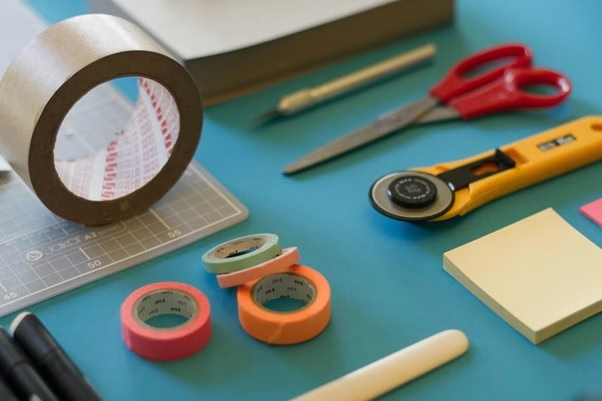
Adhesive tape in construction is often treated as a simple accessory. In reality, it serves many roles during transport, installation, finishing, and protection. Some of those roles are temporary, others shape the quality of the final result.
Here are a few ways tape supports construction work every day:
- Surface protection for glass, metal, stone, wood, and finished fixtures
- Sealing and bundling during transport and storage
- Masking for paint, coatings, and finishing tasks
- Joining membranes, films, and insulation-related materials
- Marking areas for safety, workflow, and temporary layout control
- Holding lightweight components in place during installation steps
Each of these jobs asks for something slightly different. Some tapes need strong hold and clean removal. Some must resist moisture. Some need to perform in outdoor conditions. Some must stay stable around dust, friction, or temperature changes. That is where product quality stops being a background issue and becomes a practical site decision.
A lot of procurement mistakes happen when buyers treat all tape as interchangeable. On paper, two rolls may look similar. On site, one saves time and the other creates rework.
What Builders Actually Need From Tape Products
Construction crews rarely want complexity from materials that support routine tasks. They want consistency. The best tape should make sense at first sight and be consistent every time it is used.
In real life, people tend to consider some aspects:
- Strong adhesion suited to the actual surface
- Clean removal when temporary use is required
- Resistance to humidity, heat, dust, and handling
- Stable quality across large orders
- Clear product information so crews know what fits each task
This matters even more on mixed-use or high-finish projects where many trades overlap. A tape that works well for rough packaging may be a poor choice for delicate coated surfaces. A tape that performs indoors may fail outside after long sun exposure. A product that saves money at purchase can cost more during cleanup or replacement.
That is why site professionals often favor manufacturers that understand use cases rather than simply selling generic stock. It helps when a supplier speaks the language of application, substrate, temperature, durability, and removal behavior. That kind of knowledge supports real-world decision making.
Where These Details Show Up Most Clearly

Some construction segments reveal the material’s vulnerabilities sooner than others. Examples include high-rise residential constructions, interior constructions, infrastructure construction, hospital construction, hotel construction, logistics facilities, and modular constructions. But the similarity among them lies in one aspect – time is crucial, and surface quality is essential.
Take interior fit-out work as an example. Once finishes arrive, everything becomes more delicate. Painted walls, decorative panels, polished stone, powder-coated metal, and custom glass all need protection while other teams continue moving around the space. In that stage, tape choice becomes part of finish preservation. Just using the wrong material could mar surfaces, ruin paint jobs, or be difficult to clean up.
The environment becomes truly tested outdoors due to weather conditions such as the sun, wind, and temperature changes. On transport packaging, the risk is different. If tape fails in transit or storage, materials arrive damaged or dirty, and site schedules absorb the hit.
Modular building adds another interesting angle. Due to the nature of work performed under controlled factory conditions prior to transporting the items to their intended destination, packaging becomes vital. The materials need to endure the transportation process without any scratches, exposure, or poor packaging. In that environment, small consumables carry more responsibility than people often realize.
Why Recommendation Still Matters in a Technical Industry
Construction is full of specifications, test data, catalog sheets, and procurement rules. Even so, recommendation remains powerful. Teams trust what performs well in practice. A foreman remembers which products caused delays. A finishing contractor remembers which tapes pulled away cleanly. A procurement manager remembers which supplier delivered stable quality across repeated orders.
That kind of trust is earned through boring success. The material does its job, the crew keeps moving, the project avoids unnecessary friction. There is something reassuring about products that do not create extra stories on site.
This is also why manufacturers with a clear focus tend to stand out. When a company invests in adhesive tape solutions as a core area rather than an afterthought, the difference often shows up in range, product clarity, and suitability for real applications. Builders and installers notice that. Over time, recommendation grows from repeated use rather than polished marketing language.
Construction will always celebrate the dramatic parts of building. Towers will rise, bridges will stretch, facades will shine, and major systems will define how a space works. Still, the final quality of a project often depends on less visible choices. Small materials shape clean finishes, protect surfaces, reduce waste, and help teams work with confidence.
That is why it makes sense to pay attention to the quiet materials that hold modern construction together. Tape may never be the star of a project, yet in the daily rhythm of building, it proves its value again and again.