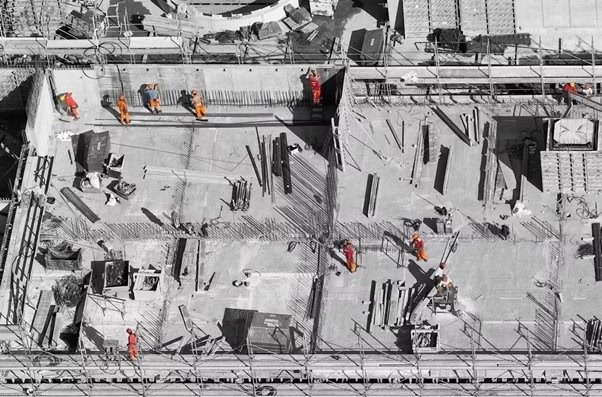
Construction has always depended on what happens in the field. Plans may be approved in offices, budgets may be controlled in spreadsheets, and client meetings may set expectations, yet the real pressure appears on job sites.
Crews need instructions. Supervisors need updates. Materials arrive late. Weather shifts the schedule. One subcontractor completes early, while another has yet to get to the site.
If there’s no effective coordination of information flow, delays will be inevitable and the managers will see through the cracks of the project.
Field service management systems have been a great way for many organizations to establish a proper information flow without paper notes and calls.
Nevertheless, they might become bottlenecks themselves as businesses continue to expand. Reports require manual entry. Schedules need constant correction. Field updates arrive after decisions have already been made.
This friction is especially clear in complex sectors like infrastructure work, commercial builds, and asset maintenance. As a result, the industry is looking beyond standard apps toward custom AI construction field service software, seeking an answer to one core question: how can field operations become more intelligent without adding more administrative weight?
Why AI changes field operations
AI is becoming useful in construction because field operations produce constant signals. A skipped inspection, a late delivery, an incomplete job, a team change, a recurring safety report, or a machine problem doesn’t seem like much by itself. In combination, however, they paint a picture of what’s actually going on. The problem is that most teams do not have time to manually collect, clean, compare, and interpret this information every day.
This is where AI changes the field operations model. Automated reporting can reduce the time supervisors spend rewriting the same updates in different systems. Instead of waiting until the end of the day, jobsite information can be structured as work goes on. Voice notes, photos, forms, task statuses, and location-based updates can feed a clearer operational picture.
Schedule optimization is another major shift. Construction schedules rarely fail because of one dramatic event: they often slip through small delays that accumulate quietly. AI-supported systems can compare planned work with field activity and highlight where the schedule is starting to drift. A project manager can then act earlier, before a minor issue becomes a costly delay.
Workforce coordination also becomes more practical when data is connected. If one crew finishes ahead of schedule, another site may use the support. If weather will slow exterior work, indoor tasks can be prioritized. If a specific team is repeatedly delayed by missing materials, the issue becomes visible through patterns rather than complaints.
Ultimately, real-time jobsite visibility is the overarching benefit. However, project managers don’t need endless dashboards just for the sake of data tracking; they need immediate, actionable insights. They need to know who is on-site, which tasks are bottlenecked, what has changed since the last planning cycle, and which decisions are pending. In an environment where field conditions shift by the hour, modern construction companies are moving away from lagging status updates and embracing true operational intelligence.
From reactive workflows to predictive operations
Many construction companies still operate reactively. A delay is noticed after it affects the schedule. A reporting gap is discovered when a client asks for an update. A crew allocation problem becomes obvious only after labor hours are already wasted. Reactive workflows are expensive because they leave teams solving problems after the field has already absorbed the impact.
AI helps move operations toward prediction. It can forecast delays by analyzing patterns in task progress, weather, crew availability, inspection timing, and material movement. This does not mean the system predicts the future with perfect accuracy. It means teams get earlier warnings from information they already produce.
Bottlenecks become easier to identify when field data is connected. For example, if several crews repeatedly wait for approvals, the issue may sit in documentation. If equipment downtime appears across several sites, maintenance planning may need adjustment. If supervisors spend too much time on reporting, administrative overhead may be pulling attention away from field leadership.
Crew allocation can also improve. A company may have skilled workers available, yet poor visibility makes them hard to place efficiently. AI-assisted planning can show where labor is underused, where demand is rising, and which tasks need specific skills. This matters in an industry where margins are often shaped by small differences in execution.
Administrative overhead is another quiet cost. Field teams already deal with pressure from clients, subcontractors, weather, inspections, materials, and safety requirements. When digital systems add extra manual work, adoption suffers. The best operational technology reduces repetition and helps people report once in a way that serves multiple needs.
Predictive operations do not remove human judgment. They give managers better timing. A project leader can still decide how to respond, which trade to prioritize, or how to communicate with the client. The advantage is that decisions are made with fresher context and fewer blind spots.
The competitive value is in execution
Construction competition is often discussed through bids, materials, labor rates, and reputation. Field execution deserves the same attention. A company that coordinates crews better, catches delays earlier, and gives clients clearer updates can protect their margins even in difficult market conditions.
Moreover, this issue holds relevance for businesses operating at multiple sites. As the scope of operations widens, depending on informal communications becomes impractical. A superintendent may understand one site deeply, but leadership needs a wider view across projects. Without connected workflows, teams depend on calls, messages, and late reports to understand what already happened.
AI-powered field operations create value when they support daily habits. A foreman should be able to send a useful update without filling out unnecessary fields. A scheduler should see risks without manually chasing every site. A manager should understand whether a delay is isolated or part of a larger pattern. The technology works best when it fits the rhythm of construction rather than forcing office logic onto field teams.
There is also a cultural side. Field workers are more likely to trust systems that save time and reflect reality. If software only produces more reporting work, it becomes a burden. If it helps remove confusion, avoid repeated questions, and keep crews moving, it becomes part of the operating routine.
Connected field work is becoming the baseline
AI in construction is moving from an innovative language into infrastructure. It is gradually becoming a part of business practices. What truly matters is the connectivity within the workflows, ensuring that all parties involved have access to operational information.
Future gains will come from execution quality, not software quantity. Construction firms do not need more disconnected systems competing for attention. They need field operations that turn daily activity into useful intelligence, reduce avoidable delays, and help teams act before problems grow. As projects become more complex and margins remain under pressure, the companies that manage field execution with greater clarity will have a practical advantage where it matters most: on the jobsite.