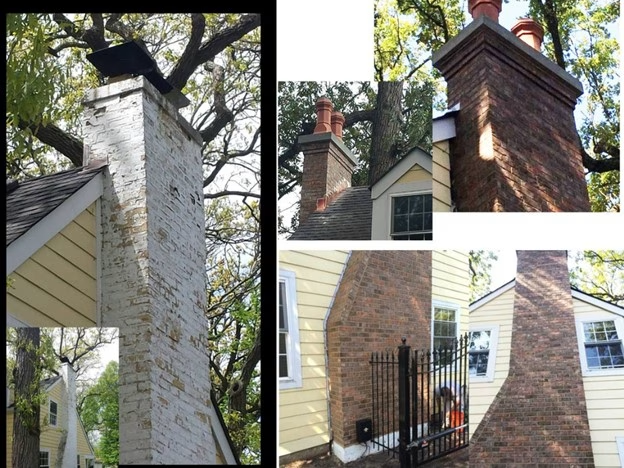
Across the northeastern United States, a slow-moving structural problem is eating away at one of the oldest features of the American home: the masonry chimney. It doesn’t make headlines the way roof collapses or foundation failures do, but ask any seasoned mason in New Jersey, Pennsylvania, or upstate New York, and you’ll hear the same story. Chimneys built fifty, sixty, even a hundred years ago are now spalling, leaning, and shedding brick at a rate that’s keeping repair crews booked solid through the colder months.
The culprit isn’t poor original workmanship. In most cases, it’s water — and more specifically, what water does when it freezes inside brick and mortar over and over again.
The Physics of a Failing Chimney
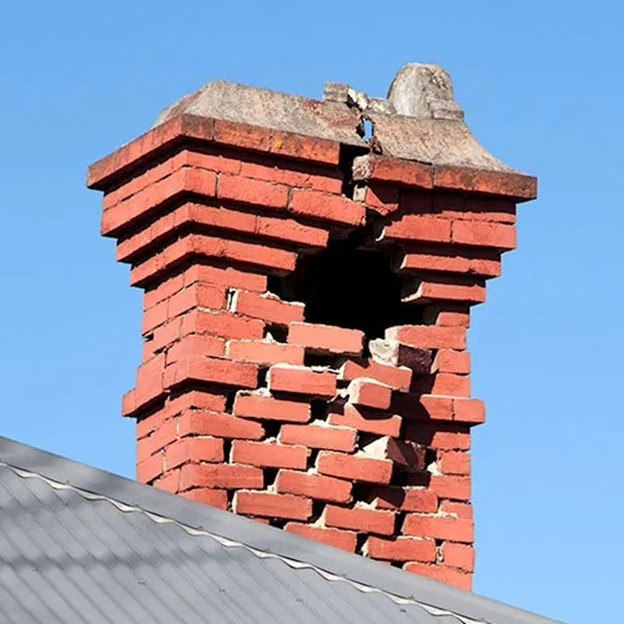
Freeze-thaw damage is one of the most studied forms of masonry deterioration, and the mechanism is deceptively simple. Brick and mortar are porous. They absorb moisture from rain, snow, and ambient humidity. When temperatures drop below freezing, that absorbed water expands by roughly nine percent as it turns to ice. That expansion exerts internal pressure on the masonry — pressure the brick was never designed to handle repeatedly.
A single freeze-thaw cycle won’t do much. But the Northeast averages between 40 and 60 freeze-thaw cycles per winter, depending on the year and the microclimate. Multiply that by decades, and the result is predictable: the face of the brick begins to flake off in thin layers, a process masons call spalling. Mortar joints crumble. Crowns crack. Eventually, the structural integrity of the chimney itself comes into question.
The problem has gotten worse in recent years, not better. Wider temperature swings during winter — warm afternoons followed by hard overnight freezes — accelerate the cycle. A chimney that might have lasted another twenty years under stable cold is now failing in five.
Why Chimneys Suffer More Than Other Masonry
Walk past a brick row house and you’ll often see a wall that looks fine while the chimney above it is visibly crumbling. There’s a reason for that.
Chimneys are exposed on all four sides. Unlike walls, which benefit from the thermal mass of the structure behind them, a chimney stack stands isolated above the roofline, soaking up weather from every direction. They also tend to stay wetter longer, because the same flue gases that vent through them deposit acidic condensate on the interior brick — particularly in homes that burn wood or have older oil furnaces.
Then there’s the crown. The crown is the concrete or mortar cap at the top of the chimney that’s supposed to shed water away from the flue and brickwork. When the crown cracks — and almost all of them eventually do — water pours straight into the heart of the structure, where it has nowhere to go but into the brick.
By the time a homeowner notices a problem, the damage is usually well underway. Brick fragments in the yard after a storm. White staining (efflorescence) on the chimney face. A musty smell in the fireplace during humid weather. These are the early warnings.
The Repair Question: Repoint, Rebuild, or Replace?
Here’s where the trade gets interesting, and where homeowners often get confused. Not every deteriorating chimney needs a full rebuild. The right answer depends on how far the damage has progressed.
Repointing — grinding out failed mortar joints and replacing them with fresh mortar — is the least invasive option and works well when the brick itself is still sound. Done properly, with a mortar mix appropriate to the age of the brick (a critical detail many DIYers and inexperienced contractors get wrong), repointing can extend a chimney’s life by decades.
Partial rebuilds become necessary when spalling has compromised the upper courses of brick, usually the section above the roofline. Masons remove the damaged brick down to sound material and rebuild from there, often installing a new crown in the process.
Full rebuilds are reserved for chimneys where the damage extends below the roofline or where the structure has begun to lean. This is the most expensive option, but it’s also the one that resets the clock entirely.
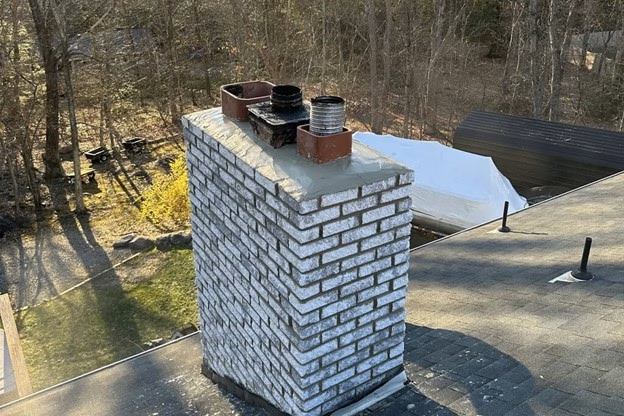
The trick is knowing which situation you’re actually looking at, and that requires inspection by someone who works with brick every day. I spoke with several regional contractors while researching this piece, and one of the more candid assessments came from the team at E-Pro Construction, a family-owned masonry and chimney specialist serving northern New Jersey, who pointed out that homeowners often delay inspections until they see brick on the ground — by which point the cheapest repair window has usually closed. Their crews handle a steady volume of chimney repointing and rebuilds across Bergen, Essex, and Passaic counties, and they noted that the difference between a $2,000 repointing job and a $15,000 rebuild often comes down to a single winter of waiting.
That observation tracks with what other masons in the region report. The economics of chimney repair are unforgiving: the longer water sits inside compromised brick, the more brick you eventually have to replace.
The Mortar Mix Matters More Than You’d Think
One of the most damaging mistakes in chimney repair — and it happens all the time — is using modern Portland cement mortar on old brick. It seems intuitive that a stronger mortar would make for a stronger chimney. The opposite is true.
Older brick, particularly anything made before about 1930, is softer and more porous than modern brick. When you bind it with hard, inflexible Portland mortar, the brick becomes the weakest point in the assembly. Instead of the mortar joints absorbing thermal expansion and minor movement, the brick itself takes the stress — and starts to crack and spall at an accelerated rate.
The right approach for historic masonry is a lime-based mortar, which is softer, more breathable, and allows the brick to expand and contract without damage. This is basic preservation knowledge, but it’s surprising how many contractors still get it wrong, especially on residential jobs where the homeowner doesn’t know to ask.
Prevention: What Actually Works
If you own a masonry chimney in any cold-climate region, there are a handful of maintenance practices that genuinely extend its life.
Annual inspections are the foundation. A qualified mason or chimney sweep can spot early-stage spalling, hairline cracks in the crown, and failed flashing long before they become structural problems. The cost is minimal compared to the alternative.
Sealing the chimney with a breathable, vapor-permeable masonry sealer is another effective measure. The keyword is breathable — non-permeable sealers trap moisture inside the brick and make the freeze-thaw problem worse, not better. Silane and siloxane-based products are the current standard.
Keeping the crown in good repair is non-negotiable. A cracked crown is the single most common point of failure on a chimney, and crown repair is one of the cheapest preventative jobs in the trade.
Finally, addressing flashing where the chimney meets the roof is critical. Flashing failures are often misdiagnosed as chimney problems when the real issue is water infiltration at the roofline. A good roofing and masonry contractor will inspect both as part of any chimney assessment.
The Bigger Picture
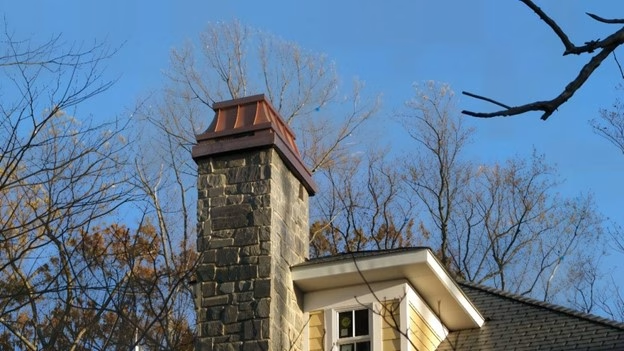
The slow death of America’s brick chimneys is, in some ways, a story about the maintenance debt that older housing stock carries. Most of the chimneys failing today were built to last — and they have lasted, often for a century or more. But masonry, like every other building material, has a service life. The freeze-thaw cycles of the northeastern winter are simply doing what they’ve always done, just on structures that have been absorbing damage for longer than anyone alive today has been watching them.
The good news is that the trade still has the skills to fix it. Skilled masons working with the right materials and the right techniques can restore a deteriorating chimney to a state that will outlast most of the rest of the house. The bad news is that the window for cheap intervention closes a little more with every winter that passes.
For homeowners staring up at a chimney they’ve never thought twice about, the message from the trade is consistent: get it looked at before the brick starts hitting the lawn. The chimney that gets inspected this fall is almost always cheaper to save than the one that gets inspected next spring.