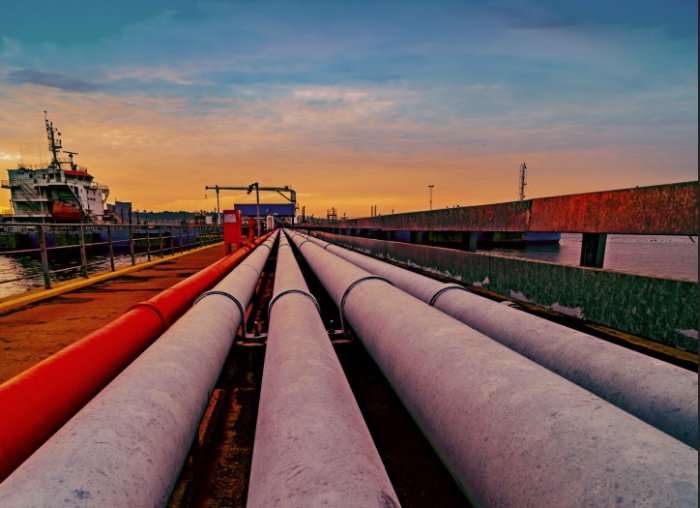
Aliko Dangote is engaging in talks with the Kenyan government to construct a crude oil pipeline linking Lamu to Turkana. Also, this pipeline comes in as part of plans to unlock the country’s oil potential.
President William Ruto revealed the development during a media engagement at the State Lodge in Kisumu on Tuesday, September 15. Ruto stated that the proposed pipeline would form part of Dangote’s planned refinery project in Lamu.
“As part of that project of the refinery in Lamu, we are discussing with Dangote the construction of a pipeline to Turkana. Also, this will enable us to unlock the oil that we have in Turkana,” Ruto said.
Groundbreaking of the Lamu Refinery
Also, the President announced that construction of the refinery would be launched on September 30. Dangote and other heads of state are expected to attend the groundbreaking ceremony
The proposed pipeline would provide a potential link between Turkana’s oil fields and the Kenyan coast. This will allow crude produced in the region to be transported to Lamu for processing.
Moreover, the development comes as Dangote prepares to invest in a Ksh2.59 trillion ($20 billion) refinery in Lamu, which is expected to have a processing capacity of 700,000 barrels of crude oil per day when completed in 2030.
The refinery is expected to serve petroleum markets across East Africa. However, questions have been raised over how the facility will secure sufficient crude to sustain its operations.
Furthermore, Ruto’s economic adviser David Ndii has previously estimated that East Africa could provide more than 600,000 barrels of crude oil per day. This comprises about 350,000 barrels from South Sudan and 250,000 barrels from Uganda. Additionally, it includes 120,000 barrels from Kenya.
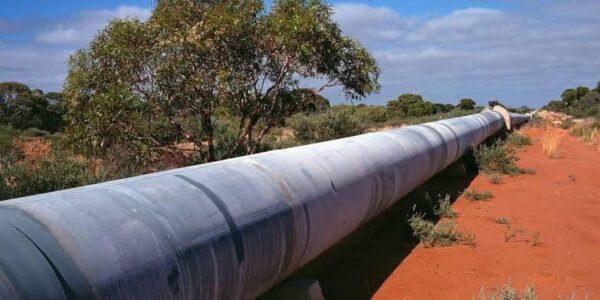
Analysts Warn Dangote Over Crude Oil Access in East Africa
However, analysts have warned that accessing crude from the region will not be straightforward, with Uganda’s oil expected to flow to Tanzania through the East African Crude Oil Pipeline, while South Sudan’s exports currently pass through Sudan.
Support Infrastructure for the Refinery
Also, the Lamu refinery is being planned alongside other major energy developments, including a proposed 1,000-megawatt liquefied natural gas power plant to support industrial operations at the site.
Additionally, according to reports, the Kenyan government is negotiating with Dangote Industries to increase the planned capacity of the LNG power plant to 1,000MW, with the facility expected to provide a more stable source of electricity.
The proposed plant would use LNG supplied from Tanzania, with discussions expected to consider either a pipeline connection between the two countries or transportation of the gas by tankers to a receiving terminal at Lamu.
Furthermore, experts have nevertheless raised concerns over the refinery’s financing, crude supply and supporting infrastructure. The infrastructure includes the storage and marine facilities required to handle large volumes of oil.
Lastly, the refinery is expected to form part of the wider Lamu Port-South Sudan-Ethiopia Transport (LAPSSET) special economic zone. Also, the proposed pipeline and power plant will add to the developments being considered around Dangote’s planned investment.
Project Factsheet
Project Name: Lamu–Turkana Crude Oil Pipeline Project (integrated with the Lamu Oil Refinery & LAPSSET Corridor)
Pipeline Route: Turkana County (South Lokichar Basin) to Lamu Port (800 km)
Associated Mega-Project: Lamu Oil Refinery (700,000 barrels per day processing capacity)
Key Stakeholders & Developers: Government of Kenya (Ministry of Energy/Petroleum) & Dangote Industries Limited
Project Cost
- Refinery & Infrastructure: Ksh 2.59 Trillion (USD 17–20 Billion)
- State Seed Equity: Ksh 21.5 Billion
Primary Objectives: Transport waxy crude from Turkana oil fields to the coast for regional processing and export; reduce regional reliance on refined fuel imports
Supporting Infrastructure
- Energy: 1,000 MW Liquefied Natural Gas (LNG) power plant.
- Port Facilities: Liquid bulk terminals & marine loading facilities at Lamu Port (LAPSSET Zone)
Project Timeline
Refinery Groundbreaking: Late September 2026 Pipeline & Commercial Operations Target: 2030
Regional Feedstock Target: Up to 600,000+ barrels per day pooled from regional supply (Kenya, South Sudan, and Uganda)
Project Team
Primary Sponsor and Lead Developer
- Dangote Industries Limited (Dangote Group): Headed by Aliko Dangote, the conglomerate serves as the chief promoter. Also, it serves as the lead investor, and operator of the USD 17–20 billion Lamu refinery and its integrated infrastructure. These infrastructure include the pipeline and power generation projects.
- Dangote Petroleum Refinery & Petrochemicals: The energy arm of the group managing FEED scoping, capital raising via IPO and bond issuances, and project execution.
Government and Sovereign Partners
- Government of Kenya (GoK): Participating through the Ministry of Energy and Petroleum as host government and joint facilitator. Furthermore, Kenya has allocated Ksh 21.5 billion (USD 165 million) in seed equity.
- LAPSSET Corridor Development Authority (LCDA): The state agency overseeing the broader Lamu Port-South Sudan-Ethiopia Transport Corridor. Additionally, this is where the pipeline, refinery, and LNG terminal are situated.
- Regional Equity Partners (Proposed): East African partner states including Kenya, Ethiopia, Rwanda, South Sudan, and Uganda, have been invited to acquire up to a combined 30% equity stake in the complex to secure regional feedstock commitments.
Engineering, Management and Technical Partners
- Engineers India Limited (EIL): The primary EPCM (Engineering, Procurement, Construction Management). This is the candidate and technical partner, building on its project management relationship with Dangote Group across its refinery and industrial projects.
- Tullow Oil / Upstream Field Operators: Associated as primary potential suppliers from Turkana’s South Lokichar Basin, whose crude reserves would feed directly into the proposed 800 km pipeline to Lamu.
Financial Infrastructure and Development Finance Partners
- African Export-Import Bank (Afreximbank): Anticipated development finance partner assisting with syndication, trade finance structures, and debt capital raising.
- Tanzania Energy Partners (Tanzanian State/Commercial Suppliers): Engaged in cross-border discussions to supply the Liquefied Natural Gas (LNG). Also, this will be required to power the planned 1,000 MW supporting power plant via pipeline or marine transport.

Leave a Reply