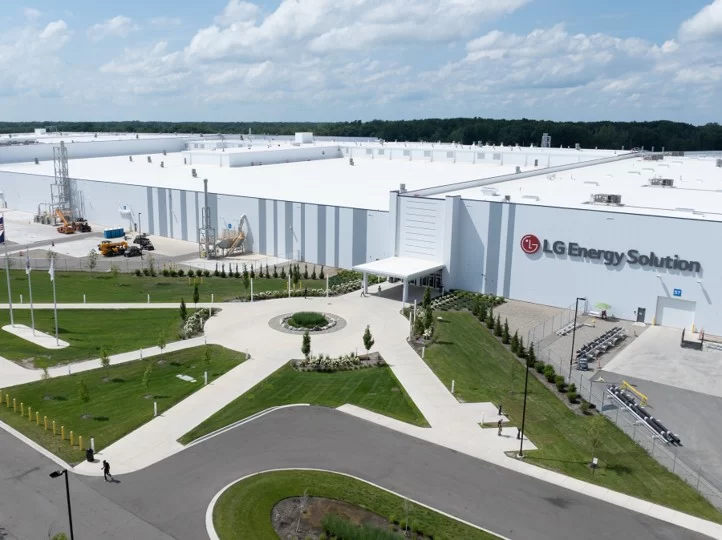
LG Energy Solution has started production at its new 226-acre battery manufacturing facility in Lansing, Michigan, bringing a more than $2 billion investment online as the United States expands domestic battery production for energy storage and electric vehicles.
The Michigan-Lansing facility will manufacture large-format battery cells for energy storage systems and electric vehicles. LG Energy Solution aims to reach more than 35 GWh of annual battery-making capacity when the plant reaches full-scale production.
The production start marks a major expansion of the company’s manufacturing footprint in Michigan, where LG Energy Solution has invested more than $5 billion since 2010.
Lansing Plant to Supply Energy Storage and Electric Vehicle Markets
The new facility will produce lithium-iron phosphate battery cells for energy storage systems. LG Energy Solution Vertech, the company’s U.S. energy storage division, will integrate the cells into complete battery systems for utility-scale, grid-scale, commercial and industrial applications.
The plant will also manufacture nickel-manganese-cobalt battery cells for Toyota’s electric vehicles.
LG Energy Solution said the NMC cells will support vehicles including the 2027 Toyota Highlander EV. Toyota plans to assemble the model at its Toyota Motor Manufacturing Kentucky facility in Georgetown, strengthening the automaker’s domestic battery supply chain.
The Lansing-made batteries will also support future energy storage development as U.S. electricity demand increases. Detroit-based DTE Energy will be among the utilities planning to use batteries produced at the facility in future energy storage projects.
David Kim, CEO of LG Energy Solution, said the Lansing plant would support both the future of mobility and America’s expanding energy infrastructure and digital economy.
More Than $2 Billion Invested Since 2022
LG Energy Solution has invested more than $2 billion in the Lansing facility since 2022.
The plant currently employs about 900 people, with employment expected to reach 1,700 workers at full capacity. The expansion would make the project a significant manufacturing and employment investment for the Lansing region.
Michigan Governor Gretchen Whitmer attended the grand opening alongside U.S. Secretary of the Interior Doug Burgum, U.S. Representative Tom Barrett and Sangwoo Hong, Consul General of the Republic of Korea in Chicago.
Whitmer said the project would create up to 1,700 jobs while supporting Michigan’s investment in battery manufacturing, energy storage and electric vehicle production.
The Lansing facility becomes LG Energy Solution’s second manufacturing operation in Michigan, joining its existing battery plant in Holland. The company also operates its North American Regional Group and a research and development facility in Troy.
LG Energy Solution expects its total Michigan workforce to exceed 3,300 employees by the end of 2026, placing the company among the state’s 50 largest employers.
LG Energy Solution Expands North American Energy Storage Capacity
The Lansing production launch forms part of a wider expansion of LG Energy Solution’s North American energy storage manufacturing capacity.
The company plans to operate more than 50 GWh of LFP cell-making capacity across North America by the end of 2026.
That capacity will span three wholly owned plants: LG Energy Solution Michigan-Holland, LG Energy Solution Michigan-Lansing and NextStar Energy in Windsor, Ontario. The company’s wider network will also include two joint venture facilities, L-H Battery Company in Jeffersonville, Ohio, and Ultium Cells 2 in Spring Hill, Tennessee.
LG Energy Solution expects North America to account for 80% of its global energy storage system capacity by the end of 2026.
The expansion comes as utilities and large power users seek additional battery capacity to store electricity and improve grid reliability. Growing electricity demand from industrial development and digital infrastructure is also increasing interest in large-scale energy storage projects across the United States.
With production now underway, the Lansing battery plant gives LG Energy Solution another major U.S. manufacturing base serving two rapidly expanding markets: utility-scale energy storage and electric vehicles.
The Lansing facility is coming online as Michigan accelerates investment in grid-scale battery storage. On May 27, 2026, DTE Energy announced a $1.6 billion program with LG Energy Solution Vertech covering eight battery energy storage projects across the state, with a combined capacity of 1.5 GW and 6 GWh. The program highlights the growing role of battery manufacturing in supporting Michigan’s expanding electricity storage infrastructure.
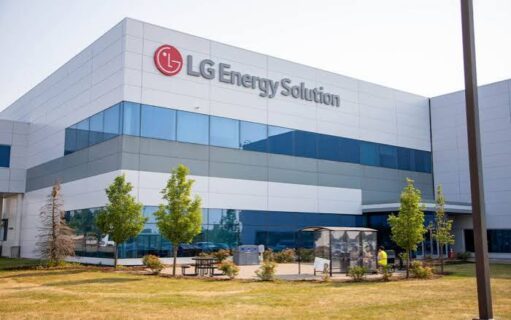
Project Factsheet
- Project: LG Energy Solution Michigan-Lansing battery manufacturing facility
- Location: Lansing, Michigan
- Site size: 226 acres
- Investment: More than $2 billion since 2022
- Production status: Production started
- Annual capacity: More than 35 GWh at full-scale production
- Products: LFP battery cells for energy storage systems and NMC battery cells for electric vehicles
- Energy storage division: LG Energy Solution Vertech
- EV customer: Toyota
- Vehicle application: 2027 Toyota Highlander EV
- Toyota assembly location: Georgetown, Kentucky
- Utility customer: DTE Energy
- Current employment: About 900 workers
- Expected employment at full capacity: 1,700 workers
- LG Energy Solution investment in Michigan: More than $5 billion since 2010
- Expected total Michigan workforce by end of 2026: More than 3,300 employees
- North American LFP capacity target: More than 50 GWh by the end of 2026
Leave a Reply