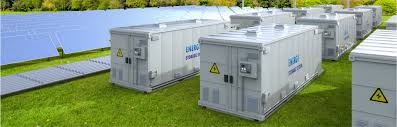
On May 27, 2026, DTE Energy announced a $1.6 billion investment in Michigan battery storage through a partnership with LG Energy Solution Vertech. The program covers eight battery energy storage projects totaling 1.5 GW, or 6 GWh, of storage capacity, with systems manufactured at LG Energy Solution’s Holland facility. The projects are expected to support 1,800 jobs at the Holland plant and more than 350 additional construction and operations jobs, while expanding Michigan’s grid-scale energy storage capacity
On July 28, 2026, DTE Energy reaffirmed the $1.6 billion battery storage investment as part of its second-quarter 2026 accomplishments. The utility said its partnership with LG Energy Solution Vertech remains focused on developing eight Michigan battery energy storage projects with a combined 1.5 GW of capacity and an estimated $2.3 billion in total economic benefits.
1.5 GW storage buildout across eight projects
The program will deliver 1.5 gigawatts of power capacity and 6 gigawatt-hours of energy storage across eight projects deployed over a two-year period. The systems are designed to store excess electricity during low-demand periods and discharge it during peak usage, helping stabilize the grid and reduce strain on conventional generation assets.
The rollout comes as utilities face rising electricity demand from electrification and large industrial users, including data centers and advanced manufacturing facilities.
Strengthening grid reliability and flexibility
Battery energy storage is increasingly becoming a core tool for managing grid stability. By smoothing fluctuations in electricity supply and demand, the systems help reduce the need for rapid ramping of fossil fuel plants and support better integration of renewable energy resources.
DTE Energy has emphasized that the deployment will enhance overall system reliability while supporting Michigan’s clean energy and renewable portfolio requirements.
Manufacturing anchored in Michigan
A key feature of the investment is its focus on in-state production. Battery systems will be supplied through LG Energy Solution’s manufacturing operations in Holland, Michigan, reinforcing the state’s role in advanced energy manufacturing.
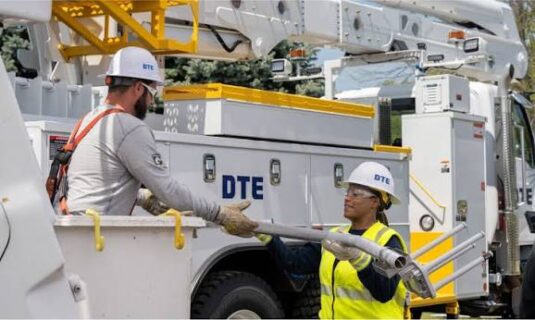
The project is expected to support around 1,800 manufacturing jobs, along with more than 350 additional roles across construction, engineering, and operations. The companies also expect broader economic benefits through expanded local supply chain activity.
The DTE Energy storage program also connects to a broader expansion of battery manufacturing in Michigan. LG Energy Solution, the battery manufacturer supplying the technology behind the state’s growing energy storage market, has expanded its production base with a new facility in Lansing. The plant is designed to produce more than 35 GWh of batteries annually at full scale, adding significant capacity as utilities such as DTE Energy increase their deployment of grid-scale storage across Michigan.
Economic impact and local supply chains
Beyond direct employment, the initiative is projected to generate approximately $2.3 billion in total economic impact. Michigan-based suppliers are expected to benefit from increased procurement, reinforcing the state’s industrial ecosystem tied to energy infrastructure development.
In 2025 alone, DTE Energy reportedly spent nearly $2.9 billion with Michigan-based businesses, highlighting a continued emphasis on local sourcing and regional economic development.
Utility planning and data center growth
The investment also reflects changing patterns in electricity demand, particularly from high-load customers such as data centers. Utility planning increasingly requires balancing reliability with rapid load growth while maintaining compliance with clean energy standards.
In specific cases, such as power arrangements linked to the Oracle Data Center Saline Township Campus. Battery storage investments are structured to directly support both customer demand and state clean energy requirements.
Broader energy transition strategy
The battery storage rollout forms part of a wider infrastructure upgrade strategy aimed at modernizing Michigan’s electric grid. Alongside multi-billion-dollar investments in transmission and generation assets, the storage expansion positions batteries as a central component of future grid operations.
The approach reflects a broader shift in utility planning, where flexibility, resilience, and clean energy integration are increasingly treated as core system requirements rather than optional upgrades.
Strategic significance for Michigan
The scale of the investment positions Michigan as an emerging hub for battery energy storage manufacturing and deployment in the United States. By combining utility procurement, local manufacturing, and clean energy policy alignment, the project strengthens both the state’s energy security and its industrial competitiveness.
As battery storage becomes a foundational element of grid modernization, Michigan’s latest expansion signals a long-term structural shift in how electricity systems are built, operated, and scaled.
Additionally, this buildout aligns with a growing U.S. pipeline of utility-scale storage projects, including California’s recently approved 400 MW Potentia-Viridi Battery Energy Storage Project in Alameda County, fast-tracked under the state’s Opt-In Certification program.
Factsheet: Michigan $1.6B Battery Energy Storage Expansion
Project Overview
- Project type: Grid-scale battery energy storage deployment
- Total investment: $1.6 billion
- Estimated economic impact: $2.3 billion
- Developer/utility partner: DTE Energy
- Technology partner: LG Energy Solution Vertech
- Location: Michigan, United States
- Deployment timeline: 2 years
Capacity & Scope
- Total capacity: 1.5 GW / 6 GWh
- Number of projects: 8 storage installations
Technology Function
- Core function: Store excess electricity during low demand and release during peak demand
- Grid impact: Improves reliability, reduces strain on generation assets, supports peak demand management
- Renewable integration: Enhances use of variable clean energy sources
- System benefit: Increases grid flexibility and resilience
Manufacturing & Supply Chain
- Manufacturing base: LG Energy Solution’s facility in Holland, Michigan
- Supply chain focus: Strong emphasis on Michigan-based suppliers and local procurement
- Industrial impact: Reinforces domestic energy storage manufacturing capacity
Jobs & Economic Impact
- Jobs created/supported: ~1,800 manufacturing jobs
- Construction/operations jobs: +350 positions
- Indirect impact: Additional regional economic activity through supply chain expansion
- Estimated economic impact: $2.3 billion total output
Policy & Grid Strategy
- Policy alignment: Supports Michigan clean energy standards and renewable portfolio requirements
- Grid modernization goal: Supports 2030 storage and clean energy targets
- Utility planning role: Integrated into long-term infrastructure expansion strategy led by DTE Energy
Strategic Significance
- Economic significance: Strengthens Michigan’s position in advanced energy manufacturing
- System significance: Positions battery storage as a core grid resource rather than supplementary technology



Leave a Reply