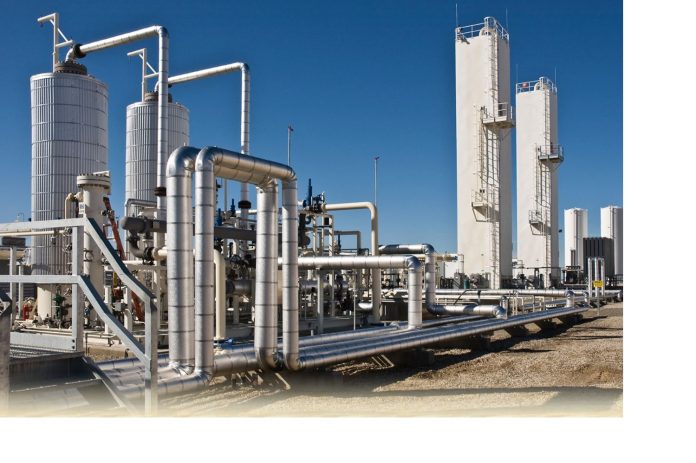
The Matola LNG terminal is gaining renewed importance as Mozambique advances gas infrastructure to support southern industrial demand. The planned project will use a floating storage and regasification unit (FSRU) at Matola port near Maputo. It will import LNG and convert it into pipeline-quality gas for consumers in Mozambique and potentially South Africa.
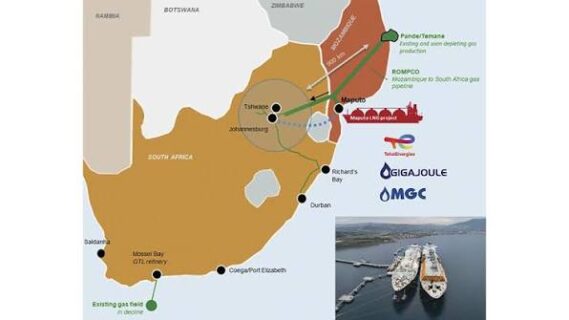
The project initially emerged as a response to declining production from Mozambique’s mature Pande and Temane gas fields. The original plan targeted more than 30 industrial customers around Maputo and Matola.
However, the project has evolved significantly since that earlier proposal. Current plans target an LNG import capacity of about 2.5 million tones annually.
Matola LNG Terminal Advances Southern Mozambique Gas Construction
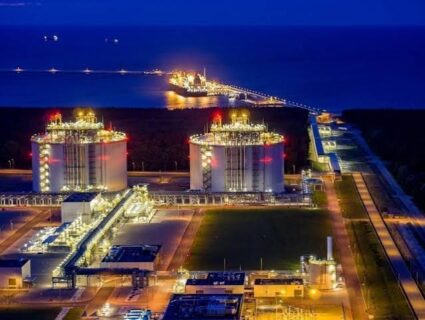
The Matola LNG terminal will center on a permanently moored FSRU at Matola harbour. The infrastructure will also include maritime facilities and a high-pressure gas pipeline.
TotalEnergies and Gigajoule are developing the terminal with Mozambican partners. The development could cost about $550 million, according to earlier project estimates.
Furthermore, the project could connect with Mozambique’s existing gas infrastructure and regional supply networks. Regasified LNG could support domestic industries while strengthening supplies to South African customers.
The terminal could also support a proposed gas-to-power development at the Beluluane Industrial Complex. Earlier plans linked the LNG infrastructure to a 2,000-MW gas-fired power plant through a nine-kilometre pipeline.
More recent reporting places the terminal within Mozambique’s wider strategy for securing gas supplies. The development could therefore provide an alternative source as existing domestic production declines.
Matola LNG Terminal Could Strengthen Regional Energy Security
The Matola project carries significance beyond Mozambique’s southern industrial corridor. Its location near Maputo provides access to existing infrastructure and South Africa’s nearby gas market.
The project could become an important LNG supply point for South African industrial consumers. Earlier plans targeted potential gas flows into South Africa through the existing regional pipeline network.
However, the development timeline has shifted from earlier targets. In 2023, TotalEnergies expected to reach FID by September 2024, but gas purchase agreements delayed progress.
Current sector information expects the terminal to begin operations around 2027. The project remains an important component of Mozambique’s emerging LNG import and gas infrastructure network.
Meanwhile, Mozambique has continued developing other major gas projects. TotalEnergies restarted construction on its $20 billion Mozambique LNG project in January 2026.
The restart has renewed attention on Mozambique’s broader gas infrastructure pipeline. It also creates stronger prospects for future integration between northern gas resources and southern demand centers.
In particular, ExxonMobil’s $1.1 billion Rovuma LNG contracts have advanced procurement for another major gas development in northern Mozambique. The awards cover subsea systems, valves and line pipe needed for the project.
That development could eventually strengthen Mozambique’s domestic gas ecosystem as new production comes online. The Matola terminal could therefore serve as an important southern infrastructure component within this expanding gas network.
The two developments remain separate projects with different commercial structures. Nevertheless, their progress highlights Mozambique’s expanding role across LNG production, import infrastructure and regional gas distribution.
Also Read: FID on Rovuma LNG Project in Mozambique put on hold until 2021
Uninterrupted supply of gas to more than 30 industries
The construction of an LNG terminal is intended to ensure the uninterrupted supply of gas to more than 30 industries in the Maputo/Matola area, and in future for export to other SADC (Southern African Development Community) countries.
Initially, the terminal will receive LNG from the international market, but later the LNG will come from Mozambique’s own reserves in the Rovuma Basin, in the far north of the country. Total is the operator of Rovuma Basin Area One, and heads the consortium that will produce LNG at plants built on the Afungi peninsula, in Palma district.
The Rovuma Basin LNG will replace the gas from Pande and Temane, which will go into decline as from 2024, as the reserves are gradually exhausted.
Construction of the terminal is expected to begin in the first quarter of 2021, with an investment of US $300m. The initiative also seeks to anticipate strategically the regional market, by creating LNG infrastructures, in order to capitalize on business opportunities.
Project Fact Sheet
Name: Matola LNG Import Terminal
Type: LNG import and regasification terminal
Location: Matola, Maputo Province, southern Mozambique
Port: Matola harbour
Estimated project cost: Approximately $550 million
Planned capacity: About 2.5 million tones of LNG annually
Core technology: Floating storage and regasification unit
FSRU function: Receives, stores and regasifies imported LNG
Pipeline infrastructure: New high-pressure gas pipeline
Power integration: Planned connection to gas-to-power infrastructure
Primary market: Mozambique’s domestic industrial and energy consumers
Potential regional market: South Africa and wider Southern African markets
Development partners: TotalEnergies, Gigajoule and Mozambican entities
Expected operations: Around 2027, according to current sector information
Strategic purpose: Strengthen gas security as mature domestic fields decline
Project Team
Developer: TotalEnergies
Development partner: Gigajoule
Mozambican partners: Local entities involved in the terminal development
LNG supplier: TotalEnergies’ international LNG portfolio
FSRU infrastructure: Project consortium and appointed marine infrastructure contractors
Gas transmission infrastructure: Matola terminal development consortium
Potential downstream power partner: Beluluane Industrial Complex stakeholders



Leave a Reply