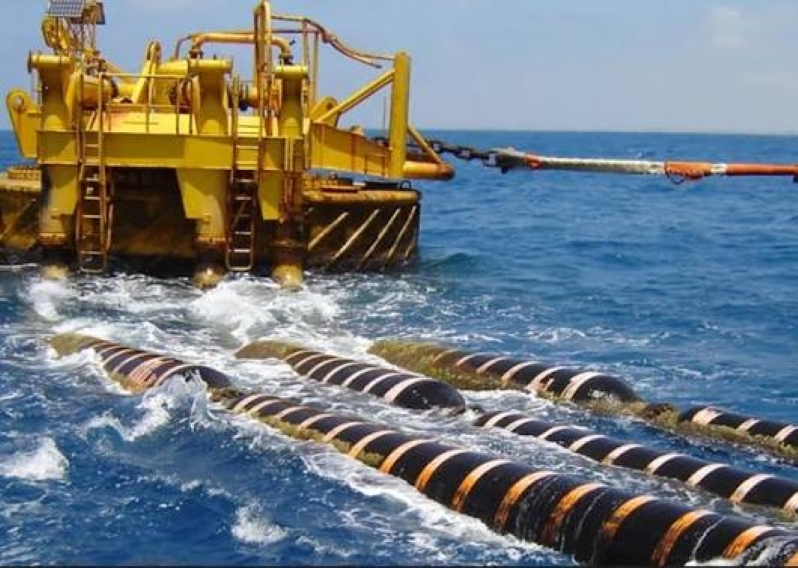
A consortium led by Microsoft and Singapore-based digital infrastructure company Lightstorm has unveiled plans to develop a new high-capacity undersea cable project linking India with Malaysia and Singapore, strengthening one of Asia’s fastest-growing digital infrastructure corridors.
The new cable, known as I-2SEA (India-International Subsea Express Alliance), is designed to support surging AI and cloud computing. It is also expected to support hyperscale data center demand across the region, further reinforcing India’s emergence as a major global digital hub.
The India-Malaysia-Singapore undersea cable project brings together Microsoft, Lightstorm, Tata Communications, Singapore Telecommunications (Singtel), ASEAN Cableship and Japan’s NEC Corporation under a joint build agreement. Financial terms have not yet been disclosed, while commercial operations are targeted for Q4 2029.
Global AI infrastructure race
The announcement reflects the accelerating race among hyperscale cloud providers to expand international digital infrastructure. This is as AI workloads grow exponentially. Additionally, while global attention has largely focused on new data centers and GPU deployments, international fiber connectivity has become equally critical. AI model training, cloud services and cross-border enterprise applications requiring vast increases in low-latency bandwidth continue to sustain this demand.

India has become one of the world’s fastest-growing digital markets. This is driven by rapid cloud adoption, expanding AI investments, rising internet penetration and government-led digitalization initiatives. Existing subsea infrastructure has also become increasingly congested as international traffic grows. This has prompted technology companies to diversify routes and increase network resilience.
The I-2SEA cable will provide a direct digital corridor between India and Southeast Asia. It will complement existing submarine cable systems. This is while improving redundancy, lowering latency and supporting future traffic growth between the two regions.
India-Malaysia-Singapore undersea cable project overview
The new India-Malaysia-Singapore submarine cable will extend approximately 3,600 kilometers.
One of its key landing points will be Machilipatnam in India’s Andhra Pradesh state. It is an emerging digital infrastructure hub where major technology companies including Meta and Alphabet have announced significant data center investments.
From there, Lightstorm plans to integrate the subsea system with its existing terrestrial fibre network spanning more than 30,000 kilometers across India. It connects over 80 data centers nationwide.
The cable is specifically designed to support AI, cloud computing and hyperscale applications. It will provide high-capacity international connectivity between India’s rapidly expanding digital economy and Southeast Asia’s established cloud ecosystem.
According to Lightstorm Chief Executive Officer Amajit Gupta, the company also plans to expand its AI and cloud network presence across India from 19 locations to 29. This is as part of its broader infrastructure strategy.
Growing importance of India’s east coast
Historically, most of India’s international submarine cable landings have been concentrated around Mumbai and Chennai. The selection of Machilipatnam is an important shift toward developing additional digital gateways along India’s east coast.
The location is also increasingly attracting investment because of its proximity to major technology campuses, industrial developments and planned hyperscale data centers. Additional landing stations improve network resilience while reducing dependence on existing cable routes.
Also noteworthy is the growing need to diversify international connectivity following repeated disruptions affecting global submarine cable routes over recent years.
Supporting the AI infrastructure boom
Demand for AI infrastructure has triggered unprecedented investment in cloud platforms, high-performance computing facilities and international fiber networks.
Large language models (LLMs), AI inference services and enterprise cloud applications require significantly greater international bandwidth than conventional internet traffic. This has made submarine cable projects an increasingly strategic component of national digital infrastructure planning.
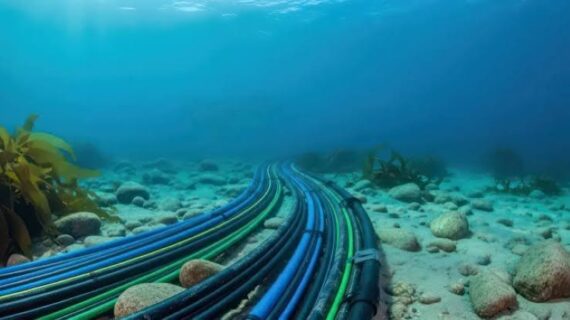
Microsoft has also been expanding its global AI infrastructure through new data centers, cloud regions and connectivity investments. This is while regional telecommunications companies continue strengthening international fiber capacity to accommodate rapidly increasing traffic.
The I-2SEA project also aligns with broader industry efforts to establish resilient, high-capacity digital corridors linking major AI markets across Asia. This is also mirrored by other projects in the region including the Vietnam-Singapore Submarine cable project.
India-Malaysia-Singapore undersea cable project finance
The consortium has not disclosed the total investment value for the India-Malaysia-Singapore submarine cable project.
Lightstorm, backed by global infrastructure investor I Squared Capital, has also separately, indicated plans to pursue an initial public offering (IPO) in India by mid-2027. This is after previously seeking a valuation of up to approximately US$1.5 billion.
I-2SEA (India–International Subsea Express Alliance) project factsheet
Status: Announced (July 2026)
Length: 3,600 km
Expected Completion: Q4 2029
Primary Route: India-Malaysia-Singapore
India Landing Station: Machilipatnam, Andhra Pradesh
Purpose: AI, cloud computing, hyperscale and international data connectivity
Lead Developer: Lightstorm
Consortium Members:
- Microsoft
- Lightstorm
- Tata Communications
- Singtel
- ASEAN Cableship
- NEC Corporation
Investment Value: Not disclosed
Key Objective: Expand resilient, high-capacity digital connectivity between India and Southeast Asia while supporting next-generation AI infrastructure.


Leave a Reply