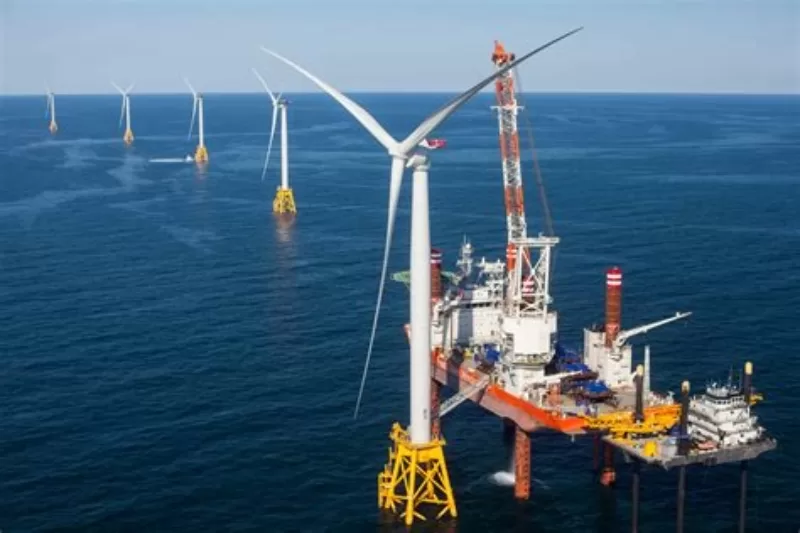
The offshore wind lease areas off the coasts of New York and New Jersey are part of planned renewable energy developments intended to generate electricity for the regional grid such as New York Bight. The projects are expected to contribute to large-scale offshore wind capacity and support residential power demand once operational.
The Bureau of Ocean Energy Management released an environmental review covering six offshore lease sites in the region. According to the assessment, the combined developments are projected to generate approximately 19.9 MWh per year and could supply electricity to nearly 2 million homes.
The review follows the lease auction held in February 2022, during which development rights for the areas were awarded. The auction generated more than $4.3 billion, representing the highest revenue recorded for a U.S. offshore energy lease sale.
Further south along the East Coast, offshore wind development activity was also been reported in Maryland, where a commercial-scale project has been announced. The development is expected to have a generation capacity of over 5 GW and could supply electricity to more than 718,000 homes.
According to project details, the Maryland development is planned to be implemented in three phases and will include wind turbine generators, offshore substations, a meteorological tower, and offshore export cable corridors. Two phases, MarWin and Momentum Wind, have received state-level approvals to proceed.
Setbacks
Despite the thriving offshore windfarm projects on the East Coast, the Trump administration is hellbent on stopping progress on its tracks. It is weighing a $1 billion payout to shutdown East Coast offshore windfarm projects. The administration is devising this new strategy in an aim to throttle the country’s offshore wind industry after its earlier plan flopped. Federal judges blocked its five previous attempts to stop wind farms under construction off the East Coast.
Senior administration officials are drafting settlement agreements that would pay nearly $1 billion to TotalEnergies. The French energy company is behind two wind farms off New York State and North Carolina. Under the terms of the proposed settlements, the Interior Department would cancel the leases in federal waters for the two projects.
These include the Attentive Energy and also Carolina Long Bay, as noted by the New York Times. On the other hand, the Justice Department would then pay more than $928 million to TotalEnergies, reimbursing the company for its winning bids in lease sales during the Biden administration.
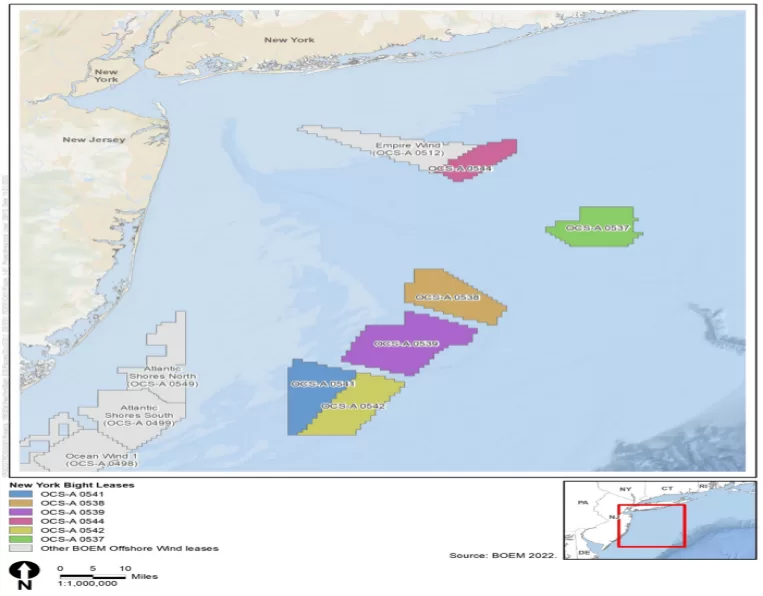
New York Bight
The six lease areas collectively referred to as New York Bight, spanning varying area sizes will be under the the following companies:
• Community Offshore Wind
• Invenergy Wind Offshore
• Attentive Energy
• Vineyard Mid-Atlantic
• Atlantic Shores Offshore Wind Bight, and
• Bluepoint Wind
The total lease area is set at 488,000 acres, with only 27 acres designated “ not-developable”.
After plan submissions by the respective companies was done in June this year, the environmental review done by BOEM was completed on Monday. The review will be published in the Federal Register on the 25th of October.
The review stated that there could be impact to marine life though predictions indicated they would only be temporary. The National Oceanic and Atmospheric Administration also noted that marine line would not be “jeopardized” despite there being indications of adverse effects to the ocean life in the areas where development has been proposed.
Read Also:
New York City launches construction of the largest dedicated offshore wind port in the USA
$86m Sunrise Wind Offshore project to be built in Upstate New York
The Atlantic Shores Projects 1 and 2: New Jersey’s first offshore wind project
Who has the largest share of New York Bight?
Among the project managers getting the largest share of the New York Bight is Community Offshore Wind. It got the lease of over 125,000 acres and is expected to generate up to 1300 MW of power in installation capacity. This will serve over 485, 000 homes.
They are expected to continue submitting progress reports to BOEM every six months until the Construction and Operations Plans (COP) are approved. This applies to all the other lessees in the project. The aim of the progress reports is to ensure that everyone involved in the project is fully on board.
This is not to be understated as The Atlantic Shores Projects in New Jersey that got their COP earlier this month might be facing lawsuits from environmental justice groups and non profit organizations like Save LBI.
The project is a pivotal in the “30 GW of offshore wind energy by 2030” plan by the US government.
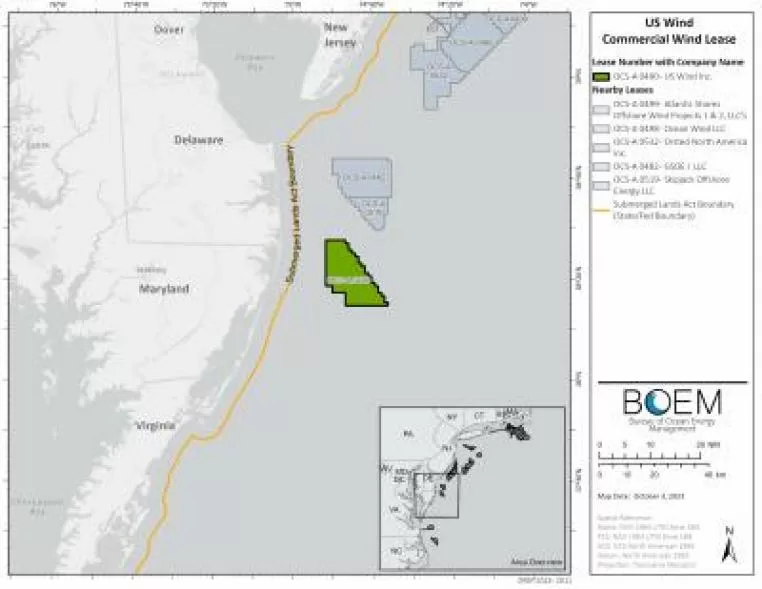
Offshore wind energy in Maryland
Further down from New Jersey, along the east coast, the state of Maryland also saw the announcement of the tenth commercial-scale offshore wind energy project in the US in September. The project manager notes that over 5 GW of clean renewable wind energy will be generated. This will be able to power over 718,00 homes. Other upsides of the project will be over 2600 jobs created annually over a seven year period. The project will be done in three phases and will include 144 wind turbine generators, four offshore substations, one met tower, and four offshore export cable corridor. Two of the three phases – MarWin and Momentum Wind, already have their “go-ahead” greenlight from the state.
Project Factsheet
- Project Name: New York Bight Offshore Wind Projects
• Location: Offshore areas between New York and New Jersey, United States
• Total Lease Area: ~488,000 acres
• Project Type: Offshore wind energy developments
Timeline
- February 2022: Lease auction completed ($4.3 billion raised).
• June (recent year): Developers submitted project plans.
• October 25: Environmental review to be published in the Federal Register.
• Current Phase: Environmental review completed; permitting ongoing.
Site & Scale
- Total Lease Area: 488,000 acres (27 acres non-developable).
• Estimated Output: ~19.9 MWh annually (reported estimate).
• Power Supply: Up to 2 million homes.
• Project Scope: Six offshore lease areas collectively known as New York Bight.
Project Teams (Lease Holders)
- Community Offshore Wind
• Invenergy Wind Offshore
• Attentive Energy
• Vineyard Mid-Atlantic
• Atlantic Shores Offshore Wind
• Bluepoint Wind
Regulatory Authorities
- Bureau of Ocean Energy Management (BOEM) – Environmental review and leasing authority.
• National Oceanic and Atmospheric Administration (NOAA) – Marine impact assessment.
Infrastructure Components
- Offshore wind turbines across six lease areas.
• Offshore substations and transmission systems.
• Export cable corridors to onshore grids.
• Meteorological monitoring systems.
Strategic Objectives
- Expand U.S. offshore wind capacity.
• Support regional electricity demand in New York and New Jersey.
• Contribute to national clean energy targets (30 GW offshore wind by 2030).
• Reduce reliance on fossil fuels.
Environmental Considerations
- Temporary impacts on marine ecosystems expected.
• NOAA indicates no long-term jeopardy to marine life.
• Ongoing monitoring and regulatory oversight required.
Regional Expansion: Maryland Offshore Wind
- Capacity: 5+ GW.
• Power Supply: 718,000+ homes.
• Phases: Three (including MarWin and Momentum Wind – approved).
• Infrastructure: 144 turbines, 4 substations, met tower, export cables.
• Jobs: ~2,600 annually during construction.
Setbacks & Policy Risks
- Proposed ~$1 billion federal payout to halt some offshore wind projects.
• Targeted projects include developments linked to TotalEnergies.
• Five prior federal attempts to stop projects blocked by courts.
• Potential lease cancellations could disrupt sector growth.
Current Status
- Environmental review completed by Bureau of Ocean Energy Management.
• Developers progressing toward Construction and Operations Plans (COP).
• Sector facing regulatory uncertainty amid federal policy shifts.
Leave a Reply