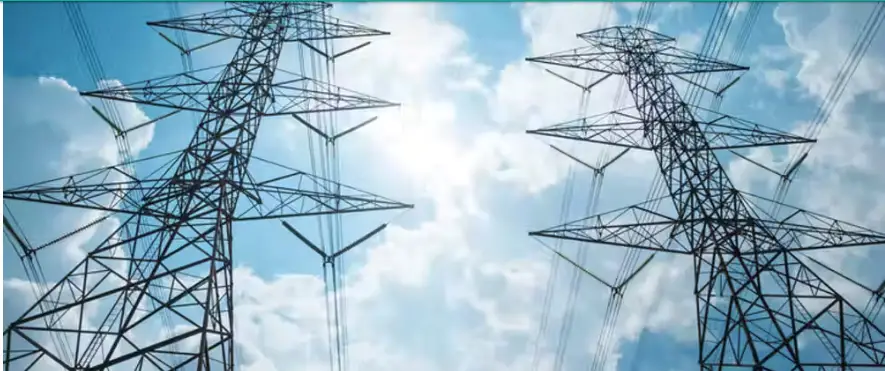
The Shawnee-Walker 69-kV Transmission Line Project in eastern Pennsylvania is facing increasing challenges as FirstEnergy’s transmission affiliate confronts mounting opposition from local officials and residents over transparency, property rights, and the project’s long-term necessity.
Recent opposition has come mainly from a bipartisan group of Pennsylvania lawmakers who argue the project suffers from transparency issues, insufficient public engagement, and unresolved concerns over property rights and environmental impact. While some officials focus on procedural fairness and oversight, others have taken a firmer stance, calling for outright opposition in its current form.
Originally targeted for completion by the end of 2025, the approximately 30-mile transmission line—designed to connect the Shawnee Substation in East Stroudsburg with the Walker Substation in Dingman Township—has seen its timeline extended by several years amid regulatory delays and sustained community resistance.
Grid Reliability Project Faces Multi-Year Delay
The project was developed in response to widespread power outages caused by severe winter storms in 2018, which exposed weaknesses in eastern Pennsylvania’s aging distribution network. According to project developers, the new transmission line is intended to improve reliability for roughly 13,000 customers across Pike and Monroe counties by adding redundancy and strengthening system capacity.
However, updated regional utility projections now indicate that the line will not enter full service until 2028, marking a significant delay from earlier expectations.
Community Opposition Grows Across Pike County
Opposition to the project has intensified over the past year, particularly in municipalities along the proposed route, where residents and local officials have raised concerns about land use, environmental impacts, and communication from the developer.
Township leaders in affected areas have reported gaps in formal outreach regarding easements and zoning requirements, while residents have expressed concern over the potential impact of the transmission corridor on property values and rural landscapes.
Several local governments have formally opposed the proposed routing, calling for alternative alignments that would avoid residential areas and reduce environmental disruption.
Lawmakers Raise Transparency and Eminent Domain Concerns
State-level opposition has also escalated, with Pennsylvania lawmakers publicly criticizing the project’s planning process. In a joint statement issued in early 2026, legislators raised concerns about transparency and warned against the use of eminent domain to acquire private property for the transmission corridor.
Additional lawmakers have echoed concerns about unresolved property restrictions, potential environmental risks, and the adequacy of public engagement throughout the planning process. State officials have also called for expanded regulatory review and greater involvement from federal energy and environmental agencies.
Dispute Over Project Necessity
While FirstEnergy maintains that the transmission line is essential for long-term grid reliability and future load growth, critics argue that the project’s justification has not been sufficiently demonstrated.
Opponents have suggested that upgrading existing distribution infrastructure could provide a less disruptive alternative, while others question whether the project is being positioned to accommodate anticipated industrial demand growth, including emerging energy-intensive technologies.
A Project at the Center of Broader Infrastructure Tensions
First proposed following post-storm grid assessments in the late 2010s and early 2020s, the Shawnee-Walker project was intended to address long-standing reliability challenges in a region heavily dependent on aging infrastructure.
Now, several years into development, the project has become emblematic of a broader national tension between the need to modernize electric grids for future demand and increasing local resistance to large-scale infrastructure projects routed through residential and environmentally sensitive areas.
With construction timelines pushed further into the decade and opposition continuing to grow, the Shawnee-Walker transmission line remains stalled between regulatory uncertainty, political scrutiny, and community resistance.
Feasibility study on the Shawnee-Walker Transmission line project
When the Shawnee-Walker Transmission Line was first advanced through feasibility studies, developers presented a relatively structured and near-term construction plan. The approximately 30-mile project was designed to follow utility corridors, parallel existing roadways, and use established rights-of-way wherever possible to reduce disruption to property owners and environmentally sensitive areas.
At the time, engineers indicated that the required right-of-way would generally be about 60 feet wide, with possible expansion in steeper terrain to accommodate engineering and safety requirements. The design also included provisions for tree clearance zones and temporary access roads during construction, which field representatives were expected to coordinate directly with landowners.
Developers initially projected a construction start date around mid-2023, with completion targeted for 2025.
While the Shawnee-Walker transmission project in Pennsylvania faces growing local opposition and regulatory scrutiny, other major grid upgrades—such as the Bay Area 230 kV Underground Line Project in Northern California—are advancing as utilities push to strengthen reliability through large-scale infrastructure investment.
Fact Sheet: Shawnee-Walker 69-kV Transmission Line Project
Project Overview
- Name: Shawnee-Walker 69-kV Transmission Line
- Developer: Mid-Atlantic Interstate Transmission (MAIT), a FirstEnergy affiliate
- Location: Eastern Pennsylvania (Pike and Monroe Counties)
- Length: Approximately 30 miles
- Purpose: Improve electric grid reliability and add transmission redundancy in the region
Route & Design
- Connects Shawnee Substation (East Stroudsburg) to Walker Substation (Dingman Township)
- Designed to use:
- Existing utility corridors where possible
- Parallel roadway alignments
- Established rights-of-way
- Right-of-way width: Typically 60 feet, with expansion in steep terrain
- Includes vegetation management and tree clearance zones for reliability protection
Original Timeline
- Construction start (planned): 2023
- Completion target (initial): 2025
Revised Timeline
- Current expected completion: 2028
- Delays attributed to:
- Regulatory and permitting challenges
- Municipal opposition
- Landowner and easement disputes
- Extended planning and routing review
Project Background
- Developed after severe winter storms in 2018 exposed grid weaknesses in eastern Pennsylvania
- Intended to reduce outages and improve system resilience
- First formally advanced through feasibility and routing studies in the early 2020s
Key Components
- New 69-kV transmission line (30 miles)
- Upgrades to four substations:
- Shawnee
- Bushkill
- Dingmans Ferry
- Walker
Current Issues & Opposition
- Concerns from residents and municipalities regarding:
- Property impacts and land use
- Environmental sensitivity (Pocono region)
- Transparency in routing and easement communication
- Several township-level resolutions opposing current routing
- State lawmakers have raised concerns over:
- Use of eminent domain
- Lack of public engagement
- Project justification
Project Team
Mid-Atlantic Interstate Transmission (MAIT) — Project developer; routing, engineering, and construction planning
FirstEnergy Transmission LLC (FET) — Transmission platform; oversight and regulatory coordination
FirstEnergy Corp. — Parent company; financing and corporate governance
Brookfield Super-Core Infrastructure Partners — Equity investor; project financing support
PJM Interconnection — Regional grid operator; system approval and reliability oversight
Pennsylvania Public Utility Commission (PUC) — State regulator; permitting and compliance oversight
Local Townships (Dingman & Delaware) — Land-use review and community representation
Pike County Light & Power — Regional utility stakeholder; local system integration support
Substation Operators (Shawnee & Walker) — Endpoint infrastructure integration and upgrades
Project Status (2026)
- Project remains active but delayed
- Ongoing regulatory review and local disputes
- No confirmed construction start date



Leave a Reply