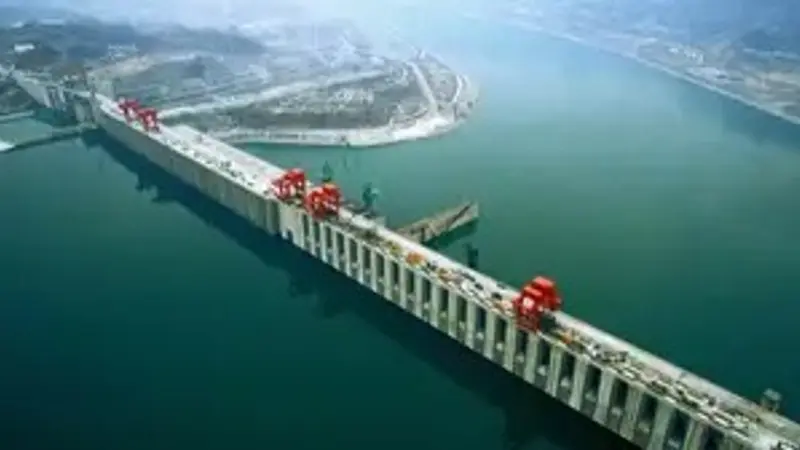
China’s and world’s largest Brahmaputra Dam Project, officially known as the Yarlung Zangbo Hydropower Project, continues to advance as one of the most ambitious renewable energy developments ever undertaken. While major construction activities are now moving forward following the project’s formal launch in 2025, the latest developments in 2026 have centered on detailed engineering, tunneling preparations and implementation planning for the massive five-station hydropower cascade in Tibet. The project formally broke ground in July 2025 and is being developed through a newly established state-owned enterprise, China Yajiang Group, created specifically to deliver and operate the scheme.
Once completed, the US$170 billion scheme is expected to become the world’s largest hydropower project, with a planned generation capacity of approximately 60GW and annual electricity output of around 300 billion kWh – more than three times that of the Three Gorges Dam – cementing its role as a cornerstone of China’s long-term clean energy and carbon neutrality strategy. China is also fast-tracking the development of other hydro projects in the country including the Lawa Hydropower Station in southwest China as part of its long-term clean energy strategy.
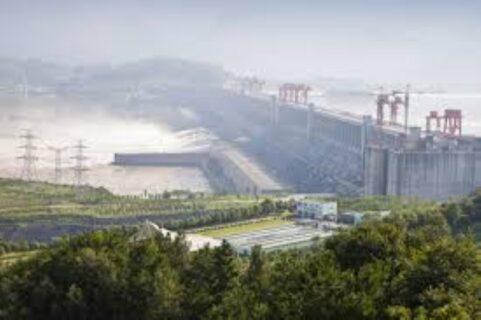
Yarlung Zangbo Hydropower Project (Brahmaputra Dam Project) Fact Sheet
Alternative Name: Medog Hydropower Project
Location: Nyingchi (Nyingtri), Tibet Autonomous Region
River: Yarlung Zangbo (Brahmaputra)
Developer/Operator: China Yajiang Group Co., Ltd.
Project Type: Hydropower Cascade Development
Number of Stations: Five cascade hydropower stations
Estimated Investment: CNY 1.2 trillion (US$168 billion)
Installed Capacity: Estimated 55-70 GW
Expected Annual Generation: 200-300 billion kWh
Construction Start: July 2025
Target Commissioning: Early 2030s
Strategic Importance: World’s largest hydropower project by investment and planned generating capacity
Key Engineering Feature: Diversion tunnels exploiting a 2,000 m elevation drop over roughly 50 km in the Yarlung Tsangpo Grand Canyon
June 2026 Status: Detailed engineering, organizational development, and project execution planning continue under China Yajiang Group following its establishment and operational ramp-up.
Chinese Officials Approve World’s Largest Hydropower Project
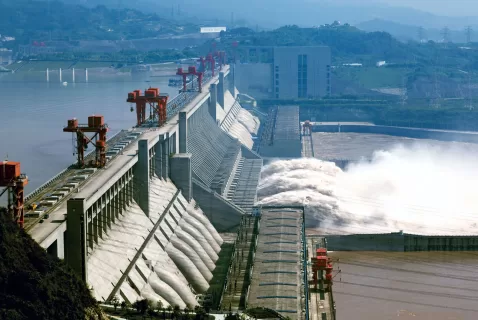
Reported December 27, 2024 – The world’s largest hydropower project could begin construction pretty soon following approval by Chinese officials. The ambitious project will be located on the eastern rim of the Tibetan Plateau. The dam which will produce 300 billion kWh of electricity every year, poses a problem for nations downstream including India and Bangladesh. Located in the lower reaches of the Yarlung Zangbo River, the dam would produce more than triple the capacity of the Three Gorges Dam, the world’s largest dam currently, located in central China which has a capacity of 88.3 billion kilowatt-hours.
Also Read: The World’s Largest Offshore Solar Farm in China: Covers Over 1,200ha of Ocean Surface
Total Cost
The total estimated cost for the project currently stands at US$137 billion. It will play a key role in meeting the nation’s carbon peaking and carbon neutrality goals. Furthermore, the project will stimulate related industries including engineering whilst creating job opportunities for Tibetan citizens. While the previously mentioned countries, India and Bangladesh, have expressed concern over the dam impacting downstream water supplies, China has argued that it will not have a major impact on the environment or on the water supplies. Authorities have not indicated how many people the Tibet project would displace and how it would affect the local ecosystem, one of the richest and most diverse on the plateau.
Project Overview
Project Name: The Brahmaputra Dam Project
Total cost: US$137 billion
Location: eastern rim of the Tibetan Plateau
Predicted capacity: 300 kilowatt-hours per year
Also Read: World record for offshore wind turbine broken again by China
Challenges with the World’s Largest Hydropower Project
China has recognized that there are also several engineering challenges that it faces whilst constructing the Brahmaputra Dam. The dam sits on a section of the Yarlung Zangbo that falls a hefty 2,000 metres within a short span of 31 miles. Whilst this offers huge hydropower potential, the site is located along a tectonic plate boundary where earthquakes frequently occur. According to Xinhua, the state official news agency, there have been thorough geological explorations and technical advancements. Further, a solid foundation has been laid for the science-based, secure and high-quaity development of the project.





Leave a Reply