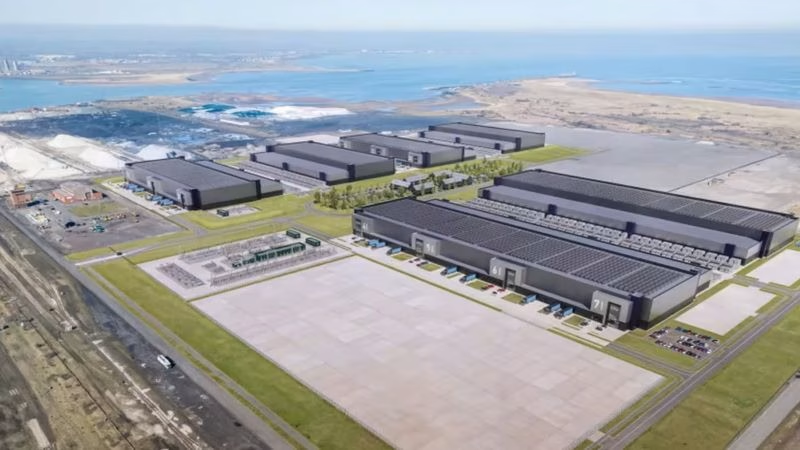
The Teesside Data Center project continues advancing through planning and infrastructure coordination stages in northeast England. Moreover, the proposed hyperscale development remains central to regional artificial intelligence and cloud computing expansion plans. The project targets the former Redcar steelworks site, where developers aim to establish one of Europe’s largest digital infrastructure campuses.
As of 2026, stakeholders continue reviewing infrastructure integration, land coordination, and power delivery requirements for the Teesside Data Center project. Although developers secured outline planning approvals earlier, they still require additional detailed approvals before construction can begin. Consequently, project teams continue engaging regulators, infrastructure providers, and regional authorities throughout the development process.
The Teesside Data Center project forms part of the wider Teesworks regeneration programme across northeast England. Furthermore, the redevelopment strategy aims to transform former industrial land into a technology, energy, and infrastructure investment hub. Regional leaders continue promoting the area because it offers grid connectivity, industrial utility systems, and large-scale development capacity.
Industry analysts expect strong demand for hyperscale computing facilities throughout the next decade. Therefore, Teesside continues attracting digital infrastructure interest because of its industrial positioning and energy availability. In addition, the region provides brownfield redevelopment opportunities that support faster delivery compared with undeveloped greenfield locations.
Teesside Data Center project supports AI and hyperscale growth
The Teesside Data Center project will support artificial intelligence processing, machine learning, and high-performance computing operations. Consequently, developers continue evaluating the site for long-term hyperscale infrastructure deployment linked to growing digital capacity requirements.
Earlier reports connected Google to discussions surrounding the proposed development. However, stakeholders have not officially confirmed final operational commitments or full construction timelines. Nevertheless, planning authorities continue supporting infrastructure assessments tied to the wider masterplan strategy.
Developers selected the former Redcar steelworks site because it provides industrial-scale land availability and energy infrastructure access. Additionally, the location offers potential subsea fibre connectivity routes supporting high-capacity data transmission across Europe and international markets.
The project also overlaps with proposed hydrogen and carbon capture developments across sections of the Teesworks regeneration zone. Therefore, planners continue coordinating land allocation and infrastructure integration to prevent operational conflicts between major industrial projects.
Teesside Data Center expansion aligns with Wilton infrastructure growth
The Teesside Data Center project aligns closely with the recently announced Wilton International Data Centre Phase 1 construction project. That project will deliver AI-ready infrastructure capacity using existing industrial utility systems at Wilton International.
Both developments strengthen Teesside’s position within the UK’s expanding digital infrastructure market. Furthermore, they demonstrate how industrial regions increasingly support hyperscale computing and artificial intelligence investment outside traditional technology clusters.
Regional authorities continue supporting digital infrastructure projects because they expect strong economic and employment benefits. Consequently, Teesside could emerge as a leading UK destination for hyperscale data center construction and AI infrastructure expansion.
While the Béthune site is primarily known for Nebius’s massive 240MW AI facility (redeveloping a former Bridgestone plant), it serves as a critical continental landing point for the “North Sea Ring” of infrastructure. By connecting the industrial heart of Teesside to the Béthune/Lille corridor, Google and other major cloud providers create a low-latency “digital bridge” between the UK and the European Union, ensuring that high-performance AI workloads can be synchronized seamlessly between these two massive brownfield-to-digital redevelopments.
October 14, 2025:
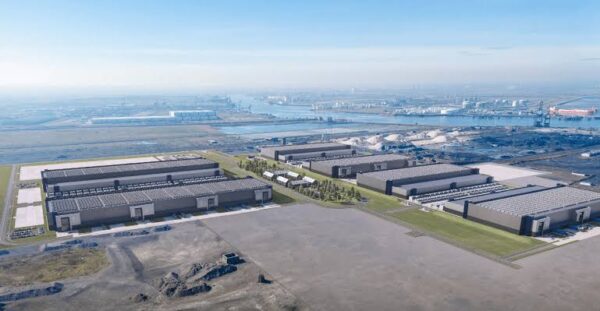
The Teesside Data Centre Project is a proposed large-scale digital infrastructure development envisioned for the former Redcar steelworks site in Teesside. Google was reported to be in advanced discussions with the UK government and Teesworks regarding its potential development, with the facility expected to become one of Europe’s largest digital infrastructure hubs.
The project, forming part of the wider Teesworks regeneration initiative and the region’s plan to establish an “AI Growth Zone,” had received initial planning approval for nearly 500,000 square metres of development. It was projected to employ up to 700 staff and attract substantial international investment, contributing to economic growth in the North East.
However, the proposed development faced challenges, as the same site had also been identified for a blue hydrogen and carbon capture project by BP. The two developments were deemed physically incompatible due to conflicting infrastructure requirements and safety constraints associated with hydrogen production.
During this period, Google had been expanding its global data center portfolio with substantial investments, including the Visakhapatnam AI Data Centre in India. These developments positioned the company as one of the world’s leading investors in advanced data infrastructure. Other than the Teesside data center project, Britain is making advances in other data center projects such as Scotland’s data center clusters by ILI Group, expected to be one of the world’s largest. However the construction of the Teesside data center seems to have ousted the construction of the Teesside hydrogen plant by BP. The plant was to be constructed in the same land as the data center but BP has scrapped the plans off owing to the clash.

Reported on September 17, 2025
Google has been linked to be in talks with the UK government over the construction of its 5 million sq ft data center in Teesside. The data center however is facing numerous challenges. One of the major being other proposals of what the plant should be used for. The ambitions of both parties to strike a deal by Christmas is at risk following a cabinet row on the field’s plans. Energy secretary Ed Miliband is backing BP’s proposal to construct a hydrogen plant instead.
However, reports note that the tech giant is in talks with Teeswork, which is behind a 4,500 acre brownfield regeneration project. In July 2025, reports emerged that the UK government was planning to convert the former steel site in Teesside into a data center project, aiming to establish its second “AI Growth Zone.” Moreover, it was said that the Department for Science, Innovation and Technology was closely involved in negotiations. They did not mention the major investor linked to the project though. Other than Europe’s largest data center, Google is also linked with Asia’s largest data center in India. The project also aligns as being Europe’s largest with its capacity expected to reach 6 gigawatts by 2030.
The Challenges Facing Implementation of Teesside Data Center Project
Despite all signs indicating a positive trajectory on Teesside data center project, there are hurdles that still emerge. One of the main challenges is BP’s alternative proposal to use the location as blue hydrogen plant. Moreover, they also aim to use it as carbon capture plant. The company wants to use part of the land to build the blue hydrogen plant, H2 Teesside. Blue hydrogen uses natural gas as part of its production process, but is considered a low-carbon form of energy.
However, Teesworks Limited, along with another group, the South Tees Development Corporation, objected to the plan. They noted that the proposed ‘inner zone’ for hazardous installations would impose planning restrictions. This would make it impossible to build a data center nearby, something that would be required as part of BP development. In August, the data center won planning permission from Redcar and Cleveland Council. This meant a second, more detailed application will be required. At that time, no end user was named.
Project Fact Sheet
Project name: Teesside Data Center project
Location: Former Redcar steelworks site, Teesside, United Kingdom
Project type: Hyperscale data center and AI infrastructure campus
Proposed scale: Approximately 5 million square feet
Current stage: Planning and infrastructure review phase
Main purpose:
- Artificial intelligence infrastructure
- Cloud computing operations
- High-performance computing
- Digital storage and processing
Wider programme: Teesworks regeneration initiative
Infrastructure advantages:
- Large-scale grid connectivity
- Brownfield redevelopment land
- Existing industrial utility systems
- Potential subsea fibre connectivity
Key development challenge:
Coordination with hydrogen and carbon capture projects
Project Team
Proposed occupier/investor: Google
Regeneration authority: South Tees Development Corporation
Site regeneration partner: Teesworks Limited
Local planning authority: Redcar and Cleveland Borough Council
UK government stakeholder: Department for Science, Innovation and Technology
Energy infrastructure stakeholder: BP
Hydrogen infrastructure stakeholder: H2 Teesside
Regional development stakeholders: Tees Valley regional authorities




Leave a Reply