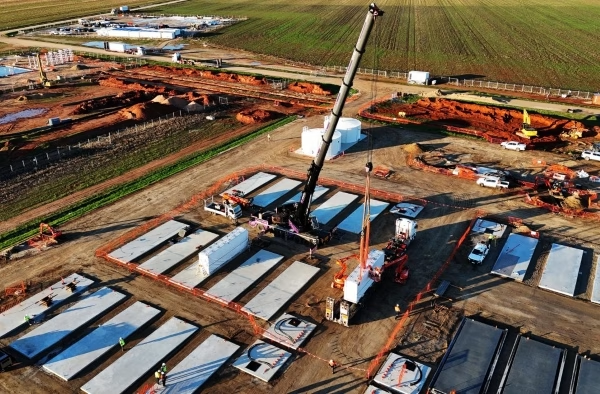
Koorangie Energy Storage System is now fully operational in Victoria after completing a major grid-scale deployment that strengthens renewable energy integration across the Murray River Renewable Energy Zone. The $400 million battery project delivers 185MW/370MWh of storage capacity and supports electricity reliability across Australia’s National Electricity Market. The facility now imports and exports power at full capacity, improving system stability while enabling greater renewable energy penetration in a constrained grid environment.
The project, located near Kerang in north-west Victoria, was developed to address rising variability in solar and wind generation. It uses advanced grid-forming inverter technology to provide both energy storage and system strength services. As a result, the facility helps reduce grid congestion and supports the dispatch of renewable energy during peak demand periods.
Edify Energy delivered the project in partnership with infrastructure investor Sosteneo. The battery system also integrates long-term commercial arrangements, including a System Support Agreement with the Australian Energy Market Operator (AEMO) and a long-term offtake agreement with Shell Energy. The system can power approximately 350,000 homes for up to two hours.
The project reached commercial operations in July 2025 after completing commissioning earlier in the year. It has since been operating at full nameplate capacity and contributing to grid stability services in Victoria’s renewable energy network.
Koorangie Energy Storage System strengthens Victoria’s renewable construction pipeline
Koorangie Energy Storage System has become a benchmark for utility-scale battery construction in Australia’s energy transition. The facility demonstrates how large batteries now function as core infrastructure rather than supporting assets in renewable projects.
The system is equipped with 100 Tesla Megapack units that enable fast-response grid balancing and frequency control services. It also supports the integration of additional renewable generation across the Murray River region by increasing hosting capacity in the transmission network.
Moreover, the project aligns with Victoria’s long-term storage expansion targets as the state accelerates renewable energy adoption. The operational performance of the system confirms the viability of grid-forming batteries in stabilizing inverter-heavy power systems.
Industry stakeholders increasingly view Koorangie as part of a broader shift toward co-located storage and renewable generation infrastructure. This shift is influencing project design across Australia, including large hybrid developments such as solar-plus-battery energy hubs.
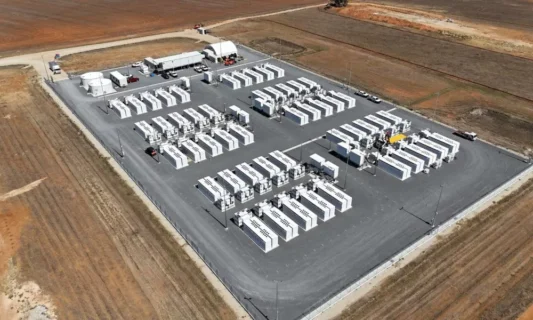
Koorangie Energy Storage System supports grid services and market transformation
Koorangie Energy Storage System plays a critical role in supporting frequency regulation, peak shaving, and renewable dispatch optimization. Consequently, it improves reliability in a grid increasingly dominated by variable renewable energy sources.
The facility operates under a long-term 20-year System Support Agreement with AEMO, ensuring consistent delivery of system strength services. Additionally, a 15-year commercial offtake agreement with Shell Energy underpins its revenue structure and operational stability.
Furthermore, the project enhances energy market efficiency by absorbing excess daytime renewable generation and releasing it during evening peak demand periods. This function directly reduces curtailment risks associated with high solar penetration.
As Australia expands renewable generation capacity, projects like Koorangie are becoming essential to maintaining grid balance. Therefore, its operational status marks a significant milestone in Victoria’s transition toward a high-renewables electricity system.
This project mirrors projects such as Bulli Creek solar-battery project redesign which highlights broader transition across Australia’s renewable construction sector, where developers increasingly prioritize large-scale storage infrastructure to stabilize electricity supply and improve project economics.
More on the Koorangie Energy Storage System (KESS)
KESS is located near Kerang in the Gannawarra region and is now equipped with 100 Tesla Megapacks capable of powering 350,000 homes for two hours.
The battery energy storage system (BESS) project is set to help in overcoming grid constraints – a known issue of contention in the region.
Additionally, KESS will use advanced grid-forming inverters. This technology was once only possible through traditional generators. This makes KESS not just a BESS, but a backbone for Victoria’s energy grid.
Team Behind Koorangie Energy Storage System
Edify led the project from start to finish, with Consolidated Power Projects on construction. Financial support came from CBA, DNB, and BNP Paribas, while Sosteneo SGR Spa owns the energy asset on behalf of its clients.
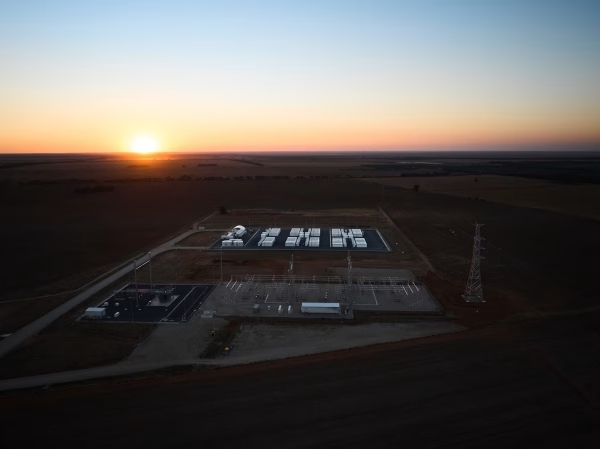
The KESS BESS project also signed a 20-year System Support Agreement with AEMO and a 15-year offtake agreement with Shell Energy. With long-term commitments from AEMO and Shell Energy, the system is set to provide grid support and clean power for decades to come.
Project Impact
At the project’s peak, more than 520 construction jobs were created. Employment opportunities continue to suffice with start of the operational phase.
Edify also worked closely with the Kerang community and Gannawarra Shire Council to ensure the project made impact to the community in a positive way. Additionally, lower energy costs, creation of local business opportunities, and a stronger electricity grid are already emerging benefits.
Executive commentary
John Cole, Executive Chairman of Edify, said the following, “KESS shows what’s possible when advanced technology meets long-term vision. It’s our third project in Kerang, and our twelfth utility-scale energy development. But more than that, it’s a shared win for industry, communities, and the climate.”
Energy Minister Lily D’Ambrosio also added that projects like KESS are exactly what Victoria needs.
Also read: Making Battery Energy Storage Systems (BESS) construction projects bankable
Project Fact Sheet
Project Name: Koorangie Energy Storage System (KESS)
Location: Near Kerang, north-west Victoria, Australia
Project Type: Utility-scale battery energy storage system (BESS)
Project Cost: Approximately US$400 million
Storage Capacity: 185MW / 370MWh
Technology: Lithium-ion battery with Tesla Megapack units
Grid Technology: Grid-forming inverters (virtual machine mode)
Grid Connection: AusNet 220kV transmission network
Commercial Operations Date: July 2025
Project Developer: Edify Energy
Investment Partner: Sosteneo Infrastructure Partners
System Support Agreement: 20-year agreement with AEMO (125MW system strength services)
Offtake Agreement: 15-year contract with Shell Energy
Energy Output Capability: Powers ~350,000 homes for up to 2 hours
Regional Impact: Increases renewable hosting capacity in Murray River REZ by ~300MW
Primary Function: Grid stability, peak demand support, renewable energy integration
Project Team
Project Developer: Edify Energy
Infrastructure Investor / Owner: Sosteneo Infrastructure Partners
EPC Contractor: Consolidated Power Projects (CPP)
Technology Provider: Tesla Energy (Megapack lithium-ion battery systems)
Grid Operator / System Authority: Australian Energy Market Operator (AEMO)
Transmission Network Operator: AusNet Services (220kV connection infrastructure)
Energy Offtaker: Shell Energy Australia
System Support Partner: AEMO System Strength Services Program
Regulatory Authorities: Victorian Department of Energy, Environment and Climate Action (DEECA) and VicGrid
Local Government Stakeholder: Gannawarra Shire Council
Financial Institutions: Commercial lenders including Major Australian and international banks supporting infrastructure financing
Community Stakeholders: Local regional communities around Kerang and the Murray River Renewable Energy Zone
Leave a Reply