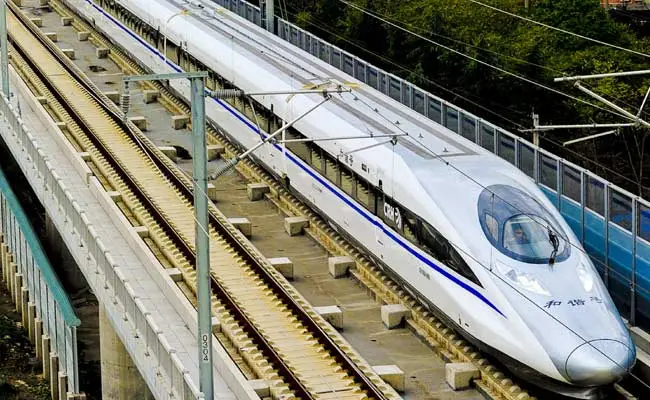
The Bangkok–Nong Khai High-Speed Railway is a 610km, THB 520+ billion (~US$15+ billion) two-phase national high-speed rail line being developed jointly by the Thai government and China under the Belt and Road Initiative, running from Krung Thep Aphiwat Central Terminal in Bangkok through Nakhon Ratchasima to the Laos border at Nong Khai — where it will connect to the Laos-China Railway and ultimately to Kunming, China — forming a critical segment of the Pan-Asian Railway Network. Designed for 250 km/h passenger operations and dual passenger/freight use, the full line will serve 11 stations across Northeast Thailand. Phase 1 has reached only 52.4% overall completion as of March 2026 — 28.2 percentage points behind its own programme target — with two of the 14 civil works contracts not yet started, the 2030 service opening acknowledged by the State Railway of Thailand as “very tight”, and Phase 2 civil works tenders still expected to be issued before construction can begin, underscoring how the cascading delays on Phase 1 are compressing the timeline for realising Thailand’s full strategic connectivity ambitions.
Project Overview
Phase 1 — Bangkok to Nakhon Ratchasima:
Route length: 253km
Total budget: THB 179 billion (~US$5.3 billion)
Stations (6): Krung Thep Aphiwat Central Terminal, Don Mueang, Ayutthaya, Saraburi, Pak Chong, Nakhon Ratchasima
Construction commenced: December 21, 2017
Overall completion: 51.74% (as of January 2026)
Stalled contracts: Contract 4-1 (Bang Sue–Don Mueang; suspended pending CP Group agreement); Contract 4-5 (Ban Pho–Phra Kaeo; Ayutthaya heritage redesign underway)
Revised operational target: 2028 (previously 2020, then 2023, 2025, 2026, 2027)
Travel time Bangkok–Nakhon Ratchasima: 1 hour 40 minutes; projected fare: THB 530
Phase 2 — Nakhon Ratchasima to Nong Khai:
Cabinet approval: February 4, 2025; total budget: THB 341.35 billion (~US$10 billion); construction 2025–2032
Route length: 357.12km
Stations (5): Bua Yai, Ban Phai, Khon Kaen, Udon Thani, Nong Khai
Civil works tenders: 7 civil engineering contracts + 1 depot; tender invitations September 2025; construction from 2026; target operations: 2031
Na Tha Transshipment Centre: THB 5.69 billion; Nong Khai province; facilitates gauge transfer between Thai 1m gauge and Laos-China 1.435m standard gauge
Phase 2 EIRR (combined Phase 1+2): 13.23%
Phase 3 — Nong Khai to Vientiane:
Status: Not yet confirmed
Project Team
Client/Developer: State Railway of Thailand (SRT)
SRT Governor: Veeris Ammarapala
Thai Prime Minister: Paetongtarn Shinawatra (successor governments since project inception)
Thai Minister of Transport: Suriya Juangroongruangkit (current)
Chinese partner: National Development and Reform Commission (NDRC); China Railway International Co. Ltd
Phase 1 civil works contractors (Chinese state-owned firms): CREC, CRCC, and other Chinese SOEs for systems (electrical, signaling, communications, track-laying, rolling stock)
Phase 1 Three Airports link private partner: CP Group consortium (suspended pending revised JV agreement)
Rolling stock: Fuxing Hao CR300AF (250 km/h EMU trains)
Operations model: Thai government responsible for investment and civil works; China contributes technology, design, tunnel/bridge construction, and operates for first 3 years; joint responsibility years 3–7
Joint Committee meeting frequency: Quarterly (30th meeting held 2025)
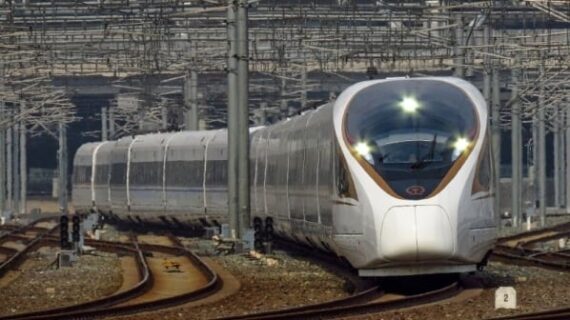
Published 5th February 2025: The second phase of the Nakhon Ratchasima-Nong Khai High-Speed rail project, at a cost of US$10 billion, in Thailand has officially been greenlit for construction.The project, stretching 357.12 kilometers was approved by cabinet on Tuesday this week with the government assuming full financial responsibility over the plan. Construction of the project is expected within the year once tenders have been assigned to contractors. What’s more, the project will connect Thailand to both Laos and China, allowing fast and safe travel for citizens. Moreover, this strategic connection by the governments involved will increase trading ties between the nations.
Also Read Morocco’s $9.6 Billion Rail Investment Plan Unveiled
Progress on the first phase of the Thailand High-speed rail project
On 11th July 2017, China and Thailand agreed to construct the project that will connect Bangkok to Nong Khai. The State Railway of Thailand was appointed to head the project. The first phase of the project broke ground later in the year and was expected to be completed in 2020. This was not the case as there have been hurdles involving the pandemic, financing and liquidity problems with contractors. Additionally, there was a controversy surrounding the construction of the Ayutthaya station. Conservationists said it could affect a Unesco World Heritage site. All this led to officials pushing the operational date to 2028. Additionally, the first phase of the project is currently 35.74% complete.
Project Overview
Location: Thailand, China, Laos
Project cost: US$10 billion
Construction timeline: 2025-2030
Developer: State Railway of Thailand
Construction Timeline
Construction of the second phase of the project is expected to be completed by 2030. Operations are expected to begin by the end of 2031. What’s more, it will be divided into two parts. The first part will involve construction of the railway and five stations. The stations will be located at Bua Yai, Ban Phai, Khon Kaen, Udon Thani, and Nong Khai. Further, the second part involves the construction of the Na Tha transshipment center in Nong Khai province. It will be used to transfer goods from trains with 1.45-meter gauge railway and 1-meter gauge railway as a comprehensive one-stop service.
Also Read Bangkok-Laos High-Speed Railway to Connect Thailand with China

Leave a Reply