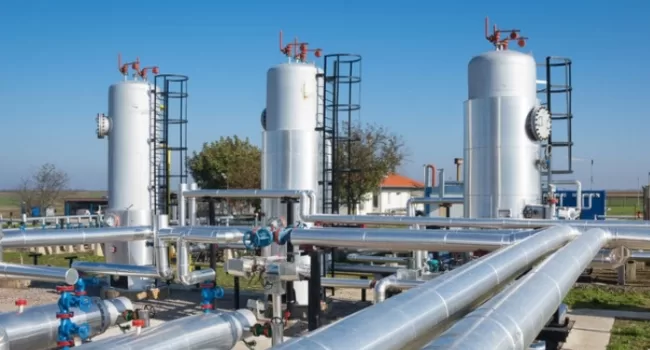
Ubeta gas project in Nigeria continues to progress following its launch as a $550 million upstream development. Moreover, the project focuses on monetizing non-associated gas resources within OML 58. Consequently, stakeholders aim to boost domestic gas supply and support LNG exports. Additionally, the development aligns with Nigeria’s broader gas expansion strategy. Therefore, industry players expect improved energy security and increased production capacity.
Current Status of Ubeta Gas Project in 2026
The Ubeta gas project reached final investment decision in 2024 and has since entered execution phases. Moreover, the Nigerian National Petroleum Company Limited and TotalEnergies officially launched the project shortly after.
Currently, operators are advancing engineering, drilling, and infrastructure integration activities. Furthermore, development includes a six-well cluster connected to existing Obite processing facilities. As a result, the project leverages existing infrastructure to reduce costs and timelines.
Industry updates indicate that the Ubeta gas project remains on track for first gas by 2027. Additionally, the project is expected to deliver around 70,000 barrels of oil equivalent per day. Consequently, it will significantly boost gas supply to Nigeria LNG.
Project Significance and Development Scope
The Ubeta gas project forms part of Nigeria’s strategy to maximize gas utilization. Notably, gas produced from the field will supply the Nigeria LNG plant on Bonny Island. Therefore, the project supports ongoing LNG capacity expansion initiatives.
The development includes drilling operations, pipeline installation, and tie-back to existing facilities. Specifically, an 11km pipeline will connect the Ubeta field to the Obite treatment center. Meanwhile, brownfield modifications will ensure seamless integration with current infrastructure.
Importantly, the project adopts a low-cost and low-emission design approach. Furthermore, operators plan to incorporate electrification and solar energy solutions at the Obite site. As a result, the Ubeta gas project contributes to reducing carbon intensity in upstream operations.
Africa is expanding offshore gas projects such as the recently contracted $300 million Aseng gas project in Equatorial Guinea highlights similar engineering approaches and investment trends.
The Ubeta field, discovered in 1964, is located northwest of Port Harcourt, Rivers State. Verheijen said the upstream gas project would deliver 350 million standard cubic feet of gas daily when operational. Furthermore, she noted that major energy reforms introduced by President Tinubu since June 2023 focused on aspects such as improving energy security. It also focused on attracting investments and deepening collaboration with key partners, including the US government.
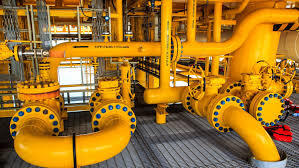
The State of Affairs Regarding the $550M Ubeta Upstream Gas Project
The Ubeta upstream gas project is expected to have unprecedented implications in Nigeria and West Africa. Verheijen noted that the federal government’s reforms had improved the viability of the country’s gas-to-power value chain. According to her, the reforms included initiatives to improve cash flows in electricity distribution through smart metering. It also entailed payment of outstanding debts owed to investors and reducing carbon emissions from gas production. She added that the President issued five new executive orders to support the reform efforts. The orders aimed to provide fiscal incentives for investment and reduce the cost and time of finalizing and implementing contracts to develop and expand gas infrastructure. The presidential aide said the directives are aimed to unlock up to $2.5 billion in new oil and gas investments in the country immediately.

The Significance of the Multimillion-dollar Project
The Ubeta upstream gas project is one of the projects that has strengthened diplomatic relations between the United States and Nigeria. The U.S. Assistant Secretary of the State Department’s Bureau of Energy Resources, Geoffrey Pyatt, said dialogues regarding the project were apt and strategic.“The inaugural U.S.-Nigeria Strategic Energy Dialogue has set the stage for strengthened energy collaboration between the United States and Nigeria. Together, we’re advancing shared energy security, decarbonisation, and economic growth goals,” he said.
Minister of State for Petroleum Resources (Gas), Ekperikpe Ekpo, led the Nigerian delegation to the event. Officials from the Ministry of Power, Nigerian Upstream Petroleum Regulatory Commission and the Nigerian Midstream and Downstream Petroleum Regulatory Authority attended. Furthermore, Nigerian Content Development and Monitoring Board, and NNPC Limited were also in attendance. The U.S. delegation included representatives from the Bureau of African Affairs, USAID, the U.S. Department of Energy, the U.S. Trade and Development Agency, and the Export-Import Bank.
Also read:
Other Significant Energy Projects in Nigeria
Apart from implementing the Ubeta upstream gas project, Nigeria has focused on other significant projects in the energy sector. One of these is the multibillion-dollar Nigeria-Morocco gas pipeline project. The pipeline would be an extension of the West African Gas Pipeline, which runs from Lagos, Nigeria, connecting to Cotonou, Benin; Lomé, Togo; and Tema and Takoradi, Ghana. The Nigeria-Morocco Gas Pipeline would connect to Abidjan, Cote d’Ivoire; Monrovia, Liberia; Freetown, Sierra Leone; Conakry and Guinea; Bissau. It will also link Guinea-Bissau, Banjul, Gambia, Dakar, Senegal, Nouakchott, Mauritania, and Tangiers, Morocco, with possible European extension through Cádiz, Spain.
Also read:
Africa’s largest gas-to-methanol plant construction in Nigeria
Project Fact Sheet
Project Name: Ubeta Gas Project
Location: OML 58, Rivers State, Nigeria
Project Value: $550 million
Operatorship: TotalEnergies (40%)
Partner: Nigerian National Petroleum Company Limited (NNPC Ltd) (60%)
Status (2026): Under development / execution phase
Final Investment Decision: June 2024
Start-Up Target: 2027
Production Capacity:
- 300 million cubic feet per day
- 70,000 boe/d including condensates
Scope of Work:
- Development of Ubeta gas condensate field
- Drilling of six production wells
- Installation of flowlines and pipelines
- 11km buried pipeline to Obite facility
- Integration with existing gas processing infrastructure
Key Infrastructure:
- Ubeta production cluster
- Flowlines and manifolds
- Obite treatment centre tie-in
- Gas export to Nigeria LNG
Objective:
- Monetise non-associated gas
- Boost domestic gas supply
- Support LNG exports
- Reduce emissions and flaring
Project Team
Operator: TotalEnergies EP Nigeria
National Partner: Nigerian National Petroleum Company Limited (NNPC Ltd)
Engineering & Technical Support: NETCO (Nigerian Engineering and Technical Company)
Regulatory Authorities:
Key Facilities & Infrastructure:
- Obite Gas Processing Plant
- Nigeria LNG (NLNG), Bonny Island
Contractors & Service Providers:
- Local drilling and construction contractors (multiple packages)
- Pipeline and subsea engineering firms
- Nigerian supply chain partners supporting local content delivery



Leave a Reply