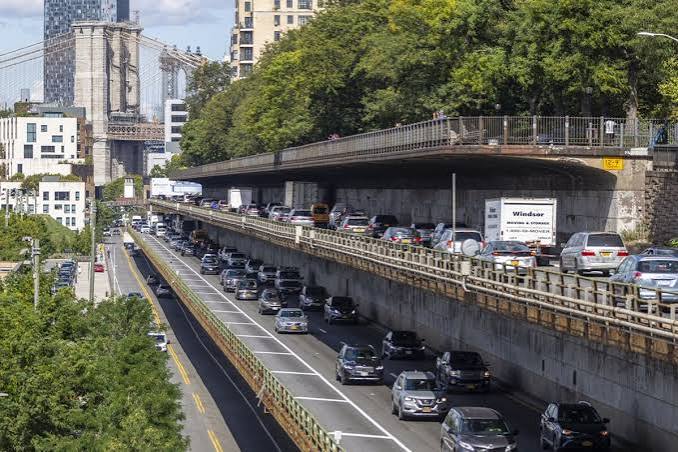
New York City has unveiled a $4 billion plan to rehabilitate the aging, city-owned section of the Brooklyn-Queens Expressway, with construction set to begin in 2030 and temporary bypasses planned to keep traffic moving during the work.
Mayor Zohran Kwame Mamdani and New York City Department of Transportation (NYC DOT) Commissioner Mike Flynn announced the plan Monday, August 24, covering the 1.5-mile section known as BQE Central between Atlantic Avenue and Sands Street.
The approximately $4 billion rehabilitation will span 10 years and extend the design life of BQE Central by another 40 years.
The project will focus on repairing and stabilizing the existing highway rather than expanding its permanent capacity. Work will address deteriorating concrete and the triple-cantilever structure, along with drainage, railings and lighting.
The city plans to use temporary highway bypasses to keep BQE Central operating while crews carry out the rehabilitation. The approach is intended to reduce the amount of traffic diverted onto Brooklyn’s local streets.
BQE Central is 20 years past its design life
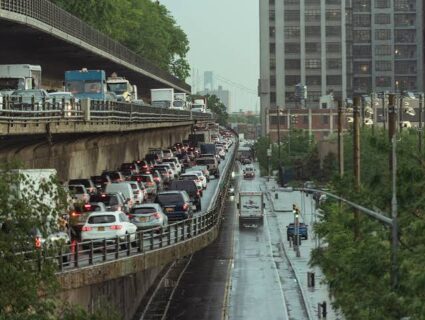
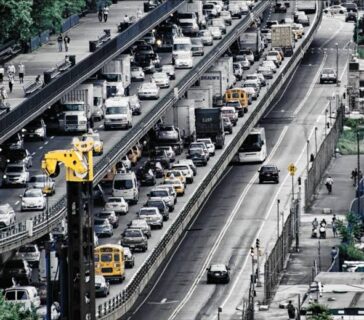
BQE Central was built approximately 70 years ago with an original design life of about 50 years. The section now carries more than 130,000 vehicles each day, more than twice the capacity for which it was designed.
Approximately 13,000 daily truck trips also use the corridor. City officials warn that continued deterioration could increase the risk of a shutdown, potentially forcing a significant share of highway traffic onto local streets.
The city estimates that every year of inaction adds approximately $160 million in cost escalation alone.
The existing structure has cracked concrete, exposed steel and extensive rust damage, according to NYC DOT. The triple cantilever is a particular focus of the rehabilitation.
“Time is up. We are fixing the triple cantilever,” Flynn said, arguing that the structural deterioration cannot wait for another round of studies or delays.
The rehabilitation is designed to keep the structure safe and stable while extending its useful life for another four decades.
Temporary bypasses will keep traffic moving
A major element of the construction plan is the use of temporary roadway structures to maintain traffic through BQE Central while crews repair the existing highway.
NYC DOT plans to build a temporary, two-level highway bypass along Furman Street, below the Brooklyn Heights Promenade. The bypass will run from Atlantic Avenue to Columbia Heights.
The structure will be no higher than the existing Queens-bound highway and will not block the Brooklyn Heights Promenade.
The agency also plans a second temporary elevated highway bypass from Columbia Heights, over the Brooklyn Bridge approach, toward the Manhattan Bridge.
Together, the temporary structures will allow NYC DOT to move traffic through the corridor while repairing deteriorated sections of BQE Central.
The plan is also intended to protect surrounding neighborhoods from large traffic diversions, facilitate the movement of goods and preserve access to destinations including the Brooklyn Heights Promenade and Brooklyn Bridge Park.
The city is not planning to widen BQE Central. The highway will retain its existing footprint and two lanes in each direction.
Environmental review begins this fall
NYC DOT plans to begin the City Environmental Quality Review (CEQR) process for BQE Central in fall 2026.
The agency will conduct community engagement through informational sessions and the public scoping process as the project moves through environmental review.
NYC DOT expects to complete an environmental impact statement in summer 2028.
The timeline puts the environmental review ahead of the planned 2030 construction start.
The city says the rehabilitation represents the shortest-term plan needed to keep BQE Central safe and stable. It will also give the City time to work with New York State on a longer-term vision for the entire BQE.
New York State controls the northern and southern sections of the expressway, while the project announced Monday covers the City-owned section between Atlantic Avenue and Sands Street.
City and State advance other BQE corridor investments
The BQE rehabilitation is being paired with other transportation, traffic-safety and quality-of-life investments along the corridor.
The City and State are advancing a traffic-safety redesign of Third Avenue in Sunset Park, while the City has identified approximately $17 million in upcoming capital upgrades for Park Avenue in Fort Greene and Clinton Hill.
Another $26 million is being directed toward capital implementation of the Brooklyn Waterfront Greenway in Gowanus and Red Hook. That work was completed earlier this year.
Officials are also pointing to longer-term transportation investments designed to shift vehicle trips toward more efficient and sustainable modes.
Those include the Interborough Express, a planned transit connection between Sunset Park in Brooklyn and Jackson Heights in Queens, as well as the Next Stop: Fast Buses, Better Service action plan and Brooklyn Bus Network Redesign.
The City and State are also pursuing initiatives to shift freight movement from trucks to waterways, rail and cargo bikes.
A 10-year rehabilitation while the wider BQE future is considered
The $4 billion BQE Central project is not a reconstruction of the entire Brooklyn-Queens Expressway.
Instead, it targets the City-owned section that officials say has reached a point where major rehabilitation can no longer be delayed.
The immediate goal is to stabilize the deteriorating structure, keep traffic moving during construction and extend the section’s design life by another 40 years.
At the same time, the City plans to work with New York State on the longer-term future of the wider BQE, which extends beyond the limits of the current rehabilitation project.
The next major milestone will come this fall when NYC DOT begins the CEQR process.
If the project advances through environmental review and subsequent design and development stages as planned, construction would begin in 2030 and continue for approximately a decade.
For now, the city’s approach is straightforward: repair the aging BQE Central before deterioration forces a much more disruptive intervention, while using temporary bypasses to keep one of Brooklyn’s busiest highway corridors operating throughout construction.
The BQE Central rehabilitation is also part of a broader wave of major transportation infrastructure work underway across New York City. In Manhattan, the MTA is advancing construction of Second Avenue Subway Phase 2, a roughly $7 billion project extending subway service into East Harlem with three new stations at 106th, 116th and 125th streets. While the BQE project focuses on preserving an aging highway, the Second Avenue extension is adding new transit capacity, illustrating the different infrastructure needs being addressed across the city.
BQE Central Rehabilitation — Factsheet
- Project: BQE Central Rehabilitation
- Location: Brooklyn, New York City
- Highway: Brooklyn-Queens Expressway
- Project length: Approximately 1.5 miles
- Project limits: Atlantic Avenue to Sands Street
- Owner: City of New York
- Lead agency: NYC Department of Transportation
- Estimated cost: Approximately $4 billion
- Construction duration: Approximately 10 years
- Expected construction start: 2030
- Design-life extension: Approximately 40 years
- Current traffic: More than 130,000 vehicles per day
- Daily truck trips: Approximately 13,000
- Primary structural work: Repair of deteriorating concrete and the triple-cantilever structure
- Additional work: Drainage, railings and lighting
- Temporary bypass 1: Two-level highway along Furman Street, from Atlantic Avenue to Columbia Heights
- Temporary bypass 2: Elevated highway from Columbia Heights over the Brooklyn Bridge approach toward the Manhattan Bridge
- Permanent widening: None planned
- Permanent configuration: Two lanes in each direction
- Brooklyn Heights Promenade: Temporary bypass will not block the promenade
- Environmental review: CEQR begins fall 2026
- Environmental impact statement: Expected summer 2028
- State-controlled sections: Northern and southern portions of the BQE
- Long-term objective: Stabilize BQE Central while developing a broader vision for the entire BQE with New York State

Leave a Reply