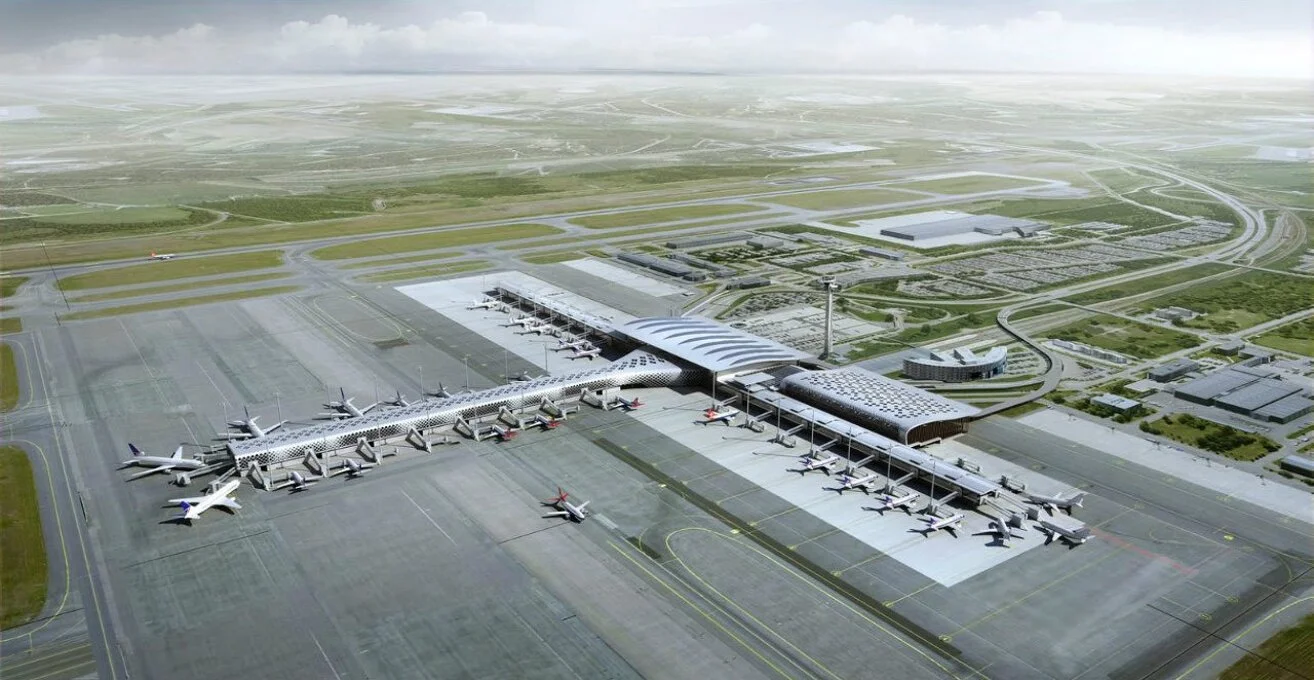
Oslo Airport, Norway’s main international gateway and the largest full freighter hub in Northern Europe, has announced a sweeping modernisation and expansion plan that could reshape the airport’s physical layout and operational capacity for decades to come. Operated by Avinor, the state owned airport company responsible for 44 Norwegian airports, the initiative addresses mounting pressure on cargo capacity, aircraft parking and passenger throughput that has been building as Norwegian trade volumes and air travel demand have grown at record pace. The full project is estimated to reach completion by 2040, with the relocation of the cargo area to the west side of the airport earmarked as the first major phase, subject to investment approvals and further regulatory sign-off.
A Campus Put Entirely on the Drawing Board
The scope of Avinor’s vision is ambitious by any measure. Airport Director Thorgeir Landevaag has described the approach in terms that signal a fundamental rethink rather than incremental adjustment, noting that the entire Oslo Airport has effectively been placed on the drawing board. The immediate trigger is a shortage of aircraft parking spaces that has already become acute during night hours and peak operating periods. Building new stands in peripheral areas of the airport would resolve the parking deficit, but would come at significantly greater cost and with considerable land use implications. By relocating the cargo operation, Avinor can instead repurpose the existing cargo footprint for aircraft parking and passenger related infrastructure, reusing assets already in place and avoiding the expense of building from scratch on undeveloped land.
Alongside the cargo relocation, Avinor plans to optimise the use of the airport’s existing two runways through the introduction of rapid exit taxiways and other technical and operational improvements. The objective is to increase the number of aircraft movements the airport can handle without requiring a third runway, which would carry substantial financial and environmental costs. If successful, this runway optimisation strategy could defer the need for a third strip by years, buying time while demand continues to grow and while the broader masterplan works through its approvals and construction phases.
Project Fact Sheet
Project Name: Oslo Airport Modernisation and Expansion Masterplan
Airport: Oslo Airport Gardermoen (OSL)
Operator: Avinor AS, a wholly owned state limited company under the Norwegian Ministry of Transport and Communications
Announcement Date: April 2026
Estimated Overall Completion: 2040
First Phase: Relocation of cargo area to the west side of the airport, with new cargo and logistics terminals
Passenger Capacity Context: Currently serves approximately 25 million passengers annually, with previous expansion targeting 30 million
Annual Cargo Volume: Approximately 200,000 tonnes of air cargo handled annually
Daily Seafood Exports: Approximately 650 tonnes airfreighted daily to Asia and North America
Current Freighter Services: More than 20 weekly full freighter operations serving the airport
Runway Strategy: Optimisation of existing two runways through rapid exits and operational measures to defer the need for a third runway
Security Upgrade (Parallel Project): New security checkpoint technology being installed from January 2026 through summer 2028
Status: Planning phase, subject to investment decisions and further approvals
Project Team
Airport Operator and Project Owner: Avinor AS, responsible for planning, funding and delivering the masterplan across all phases
Airport Director: Thorgeir Landevaag, Oslo Airport, the principal spokesperson and strategic lead for the expansion initiative
Head of Cargo: Eva Beate Lande, Avinor, overseeing cargo strategy and operator partnerships at Oslo Airport
Norwegian Government Oversight: Ministry of Transport and Communications, as the sole shareholder of Avinor and the body whose approval is required for major investment decisions
Key Cargo Operator: Menzies World Cargo, which entered Oslo Airport in 2025 following its acquisition of Spirit’s cargo and ground handling operations, and which plays a central role in the airport’s freight growth strategy
Security Technology Partners (Parallel Project): Smiths Detection, supplying new X-ray systems, and Sensec, responsible for installation, commissioning and ongoing maintenance
Salmon, Growth and the Logic Behind the Westward Shift
To understand why this expansion is happening now, it helps to understand what Oslo Airport actually moves. Seafood is Norway’s second largest export by value, and the airport sits at the centre of the global supply chain that delivers Norwegian salmon, trout and other perishables to dinner tables across Asia, North America and the Middle East. Around 650 tonnes of seafood leave Norway by air every single day, a volume that has grown significantly in recent years and that shows no sign of moderating given rising global demand for Norwegian aquaculture products. The airport currently handles approximately 200,000 tonnes of total air cargo annually and operates more than 20 full freighter services each week, a figure that makes it the largest full freighter hub in the Nordic region by some margin.
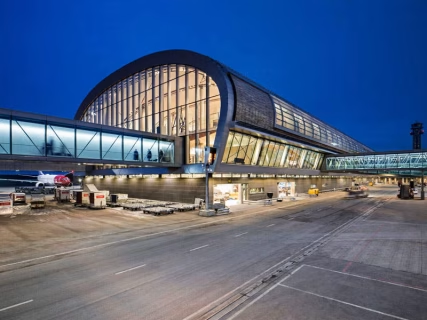
The decision to move the cargo area to the west side of the airport is therefore not simply a matter of tidying up the campus layout. It is a deliberate strategic choice to give Norway’s most economically critical export sector the infrastructure it needs to grow without competing for space with passenger operations. A dedicated west side cargo and logistics zone, purpose built for modern freighter operations and equipped with temperature controlled handling facilities, would give airlines, freight forwarders and perishables exporters the certainty and capacity they need to commit to Oslo as a long term hub. At the same time, freeing up the existing cargo footprint on the east side of the airport creates room for passenger terminal development, additional aircraft stands and new route infrastructure, addressing the dual bottleneck that has constrained the airport’s growth. With Menzies World Cargo now embedded at Gardermoen following its 2025 acquisition of Spirit’s operations, Oslo Airport enters this next phase with a strengthened operator base and growing commercial momentum that gives the masterplan a solid commercial foundation to build upon.
The Bigger Picture: Nordic Aviation Infrastructure at a Crossroads
Oslo’s plans do not unfold in a vacuum. Across the Nordic and Baltic region, major airports are grappling with the same fundamental tension between surging air freight demand, rising passenger expectations and the environmental constraints that make unchecked airport expansion increasingly difficult to justify politically. Stockholm Arlanda has been navigating runway capacity debates for years. Copenhagen Airport is investing heavily in sustainable aviation infrastructure. Helsinki Airport has been expanding its cargo handling capability in an effort to position itself as a rival hub for Asian freight transiting through Northern Europe.
This regional competitive pressure is reaching a new peak with the news that the Foster + Partners design for the massive CPK airport has been approved in Poland. Having officially accepted the 450,000 sqm passenger terminal and integrated railway station design in August 2025, the Centralny Port Komunikacyjny (CPK) project is now entering its delivery phase with construction set to begin in 2026. This multimodal hub, located 37km west of Warsaw, is designed to handle 34 million passengers annually in its first stage and is scheduled to be operational by the end of 2032. By integrating high-speed rail directly beneath a signature “woven” vaulted roof, the project aims to revolutionize travel across the country and the wider region, establishing a 21st-century benchmark for totally integrated transportation design.
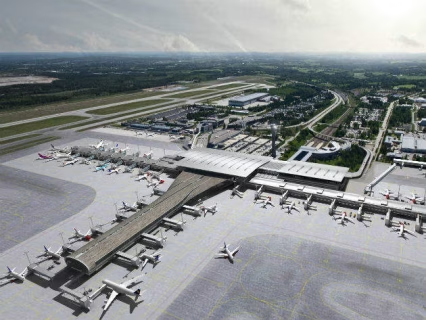
In this regional competition, Oslo’s combination of seafood export volumes, freighter frequency and geographic position gives it a distinctive and defensible niche. However, the airport’s ability to hold and grow that position depends on the decisions taken now. Cargo airlines and logistics operators make long term infrastructure investments based on confidence in hub reliability and growth capacity, and a credible masterplan with government backing sends exactly the kind of signal that encourages those commitments. The fact that Avinor has framed the 2040 programme as a generational project rather than a short term fix is itself significant. It reflects an understanding at the senior level of Norwegian aviation management that the choices made in the next five years will determine where Oslo Airport stands in the global cargo and passenger hierarchy for the remainder of the century.

Leave a Reply