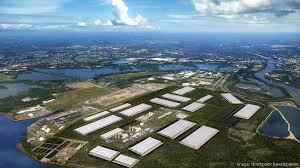
Pennsylvania data center boom is accelerating, and the state is stepping in to set limits on how, where, and at what cost they develop. On June 8, Governor Josh Shapiro’s administration released the full GRID (Governor’s Responsible Infrastructure Development) Standards, a voluntary incentive program that ties tax benefits to grid capacity, clean energy, jobs, and environmental guardrails. At the same time, towns across the state are freezing or rewriting zoning rules, legislators introduced a GOP grid protection bill, and Rep. Rob Bresnahan Jr. (PA-08) advanced a federal “local control” bill. The result is a multi-layer fight over power, water, and community choice.
Scale and Where Proposals Are Concentrated
The Delaware River Basin Commission (DRBC) reports about 60 small-to-midscale data centers operating in the basin and is tracking 24 larger hyperscale complexes in planning stages. Most existing centers purchase water from public supplies and have not applied for DRBC water withdrawal permits.
Proposals are concentrated in Luzerne, Lehigh, Wayne, Bucks, and Washington counties, and in the Delaware River Basin.
In Archbald (Luzerne County), coverage describes roughly 51 data center proposals, with public hearings set to consider nearly two dozen projects and a natural gas power plant. In Clinton Township (Wayne County), a proposal covers 682 acres with 20 to 21 data center buildings and two on-site power facilities. And in South Whitehall Township (Lehigh County), “Atlas Industrial Data Center” was scaled to three buildings but remains a 1.5 million-square-foot facility.
Grid Capacity and Transmission
The grid is under pressure, and data centers are a major driver. PJM issued its third hot weather alert for June 11–12, 2026, for the Mid-Atlantic and Southern regions ahead of expected 90-degree weather. The alert forecasted peak loads of 146,896 MW on June 11 and 140,840 MW on June 12—levels that stress the grid even without new data center demand.
FERC approved a temporary fast-track process to expedite large electric generation projects specifically to meet data center demand. In Lycoming and Union counties, residents questioned the PPL transmission line project built to serve a data center, with a formal letter urging protection of state game lands. Talen Energy announced it will add two natural gas generating units to the Montour Power Plant, explicitly citing PJM data center demand as the reason.
The tension is clear: utilities are operating at capacity during peak hours, but data centers are adding gigawatts of new demand. The summer readiness reports show utilities have prepared for emergency response and infrastructure upgrades, but the transmission infrastructure was not built for this scale of concentrated load.
Utility Rates and Energy Costs
Utility rates are a concern as the Pennsylvania data center boom accelerates. Luzerne County residents urged the PUC to reject a proposed 12.8% UGI electric rate increase. Hearings on a 13.1% People Natural Gas increase drew low attendance. Activists are urging lawmakers to curb rising electric bills linked to data center development. Experts say behind-the-meter natural gas power plants for AI data centers could raise costs for homes and businesses. A study suggests that if Pennsylvania leaders act now, households could save about $841 per year in energy costs by 2030.

Pennsylvania Data Center Boom: What GRID Requires
Governor Shapiro’s office full GRID Standards. The program is voluntary and tied to tax benefits ahead of the June 30 budget deadline. Key requirements:
- Developers must build or buy their own grid capacity.
- Clean-energy build/buy requirements up to 32% by 2035 from nuclear, hydropower, solar, wind, and batteries.
- Minimum thresholds: $250 million in new investment; 200 construction jobs; 50 permanent jobs at ≥125% of the state average wage; $1.5 million in on-site wages over time.
- Environmental sustainability plans limiting water and energy use.
The proposal would condition the state’s 6% sales tax exemption for data centers. Projected to cost the state over $2 billion by mid-2031—and requires legislative approval. Reactions vary: some groups call the framework complicated, others express hope, and some criticize it as performative after leaked emails to Amazon.
State and Federal Legislation
Legislators have introduced a GOP grid protection bill in the Pennsylvania General Assembly to codify grid agreements into state law and require hyperscale data centers to establish independent energy frameworks that could reduce strain on the public PJM grid. Rep. Craig Williams introduced the measure, which some sources refer to as the Pennsylvania Ratepayer Protection Act.
U.S. Representative Rob Bresnahan Jr. introduced the Local Control Protection Act in Washington, D.C., on June 10, 2026. Prompted by zoning disputes in Pennsylvania, the bill would protect small municipalities from lawsuits or financial pressure when they deny data center permits based on environmental or infrastructure concerns.
Local Actions: Zoning Freezes and New Ordinances
Local governments are taking concrete steps. In Hazle Township (Luzerne County), supervisors voted on June 8 that their zoning ordinance is deficient for data centers and adopted a 180-day curative amendment to freeze new applications while drafting rules. In Clinton Township, the planning commission found the Linde Corp application incomplete on June 3; follow-up reports on community response appeared June 12. South Whitehall Township, planners released an expert review on June 8 citing traffic, sound, and water usage concerns, and the June 11 planning commission meeting was canceled and postponed on June 10 after applicants pulled the proposal. In Monroe Township, the board posted on June 5 that an informational presentation was pulled at the developer’s request to revise plans after negative public feedback.
Other towns are moving in the same direction. East Marlborough and Dallas Township are drafting strict ordinances. Bensalem and Middletown (Bucks County) paused reviews until zoning is updated. Erie County proposed new rules. South Strabane (Washington County) held a hearing on June 9 and adopted data center and noise ordinances.
Keystone Trade Center and Middletown’s New Ordinance
The Keystone Trade Center data center campus is a critical component of Amazon’s $20 billion investment in high-tech infrastructure across Pennsylvania. As physical construction of the facility progresses, it has drawn growing community pushback and spurred legal changes in neighboring towns. On June 10, 2026, the neighboring township of Middletown announced it is actively drafting a strict new ordinance to regulate data center development. Local officials cited the ongoing construction at the Keystone Trade Center as the driving catalyst. Stating they want to protect their borders from similar rapid tech expansions.
Major Projects Still Moving Forward: Pennsylvania Digital I (PAX)
The $15 billion Pennsylvania Digital I (PAX) hyperscale AI data center project—a joint venture between Pennsylvania Data Center Partners and PowerHouse Data Centers—cleared a key planning hurdle in March 2026, when the Middlesex Township Board of Supervisors voted unanimously to approve construction of a 450 MW energy substation on the 700-acre site along Country Club Road in Cumberland County. The substation is now under construction, with initial power expected in Q2 2027.
However, the full six-building data center campus remains in the planning phase. And township officials still need to approve land development plans before construction of the main facility can begin. The project should start operating in 2027. Even as some towns freeze or delay approvals, this project shows that major data-center investors still move forward when developers meet infrastructure requirements.
Politics: Data Centers on the Ballot
Data centers are also a campaign issue. Coverage notes that Governor Shapiro courted new AI data centers before public opinion shifted. Republican gubernatorial candidate Garrity broke with Shapiro, calling for a pause in AI data center development. A Democratic State House candidate won her primary by keeping data centers top of mind. State Senator Jarrett Coleman hosted a June 10 telephone town hall on AI data centers. State Senator Rosemary Brown wrote that residents deserve a voice in Pennsylvania’s data center future. Rep. Nikki Rivera proposed using energy storage batteries to save ratepayers money. Sen. Williams is expected to introduce a bill forbidding AI from replacing human teachers in classrooms.
Water Use
Water use is a concern. Data centers can use up to 5 million gallons per day for cooling. DRBC is tracking 24 new hyperscale projects even though none has applied for a water withdrawal permit yet. In South Whitehall, expert reviews flagged heavy water usage as a top concern.
What This Means for You
- Your utility bill: If data centers increase demand without adding capacity, rates could rise. Activists and experts say behind-the-meter gas plants linked to data centers could increase costs for homes and businesses.
- Local jobs and construction: New projects would bring construction work and some permanent jobs, but hearings and ordinances may slow approvals.
- Traffic and neighborhood impact: Large sites can bring heavy truck traffic, noise, and increased water demand.
What to Watch
- June 30: State budget deadline. If GRID advances, data centers could face stricter conditions for incentives.
- August 19: PUC telephonic prehearing on the Transource 230 kV transmission line in Franklin County.
- Coming township hearings: Archbald public hearings; Dallas Township ordinance hearings.
Pennsylvania is under significant strain as the state’s data center boom continues. The GRID Standards aim to balance incentives with grid and environmental guardrails. Local governments are freezing or revising zoning rules to slow approvals. Legislators are pursuing state and federal measures that could protect the grid and preserve local control. Residents are already seeing impacts, including outages, new transmission projects, and proposals that could increase utility bills. The key question is whether Pennsylvania can establish clear guardrails before further growth places greater strain on the grid, water systems, and local communities.


Leave a Reply