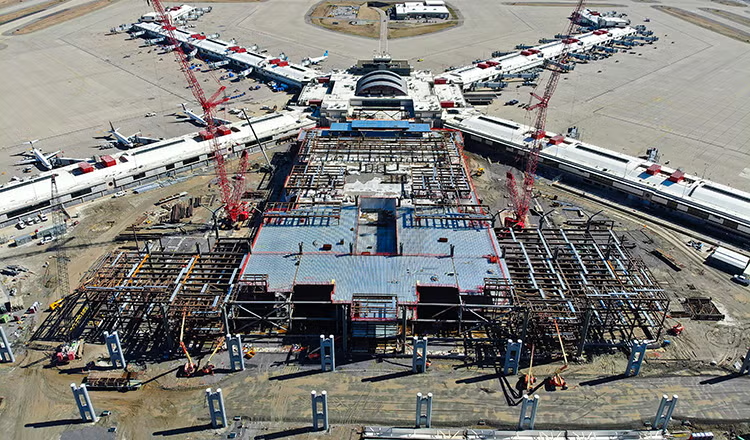
The Pittsburgh International Airport New Terminal Project is a $1.7 billion airport infrastructure development in Pennsylvania. The project involves the construction of a new passenger terminal to replace the airport’s existing facility and is scheduled to open on November 18, following more than ten years of planning and approximately four years of construction. The new terminal is intended to modernise airport operations and passenger handling capacity. Similar terminal upgrade projects are also underway at several airports across the United States in response to changing passenger demand and operational requirements. Several US airports are currently also undertaking upgrades to their terminals in a bid to meet higher passenger traffic. Other than the Pittsburgh International Airport Terminal upgrade, SEA Airport has also completed a renovation of its own.
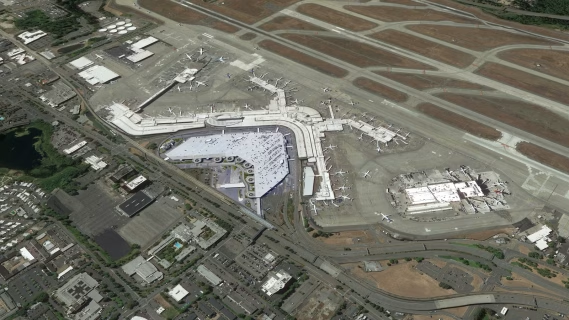
The busiest airport in the Northwest Pacific, SEA Airport, has completed a $546 million gateway project. Airport leaders celebrated the completion of the monumental project after two years of construction. The officials also noted the aim of the gateway project is to improve infrastructure and help travelers move through security faster. The renovation gives the airport’s North Main Terminal a significant makeover, marking the completion of SEA Gateway.
Delivery on the project was done by a partnership between the Port of Seattle and Alaska Airlines. Its completion highlights a fresh, modern front door for the airport while streamlining the check-in process for travelers. “It is a product that we really looked at from the curb, all the way through the checkpoint and to the gates. That is really about customer service and friendliness and flow through,” said Wendy Reiter, SEA Airport Managing Editor.
Enhanced infrastructure and amenities
The new terminal delivers a 12-lane TSA checkpoint, a dedicated international arrivals wing, and space for 20 new retail and dining outlets. Additional features include a 3,300-space parking garage, outdoor terraces, and a pedestrian Skybridge connecting the landside terminal to the airside building. By eliminating the underground tram system, the airport expects to save approximately $4.5 million annually.
Operational impact and broader context
Airport officials believe these enhancements will cut baggage wait times by half and streamline security operations currently split between two checkpoints. The project underscores the airport’s role as the busiest in Pennsylvania after Philadelphia International Airport. As the region’s infrastructure landscape evolves, stakeholders see the project as a catalyst for future growth in passenger traffic, business development and regional competitiveness.
Project Factsheet
Project: New landside terminal at Pittsburgh International Airport
Cost: $1.7 billion
Location: Pittsburgh, Pennsylvania, USA
Opening date: November 18, 2025
Construction duration: Four years, following over a decade of planning
Key features:
12 TSA lanes
International arrivals wing
20 retail/dining spaces
3,300-space parking garage
Pedestrian Skybridge replacing underground tram
Operational benefits:
Streamlined security operations
Reduced baggage wait times (estimated by half)
Regional significance: Airport now positioned to enhance passenger flow and business reach in western Pennsylvania
![PHOTOS] Pittsburgh International Airport's 2023 Terminal Design Revealed - APEX](https://apex.aero/wp-content/uploads/2020/08/Screen-Shot-2019-02-20-at-12.16.06-PM.png)
Regional economic implications
This terminal project is not simply an infrastructure upgrade: it serves as a significant economic driver for western Pennsylvania. A similar example is the $557 million terminal construction at Des Moines International Airport, currently progressing ahead of schedule, which illustrates how modernized airport facilities can stimulate regional economies. By improving airport capacity and traveler amenities, the region can better attract airlines, conferences and tourism. Local businesses may benefit from the increased foot traffic and commerce tied to the airport’s upgraded status. In effect, the terminal is both a gateway and a growth engine for the broader region.
Next steps and stakeholder focus
Moving ahead, airport leadership will focus on transitioning operations from the old concourse to the new facility while minimizing disruption for travelers and airlines. The success of the opening on November 18 will depend on coordination across security, baggage handling and retail operations. Moreover, outreach to airlines and commercial partners will be essential to maximize the new terminal’s potential and support long-term regional competitiveness.
Leave a Reply