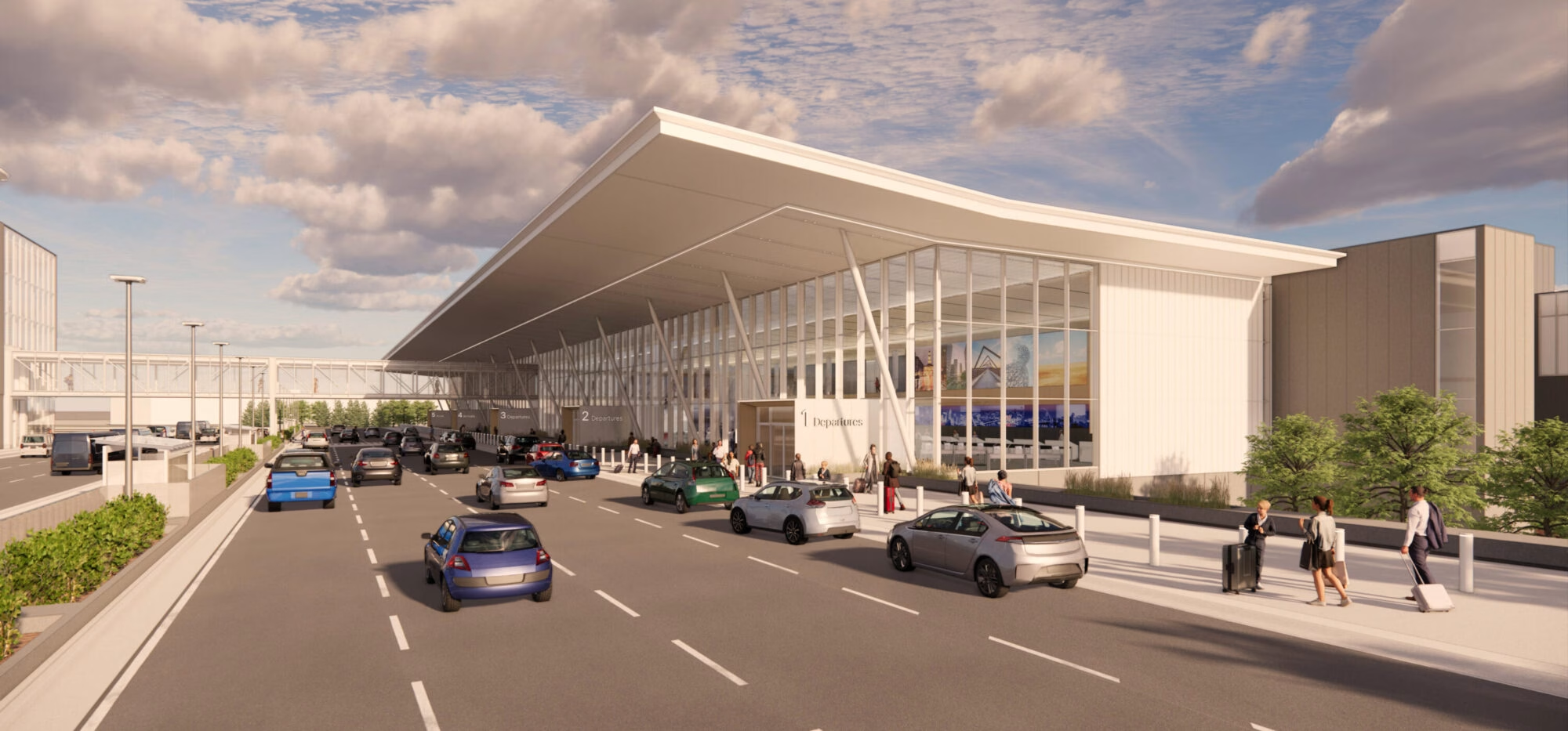
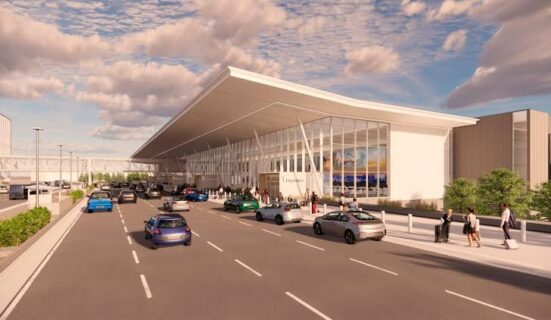
The $557 million Lift DSM Terminal Project is a massive infrastructure modernization designed to double the capacity of the Des Moines International Airport and handle projected passenger growth through 2050. Managed by the Des Moines Airport Authority, this multi-phase expansion transitions operations away from a legacy, 75-year-old facility into a brand-new, 360,000-square-foot terminal. Key infrastructure upgrades include consolidated security checkpoints, advanced baggage handling carousels, an expanded parking architecture, and a dedicated rental car facility. The terminal layout heavily features local regional identity, anchored by an Iowa-themed retail marketplace called River & Grand by Hudson alongside five distinct food and beverage concepts.
To maintain continuous airport operations without disrupting current flight schedules, construction is unfolding across rolling target deadlines:
- Parking Infrastructure: An expanded North Parking Garage has already added 1,100 covered spaces to the airport’s capacity.
- The Phase 1 Opening (January 2027): A high-stakes, coordinated overnight swap will seamlessly redirect all active operations to the new facility. The first six new gates, the centralized ticketing lobby, and the primary baggage claim area will debut immediately.
- Concourse Extensions (2027–2028): A seventh gate will become operational shortly after the initial launch. This will be followed by the completion of Phase 1B East—a separate structural extension stretching toward Fleur Drive that adds four additional gates.
- Final Long-Term Completion (2030): Consecutive construction phases will continue through the end of the decade. This final rollout will bring the total new infrastructure to 11 modern gates, which will operate alongside 11 preserved legacy gates for a total facility capability of 22 gates.
The Lift DSM Terminal Project is a collaborative effort led by the Des Moines Airport Authority, construction manager Weitz and Turner, and architectural partners HNTB and BNIM. Anser Advisory manages the timeline and budget as the owner’s representative, while Chrysalis Global oversees operational transition services and Hudson Group anchors the passenger retail experience. You can read more about the project details at Des Moines International Airport.
Project Factsheet
Location: Des Moines International Airport (DSM), Iowa, USA
Projected Investment: Approx. US $557 million
Scope: New terminal building, initial seven gates in Phases 1–2; later four more gates in Phase 3
Timeline: Terminal & initial gates expected early 2027; Phase 3 gates by late 2029
Final Gate Count: Up to 22 gates when full build-out completes by ~2030
Related infrastructure: Expanded parking garage, improved pick-up/drop-off areas, roadway redesign
Significance for Construction & Infrastructure
For construction industry stakeholders, the DSM terminal expansion delivers a robust pipeline of structural, MEP and civil-infrastructure work. A comparable example is Pittsburgh International Airport’s $1.7 billion terminal, which opened on November 18, highlighting how large-scale passenger-terminal projects combine complex structural, mechanical, and electrical scopes. Specifically, the DSM project involves major foundations, steel structures, building envelope installation and integrated systems for a modern passenger terminal. Because the airport remains operational during construction, contractors must work in staged phasing, manage logistics and minimise disruption to ongoing airport operations, raising the complexity of execution.
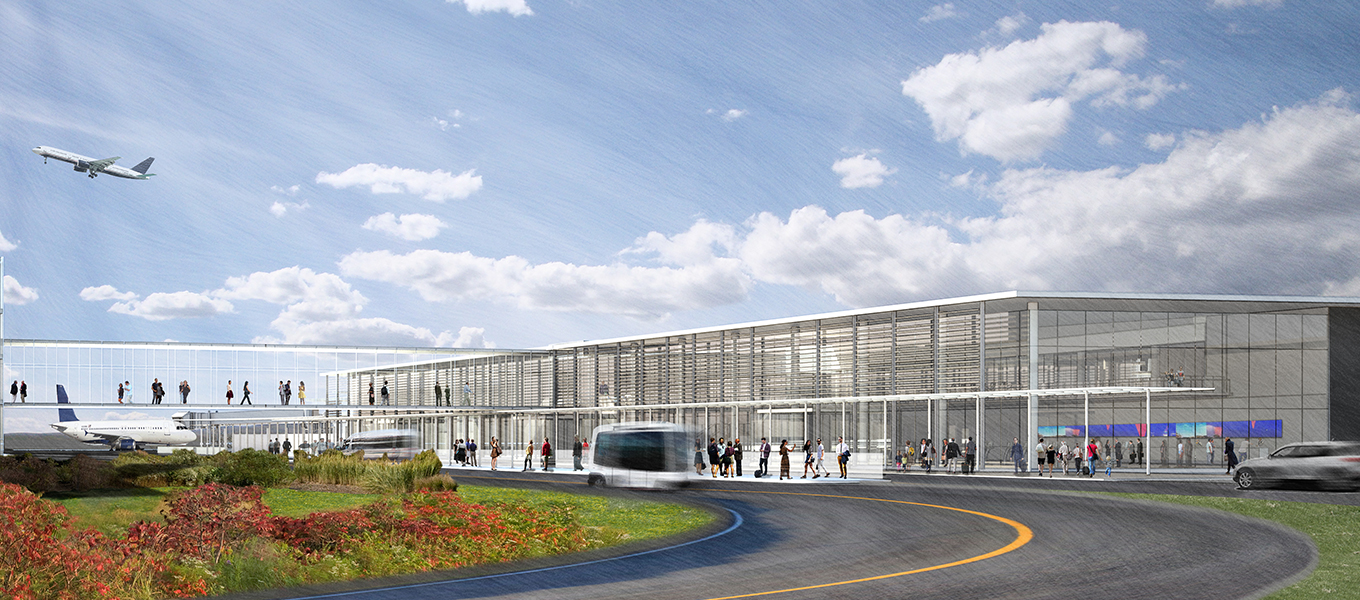
Also, the inclusion of eight-plus new gates and expanded transportation infrastructure means heavy earth-works, paving, utility relocations and parking-garage structures. A related effort is underway at San Francisco International Airport, where Skanska is leading a major cargo infrastructure redevelopment, highlighting similar large-scale logistical coordination and aviation-site construction. Moreover, given the early approval of Phase 3 due to favourable market conditions (lower construction costs), the project proves that proactive phasing and cost-management allow for scope acceleration, a lesson relevant for projects in Africa and emerging markets facing inflation or supply-chain volatility. In sum, this expansion anchors the airport’s role as a regional gateway and offers major opportunities for local and regional contractors specializing in aviation-adjacent infrastructure, mixed-use transport builds and complex multi-phase scheduling.
Additionally, Des Moines joins a growing list of mid-size U.S. airports betting big on new terminals to replace aging infrastructure. In Southern California, Hollywood Burbank Airport already moved into its new $1.3 billion, 14‑gate facility in October 2026, following a public test run and final construction push earlier that fall. The two projects — Burbank’s all‑electric terminal and Des Moines’ $557 million “Lift DSM” build — illustrate how regional hubs are racing to modernize ahead of sustained travel growth


Leave a Reply