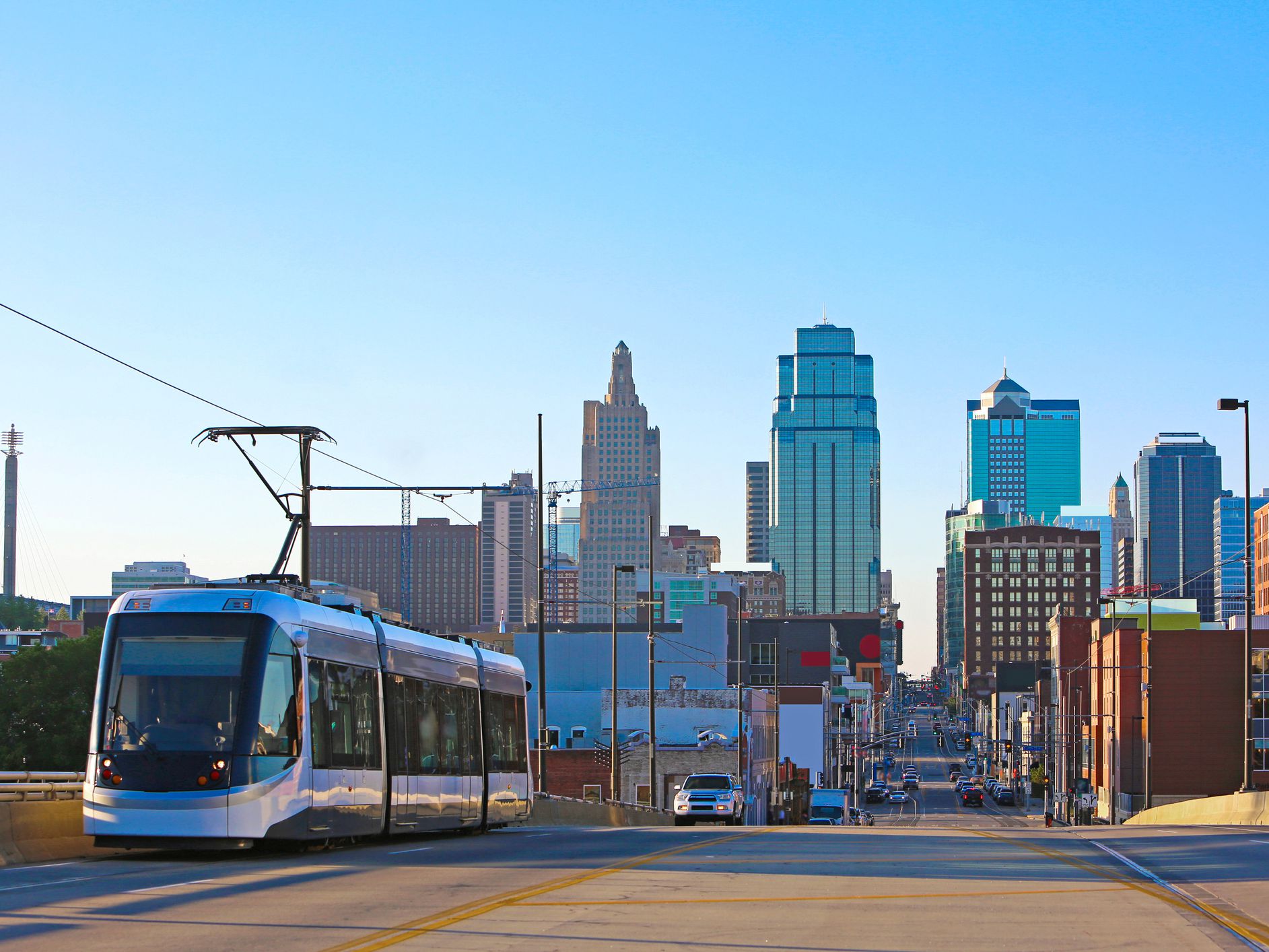
The Bi-State Sustainable Reinvestment Corridor is a 24 mile zero emission transit route located between Kansas City, Kansas, and Independence, Missouri, and it has advanced well past the 2022 concept stage. The Mid America Regional Council secured a $5.6 million federal RAISE grant in August 2024, completed an area wide assessment through September 2025, and in January 2026 opened public comment on a preferred bus rapid transit route and 12 station area designs, with feedback accepted through January 30.
Bi-State Sustainable Reinvestment Corridor Funding Mirrors a Statewide Infrastructure Push
Kansas is funding transit planning here through a federal grant even as it channels its own Eisenhower Legacy Transportation Program dollars into rural highway preservation, such as the $67.8 million US 77 rebuild underway in Cowley County. Detailed engineering for the corridor’s high capacity transit segments follows the current public engagement round, with no construction contract yet let.
Project Overview
- Project Name: Bi-State Sustainable Reinvestment Corridor
- Location: Kansas City, Kansas to Independence, Missouri, via Kansas City, Missouri, and Sugar Creek, Missouri
- Project Value: $5.6 million RAISE grant funding the planning phase; construction cost not yet disclosed
- Client/Owner: Mid America Regional Council (MARC), in partnership with the Kansas City Area Transportation Authority (KCATA)
- Main Contractor: Not yet awarded
- Key Components: 24 mile zero emission bus rapid transit route; 12 proposed station areas; new mobility hubs; pedestrian and bicycle infrastructure; transit oriented development
- Construction Start: Not yet scheduled; assessment phase concluded September 2025, with detailed engineering to follow current public input round
- Expected Completion: Not publicly disclosed
- Strategic Impact: Connects four cities across two states to jobs, health care, housing, and education along a historically underserved corridor
Project Team
- Lead Planning Agency: Mid America Regional Council (MARC)
- Transit Partner: Kansas City Area Transportation Authority (KCATA)
- Government Partners: Unified Government of Wyandotte County and Kansas City, Kansas; City of Kansas City, Missouri; Jackson County, Missouri; City of Independence, Missouri; City of Sugar Creek, Missouri
- Funding Source: U.S. Department of Transportation, RAISE Discretionary Grant Program

Reported 8th March 2022: A group of Kansas and Missouri local elected officials including Emanuel Cleaver and Sharice Davids, along with Mayors Eileen Weir and Tyrone Garner, recently announced plans for the construction of a 24-mile Kansas-Missouri Bi-State transit corridor.
The plan was also endorsed by the Mid-America Regional Council, a nonprofit association of city and county governments and the Metropolitan Planning Organization for the bistate Kansas City region, the Kansas City Area Transportation Authority, a public transit agency in metropolitan Kansas City, and RideKC.
Overview of the Kansas-Missouri Bi-State Transit Corridor
This new Bi-State transit corridor on which electric buses are set to operate will begin at Independence, Missouri, and travel up until the Legends Outlets areas in Kansas servicing between 85,000 and 90,800 people along the route.
Also Read South Corridor in Florida US to be converted into Bus Rapid Transit Project
According to Cleaver, who is a U.S. Rep. and Kansas City Democrat, the rapid transit corridor would have a zero-emission design, which aligns with the Kansas City Regional Climate Action Plan of achieving zero greenhouse gas emissions by 2050.
The U.S. Rep. and Kansas City Democrat also mentioned that license plate readers would be installed along the route, to ensure that the corridor in addition to zero emissions it also has zero crimes as well.
Other works proposed along the route
The Kansas-Missouri Bi-State Transit Corridor project also covers upgrades to pedestrian and bicycle infrastructure, and it is expected to attract grants for the construction of bridges and new affordable housing units along the route, development of high-speed internet, and school improvements.
Homes along the route are also expected to be made energy efficient as part of the project that the developers describe as a cooperative effort to create and implement a transformational strategy, which would lead to improved mobility, reduced carbon emissions, and more economic growth in communities.

Leave a Reply