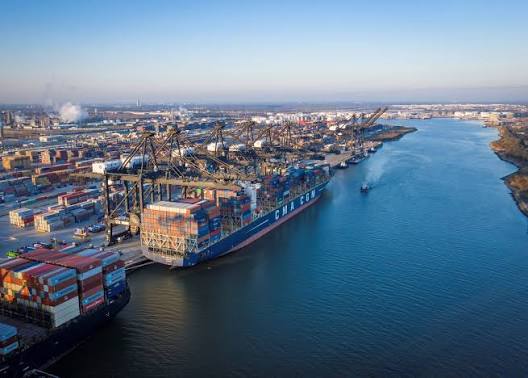
Port Houston’s proposed Barbours Cut Northside Expansion has entered the federal environmental review stage, moving the port authority closer to building a major new container terminal on Spilman Island in Galveston Bay.
On Sept. 2, 2026, the U.S. Army Corps of Engineers, Galveston District, published a public notice (SWG-2025-00640) opening the scoping process for an environmental impact statement for the Barbours Cut Northside Expansion, with comments due by Oct. 19, 2026. The EPA’s EIS database lists an amended notice date of Sept. 4, 2026, confirming that the federal environmental review moved forward in early September after the port’s permit application.
What’s new
- Federal review launched: The Corps’ public notice lists the Barbours Cut Northside Expansion as an active permit case with a comment period running through mid-October 2026.
- Project definition sharpened: The application describes an approximately 318-acre container terminal with a 3,200-foot wharf and two berths designed for neo-Panamax containerships, plus expanded turning basin and vessel maneuvering areas.
- Dredging scope disclosed: Up to 66.8 acres would be dredged or excavated as part of the marine works, with additional landside construction for terminal access roads and upgrades.
- Timeline clarified: Port Houston expects phased construction to begin no later than 2032, with terminal capacity coming online around 2036.
Project scope and design
The Barbours Cut Northside Expansion would add a large, modern container facility on Spilman Island, adjacent to the existing Barbours Cut Terminal. Key elements include:
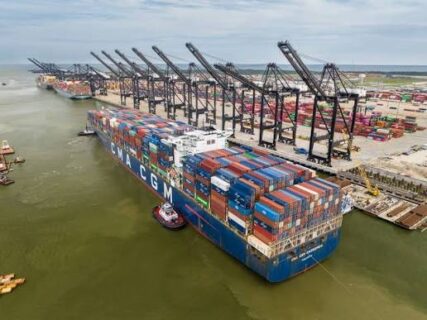
- Wharf and berths: A 3,200-foot wharf with two berths capable of handling the largest containerships now calling at Gulf Coast ports.
- Turning basin and slips: Expansion of the Barbours Cut turning basin and creation of new berth slips and vessel maneuvering areas to reduce congestion and improve turnaround times.
- Landside infrastructure: New terminal access roads and associated road upgrades to move more containers between the wharf, yard, and highway network.
- Dredging: Targeted dredging and excavation over up to 66.8 acres to achieve required depths and footprint for the marine terminal.
Why Port Houston wants it
Port Houston has posted record container volumes in recent years and is planning heavy capital spending to keep pace:
- Record throughput: The port handled a record 4.3 million TEUs in 2025 and saw its largest first-half container volume on record in 2026.
- Continued growth: Through July 2026, Port Houston’s public terminals handled about 2.6 million TEUs, up 1% year over year, with loaded imports up 5%.
- Planned investment: Port Houston plans to invest roughly $2.1 billion in landside infrastructure over the next five years and is evaluating a possible third container terminal to accommodate future cargo growth.
The Barbours Cut Northside project is effectively that “third terminal” concept taking shape, giving the port additional deepwater berths and yard space beyond Bayport and the existing Barbours Cut facilities.
Fit with Houston Ship Channel expansion
The terminal is designed to leverage the deepened and widened Houston Ship Channel under Project 11, the long-running federal-state expansion effort:
- Project 11 status: The channel expansion is nearing completion; Port Houston finished its portion of dredging in 2025, and the Corps is wrapping up remaining work, with the full project expected by 2029.
- Wider, deeper channel: Project 11 widens key segments to improve safety and allow two-way traffic for larger vessels, directly supporting the kind of neo-Panamax calls the new terminal is built to serve.
In that sense, Barbours Cut Northside is the next logical step: using the extra channel capacity to add terminal capacity rather than just moving more ships through the same berths.
Port Houston’s Barbours Cut Northside expansion is part of a wider investment in U.S. maritime infrastructure. In Delaware, construction has also begun on the $669 million Delaware Container Terminal in Wilmington, a 137-acre facility designed to handle up to 1.2 million TEUs annually and accommodate vessels carrying as many as 16,000 TEUs.
Environmental and regulatory context
The Corps’ environmental impact statement scoping process is the formal starting point for assessing environmental impacts and gathering public input:
- Scoping period: The public notice sets an expiration date of Oct. 19, 2026 for initial comments on the scope of the environmental review.
- Key issues expected: As with other large bay projects, reviewers are likely to focus on dredging impacts, water quality, wetlands and wildlife habitat, traffic and air emissions, and cumulative effects alongside other channel and terminal work.
The project will also intersect with broader safety and risk debates around U.S. ports. A recent Coast Guard Board of Inquiry report highlighted growing risks as ships get bigger and traffic increases, pointing to deepwater channels, bridges, and cargo terminals as critical infrastructure that needs stronger, more coordinated risk assessment.
Factsheet: Barbours Cut Northside terminal
- Site: Spilman Island, Galveston Bay (Barbours Cut Northside)
- Terminal size: About 318 acres
- Wharf: 3,200 feet
- Berths: Two neo-Panamax-capable
- Dredging and excavation area: Up to 66.8 acres
- Construction start: No later than 2032 (phased)
- Capacity online: Around 2036
- Regulatory step: Corps environmental review scoping open; comments due by Oct. 19, 2026




Leave a Reply