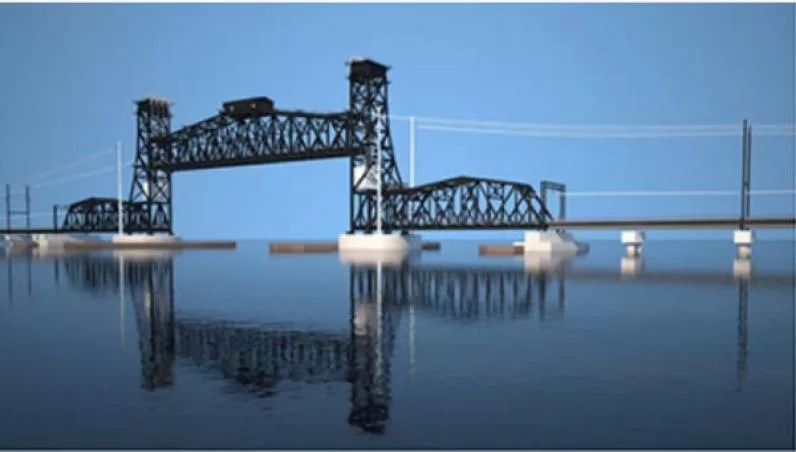
The Raritan River Bridge Replacement is a $595 million, two-phase infrastructure project replacing the 117-year-old damaged swing-span rail bridge on NJ Transit’s North Jersey Coast Line between Perth Amboy and South Amboy in Middlesex County, New Jersey, with a modern twin-track vertical lift bridge designed to withstand extreme weather events and allow uninterrupted marine traffic passage. Carrying more than 11,000 daily commuters and two million tonnes of freight annually, the original bridge sustained severe structural damage during Superstorm Sandy in 2012 — pushing the deck out of alignment and halting train and marine operations for three weeks — making replacement the most critical resiliency project on the North Jersey Coast Line. Approach span construction (Phase 1, awarded to George Harms Construction in 2020) is nearly complete, while Phase 2 — the $444 million Skanska Koch lift span contract — broke ground on June 24, 2025, with final completion targeted for Q3 2029. The Raritan project reflects the same federal infrastructure investment logic now driving major bridge replacements across the country, including the $1.05 billion replacement of the John A. Blatnik Bridge spanning St. Louis Bay between Duluth, Minnesota and Superior, Wisconsin — a 1961-era Interstate crossing carrying 33,000 vehicles and nearly $4 billion in annual freight, for which federal funding was officially released on March 18, 2026, with preliminary construction expected later this year and the new bridge targeted for opening in 2031.
Project Overview
Type: Rail bridge replacement — new twin-track vertical lift bridge replacing existing 117-year-old swing-span bridge
Location: Raritan River between Perth Amboy and South Amboy, Middlesex County, New Jersey
Rail line: NJ Transit North Jersey Coast Line (NJCL)
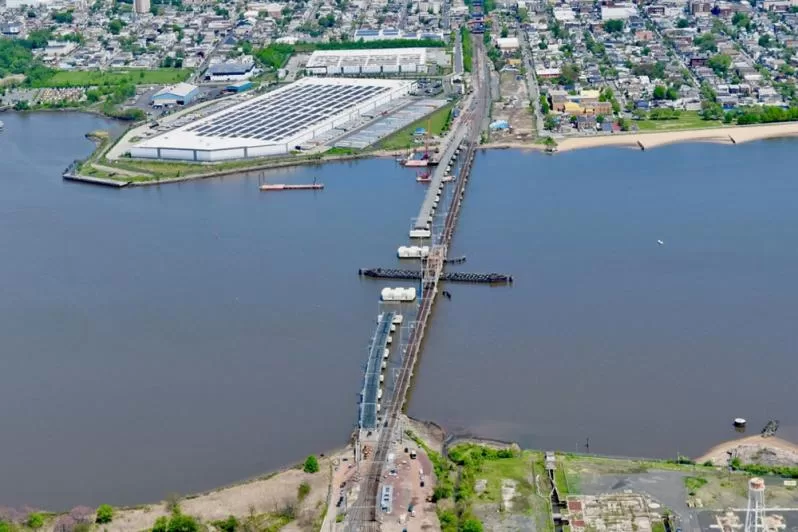
Existing bridge: 2,920-foot swing-span bridge; built 1908; damaged by Superstorm Sandy in 2012
New bridge: Twin-track vertical lift bridge; offset slightly from current alignment; reconnects to NJCL mainline at both ends; elevated above 100-year floodplain
Total project cost: $595 million
Federal funding: $444 million federal Emergency Relief Program grant (post-Superstorm Sandy)
Train speed improvement: Current 30 mph crossing → up to 60 mph on new bridge (doubled)
Daily commuters served: 11,000+
Annual freight: 2 million tonnes (Conrail freight service also uses bridge)
Phase 1 contractor: George Harms Construction Co. Inc. — awarded June 2020; scope: approach spans and four span pole fabrication; nearly complete as of mid-2025
Phase 2 contractor: Skanska Koch Inc. (Carteret, NJ) — awarded December 11, 2024; contract value: $444.4 million (+ 5% contingency)
Phase 2 construction commenced: April 2025; groundbreaking ceremony: June 24, 2025; target completion: Q3 2029
Phase 2 scope: Demolition of existing swing bridge superstructure; new vertical lift bridge towers; lift span; two flanking spans; communication and signal systems; overhead catenary; landside earthwork; rail system work; fender system; navigational channel
Existing bridge status: Remains in service with interruptions during construction; NJ Transit repaired supporting piers to enable continued operation
Project Team
Client: NJ Transit Corporation
NJ Transit President & CEO: Kris Kolluri (successor to Kevin Corbett who signed the Phase 2 contract)
Phase 1 Contractor: George Harms Construction Co. Inc.
Phase 2 Contractor: Skanska Koch Inc. (subsidiary of Skanska USA Civil)
Skanska Koch Senior VP & General Manager: Bill Matre
Bridge Designer: Hardesty & Hanover / Gannett Fleming joint venture
Programme Oversight: AECOM / Mott MacDonald joint venture ($34 million oversight contract)
Federal funding authority: Federal Transit Administration (FTA) — Emergency Relief Program
New Jersey Governor: Phil Murphy (attended Phase 2 groundbreaking)
NJ DOT Commissioner & NJ Transit Board Chair: Francis “Fran” O’Connor
Perth Amboy Mayor: Victor Prieto
South Amboy Mayor: Fred A. Henry
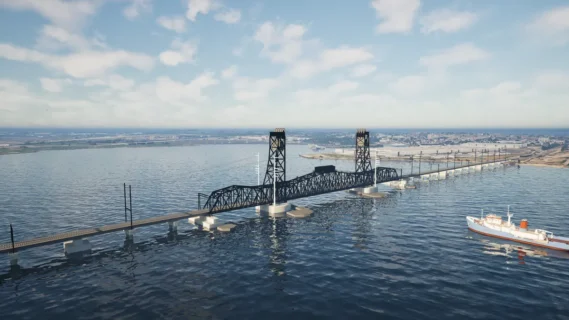
Published 12th December 2024: Skanska has been awarded the construction contract for the new Raritan River Bridge (River Draw). The contract award was by NJ Transit Corporation (NJ Transit) at a cost of $444 million. The bridge that lies on the North Jersey Coast Line will get a lift on a part of its damaged structure. Skanska will progress with construction work on the new Raritan RIver Bridge this April and complete the construction work in 2029.
The current 166-year-old 2,920-foot Raritan River Bridge stretching between Perth Amboy and South Amboy will have a vertical lift on its center portion. This will allow for easy marine traffic flow, replacing the old movable swing-span bridge to allow for vessel passage. Once complete, the new bridge will be a twin-track movable span bridge.
The President and CEO of NJ Transit, Kevin Corbett, termed the replacement of the Raritan River Bridge as the “most critical resiliency project” on the North Jersey Coast Line. He also made emphasis on the importance of the project, stating that it will critical in “ensuring a more reliable and robust rail link for thousands of daily customers on the North Jersey Coast Line”.
Contracts and cost for the new Raritan River Bridge replacement project
The latest construction contract for the new Raritan River Bridge has been awarded to Skanska at a cost of $444 million. This comes after a reveal of the overall cost for the project being $595 million. The total cost for the project was also catered for in part by a $444 million federal grant awarded to the project. A figure matching the Skanska Kock construction contract award for the new Raritan Riber Bridge project. The federal grant came after Superstorm Sandy as part of the federal Emergency Relief Program for resiliency projects.
In addition to this cost is the 5% for contingency on the construction of several parts of the project. Those included in an official statement by NJ Transit include: the lift bridge, flanking spans, overhead catenary, among others.
Also included in the latest construction contract for the new Raritan River Bridge are overhead catenary work, landside earthwork, and rail system work to be completed by Skanska.
The first construction contract for the new Raritan River Bridge was to George Harris Construction, and was awarded in June 2020. Focus of the first contract was on the approaches to the new bridge. This also included the fabrication of the four span poles to be thereafter erected on-site.
Reasons for the bridge replacement
The Raritan River Bridge connects Newark, NJ, to Manhattan, NY, and serves more than 11,000 commuters daily. As part of the 17 rail links between NJ and NY, and of the 20 New Jersey Coast Line stations, the bridge connects Perth Amboy and South Amboy stations and serves the freight service: Conrail.
The bridge needs replacement because of reasons not limited to the following:
- Damage to critical bridge components
- Misalignment of the bridge deck
- Vulnerability to extreme weather conditions, like Hurricane Sandy that did some real damage
- Improvement to marine traffic flow
Bill Matre, Skanska Koch senior VP and general manager also reinstated a widely shared sentiment in his statement. “This project will enhance transportation efficiency and safety measures, while simultaneously ensuring the bridge’s long-term resilience for the region.”
Also read: Portal North Bridge construction updates: Project reaches 75% completion on time and on budget
Skanska’s contract scope for New Raritan River Bridge replacement project
The replaced bridge will feature the following engineering make-overs: New –
- vertical lift bridge towers
- lift span
- two flanking systems
- communication and signal systems
- reinforced concrete piers on piles
- off-line replacement
- steel superstructure
- drive motor and electrical control, among others
These construction changes will supplement what was previously achieved in the first phase. Official communication has also pointed out that the necessary environmental, demolition and civil work will be adhered to. These were majorly completed in 2017 with the issuance of a “Finding of No Significant Impact” for the bridge replacement project by the FTA. The design phase for the new bridge started soon after and was completed a year later.
These will also help with the construction of the fender system and the navigational channel underneath the new bridge. The bridge will still be in use (with interruptions) as the transit authority already made repairs to the bridge’s supporting piers.
Leave a Reply