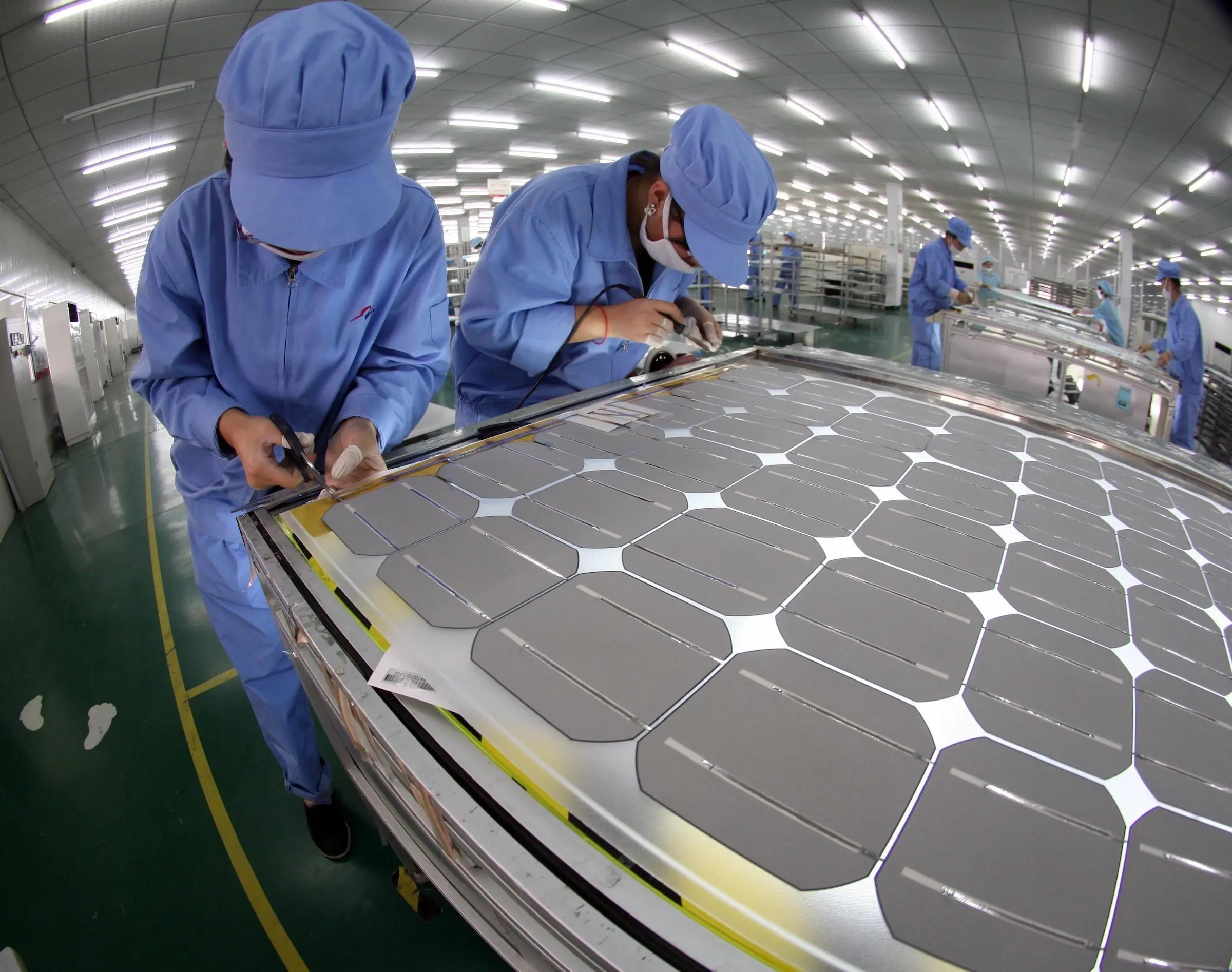
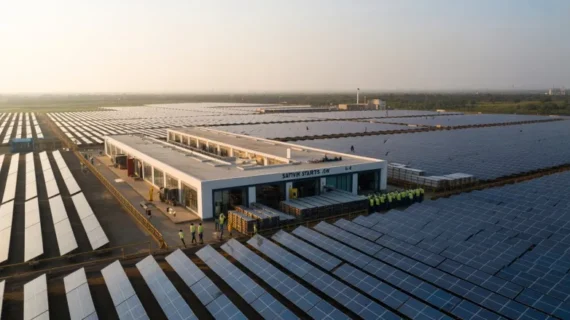
Saatvik Solar Industries has signed a Memorandum of Understanding with the Government of Odisha’s Industrial Promotion and Investment Corporation (IPICOL) to build a 3.6 GW solar cell facility at Gopalpur, Ganjam district. The plant forms Phase II of a site where Phase I, a 2.4 GW cell and 4 GW module line on 57 acres leased from Tata Steel’s Special Economic Zone, has finished construction and is preparing for commissioning.
What The MoU Covers
The agreement, signed with IPICOL on August 17, 2026, commits Saatvik Solar Industries Private Limited (SSIPL), the manufacturing subsidiary of listed Saatvik Green Energy, to a 3.6 GW solar cell line at Gopalpur. It sits alongside the company’s existing Phase I campus rather than on a new plot, extending a site the company began developing in mid-2025. The facility will run on land sub-leased from Tata Steel Special Economic Zone Limited within Gopalpur Industrial Park, on National Highway 16 at Chama Khandi, a location roughly 12 kilometres from Gopalpur port. Saatvik has not disclosed a capital outlay specific to the 3.6 GW line, and the state government has not published deal terms beyond confirming the MoU.
Odisha’s pitch to solar manufacturers rests on three overlapping instruments: the state’s Renewable Energy Policy of 2022, its Industrial Resolution Policy of 2022, and a Special Economic Zone policy dating to 2015, which together have already drawn cell and module commitments from Grew Energy, Jakson, and Jupiter Renewables to the same district. Saatvik’s Phase II expansion adds to that cluster rather than opening new ground for the state.
Phase I Nears Commissioning
The scale of Phase II only makes sense against how far Phase I has progressed. Saatvik’s own investor presentation for the quarter ended June 30, 2026, describes the 2.4 GW cell and 4 GW module campus as building-complete and site-ready, with tool installation finished and ramp-up activity due to begin by the end of August 2026. An inspection under the government’s second Approved List of Models and Manufacturers, or ALMM-II, is scheduled for September 2026; passing it would qualify Saatvik’s Gopalpur cells for domestic procurement under rules that took effect from August 31, 2025, restricting large parts of India’s solar market to ALMM-listed cell manufacturers. That qualification, more than the MoU itself, is what determines whether the site’s cell output finds a buyer at scale.
Financing An Expansion Against A Weak Quarter
The MoU lands alongside financial results that complicate the growth story. For the quarter ended June 30, 2026, Saatvik Green Energy’s consolidated revenue fell 44.20 percent year-on-year to ₹511.01 crore, and consolidated profit after tax dropped 95.40 percent to ₹5.36 crore, down from ₹116.60 crore a year earlier. The company attributes the contraction to the capital-expenditure transition around Gopalpur rather than to a change in order flow, and points to a debt-to-equity ratio that improved to 0.99x from 1.28x over the same period. That quarter follows a stronger FY26, in which annual revenue rose 111 percent to ₹4,548.4 crore and profit after tax climbed 64 percent to ₹357.1 crore, results announced in May 2026. The last disclosed capital figure for the two-phase Gopalpur campus, ₹3,150 crore, was set when Phase II was still scoped at 2.4 GW; with the cell line now enlarged to 3.6 GW, an updated investment figure has not yet been made public.
Backward Integration As The Real Prize
Saatvik’s push into cells fits a gap in India’s solar supply chain that manufacturers have been racing to close. Module manufacturing capacity in the country has scaled quickly, but cell capacity remains below 30 GW according to an SBI Capital analysis, leaving assemblers exposed to imported cell prices even as ALMM-II narrows the market to domestic cell suppliers. Waaree Energies’ 5.4 GW cell facility in Gujarat was built on the same logic, and Odisha itself is drawing a second wave of capital into adjacent infrastructure, including Adani’s proposed data centre campus in the state. The pattern extends beyond solar: Larsen & Toubro’s green hydrogen plant at IOCL’s Panipat refinery, contracted to supply 10,000 tons annually under a 25-year build-own-operate deal, represents the same kind of long-horizon capital commitment to domestic clean-energy manufacturing that Saatvik is making at Gopalpur, just in a different segment of India’s energy transition.
Open Questions
Saatvik has not disclosed a construction timeline, contractor, or capital cost specific to the 3.6 GW cell line, and IPICOL has not published the MoU’s investment or incentive terms. Phase I’s ALMM-II inspection, due in September 2026, is a near-term gate the company has not yet cleared. Job creation from the Gopalpur campus has been described only in general terms by the company and the state government, with no figure attached to Phase II specifically.
Project Fact Sheet
- Project Name: Gopalpur Integrated Solar Cell and Module Manufacturing Facility (Phase I and Phase II)
- Location: Gopalpur Industrial Park, Chama Khandi, Ganjam district, Odisha, India
- Developer: Saatvik Solar Industries Private Limited, a subsidiary of Saatvik Green Energy Limited
- Government Partner: Industrial Promotion and Investment Corporation of Odisha (IPICOL)
- Land: 57 acres sub-leased from Tata Steel Special Economic Zone Limited
- Phase I Capacity: 2.4 GW solar cells and 4 GW solar modules
- Phase II Capacity: 3.6 GW solar cells, revised up from an earlier 2.4 GW target
- Phase I Status: Construction and tool installation complete; ramp-up from late August 2026; ALMM-II inspection scheduled September 2026
- Last Disclosed Combined Project Value: ₹3,150 crore (set prior to the Phase II capacity revision)
- Funding Source: Company capital expenditure, partly supported by a ₹1,150 crore IPO completed in September 2025
Project Team
- Developer: Saatvik Solar Industries Private Limited (Saatvik Green Energy Limited)
- Government Partner: IPICOL, Government of Odisha
- Land Lessor: Tata Steel Special Economic Zone Limited
- Chairman & Managing Director: Neelesh Garg
- CEO, Saatvik Green Energy: Prashant Mathur



Leave a Reply