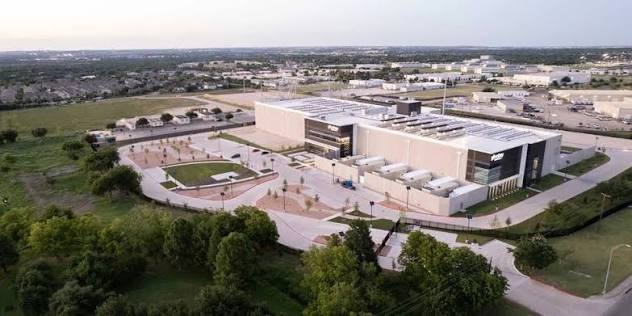
Sabey Data Centers has signed a 10-year virtual power purchase agreement (VPPA) with the operating Greasewood solar project in Texas, securing an estimated 130 gigawatt-hours (GWh) of renewable electricity generation annually as the company works toward its 2029 net-zero emissions target.
Announced on November 17, 2026, the agreement covers 43.5 megawatts (MW) of solar capacity and is expected to represent approximately 1.3 terawatt-hours (TWh) of generation over its 10-year term.
The agreement gives Sabey access to the environmental attributes associated with its contracted share of renewable generation. However, it does not involve the physical delivery of electricity directly from Greasewood to Sabey’s data centers. Instead, the solar facility supplies electricity to the utility grid, where it becomes available to residential, commercial and other electricity customers.
The arrangement allows Sabey to support renewable generation beyond its own facilities while incorporating the associated environmental attributes into its broader sustainability strategy.
Greasewood solar agreement adds long-term renewable energy commitment
The 130 GWh of estimated annual generation covered by the agreement is equivalent to the electricity consumption of approximately 12,500 households each year, according to Sabey.
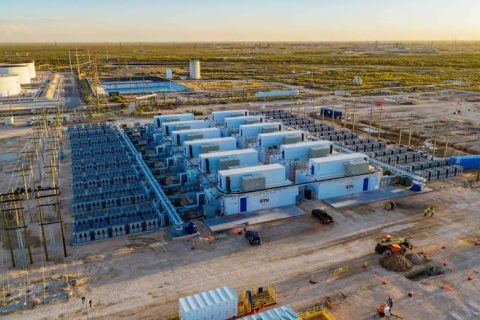
Greasewood is an established solar development in Pecos County, Texas, owned by Copenhagen Infrastructure Partners (CIP). The 255 MWac facility entered commercial operation in February 2021, with 150 MW of its capacity already covered by long-term electricity contracts involving Garland, New Braunfels Utilities and the Kerrville Public Utility Board.
Sabey’s agreement therefore adds another corporate offtake arrangement to an operating renewable energy asset rather than financing the construction of a new solar facility.
The distinction is important as data center operators increasingly use long-term renewable energy contracts to address the environmental impact of their expanding electricity requirements.
Unlike a conventional physical power purchase agreement, a VPPA is a financial arrangement that allows a buyer to contract against the output of a renewable energy facility without taking physical delivery of its electricity. The buyer receives the associated environmental attributes, while the generating facility continues supplying the grid.
Sabey has not disclosed the financial value of its agreement, the electricity price structure or the specific settlement terms.
Sabey reports 29.3% reduction in Scope 1 and Scope 2 emissions
The Greasewood agreement follows progress reported in Sabey’s 2025 Sustainability Report, which recorded a 29.3% reduction in combined Scope 1 and Scope 2 emissions against a 2018 baseline.
Scope 1 emissions cover direct emissions from sources controlled by the company, while Scope 2 emissions account for indirect emissions associated with purchased electricity.
Sabey calculated its reported reduction using the market-based method, which recognizes electricity procurement arrangements and associated environmental certificates when accounting for purchased electricity emissions.
The company’s 2029 target calls for net-zero Scope 1 and Scope 2 emissions through a combination of direct emissions reductions, energy efficiency improvements and qualifying carbon-free electricity procurement.
Sabey also plans to report any remaining Scope 1 emissions transparently and address them through independently verified carbon credits.
The distinction between emissions reductions and carbon credits is significant. The company’s target does not mean all operational emissions will necessarily disappear. Instead, Sabey intends to reduce emissions directly where possible and address residual Scope 1 emissions through verified credits.
Casey Mason, director of energy and sustainability at Sabey Data Centers, said the agreement reflects a longer-term approach to renewable energy procurement.
“Our 2029 net-zero goal requires us to think beyond simply buying renewable energy year to year,” Mason said. “This agreement is a long-term commitment that supports renewable generation on the grid and moves us meaningfully closer to where we want to be.”
Backup generator fuel adds another emissions reduction opportunity
Beyond renewable electricity procurement, Sabey is testing hydrotreated vegetable oil (HVO) as an alternative to petroleum diesel in backup generators at its SDC Austin facility.
The pilot addresses emissions associated with backup power equipment, which data centers rely on during utility outages and scheduled generator testing and maintenance.
Backup generators remain essential to data center operations because facilities must maintain electricity supply to critical IT equipment when the grid experiences interruptions.
Replacing conventional diesel with HVO could reduce the emissions associated with this part of Sabey’s operations, complementing the company’s efforts to address electricity-related emissions through renewable energy procurement.
The two initiatives target different sources of emissions. The Greasewood agreement supports renewable electricity generation on the grid, while the HVO pilot focuses on the fuel used by backup power systems.
Together, they form part of Sabey’s broader approach to reducing the environmental impact of its data center portfolio.
Data center operators face growing pressure to address electricity demand
Sabey’s agreement comes as the data center industry faces increasing scrutiny over electricity consumption, grid capacity and the environmental consequences of expanding AI infrastructure.
Long-term renewable energy agreements offer operators one way to support additional renewable generation while addressing market-based Scope 2 emissions. However, the environmental and grid benefits depend on factors including the generation profile, location, contractual structure and timing of renewable electricity production.
The Greasewood agreement does not establish that Sabey’s facilities will receive uninterrupted solar electricity or that the contracted generation will match their hourly electricity consumption.
Instead, it represents a long-term financial and environmental commitment tied to renewable generation in Texas.
The development also provides an example of how established renewable energy facilities can attract additional corporate buyers as data center companies pursue longer-term sustainability commitments.
As another example of how operators are addressing the infrastructure challenges associated with expanding AI computing capacity, Giga Energy has secured a $1 billion, 10-year lease for a 60 MW AI data center in Hunt County, Texas, where its development strategy combines modular construction with dedicated electrical infrastructure and closed-loop cooling.
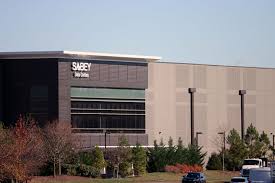
Sabey Data Centers solar agreement: Project factsheet
- Company: Sabey Data Centers
- Renewable energy project: Greasewood solar project
- Location: Pecos County, Texas
- Agreement: 10-year virtual power purchase agreement
- Contracted solar capacity: 43.5 MW
- Estimated annual generation: 130 GWh
- Estimated generation over 10 years: 1.3 TWh
- Equivalent household consumption: Approximately 12,500 households annually
- Greasewood installed capacity: 255 MWac
- Greasewood commercial operation: February 2021
- Sabey emissions reduction: 29.3% against its 2018 Scope 1 and Scope 2 baseline
- Net-zero target: 2029
- Additional sustainability initiative: HVO testing in backup generators at SDC Austin

Leave a Reply