
Sabriya City project is advancing toward contract signing as Kuwait accelerates procurement and partnership processes to unlock the estimated $22 billion development, positioning the scheme as a flagship housing and infrastructure initiative under Kuwait Vision 2035 while addressing long-standing residential demand pressures.
Procurement Progress and Contract Readiness on Sabriya City Project
Kuwait’s Public Authority for Housing Welfare continues to drive procurement activities for the Sabriya City project. Meanwhile, consultancy tenders issued earlier have shaped technical and planning frameworks.
As a result, contract packages are now approaching finalization stages. Authorities are currently reviewing proposals submitted by international and regional firms. In addition, stakeholders are aligning financial and engineering requirements ahead of execution. Therefore, the project is transitioning from planning into pre-construction phases.
Industry reports indicate contracts are ready to sign, reflecting strong institutional momentum. However, final approvals remain subject to government review and coordination processes. Consequently, timelines depend on swift administrative decisions.
Scope, Scale and Infrastructure Delivery Strategy
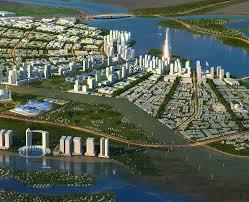
The Sabriya City project spans about 80 square kilometers in northern Kuwait. Furthermore, expansion plans could increase the total area to 110 square kilometers. Thus, it stands among the country’s largest integrated urban developments.
The master plan includes more than 52,000 residential units with full infrastructure. Similarly, roads, utilities, and public services will support long-term urban functionality. In addition, commercial zones and a marina are planned within the development. A key component involves a power plant with up to 5GW capacity. Likewise, water treatment and sewage systems will ensure sustainable operations. Therefore, the project integrates housing with critical infrastructure delivery.
China’s Metallurgical Corporation has proposed an Engineering, Procurement, Construction + Financing (EPC+F) implementation model. Notably, this structure combines construction responsibilities with full project financing. As a result, Kuwait can reduce immediate fiscal exposure while accelerating delivery.
The proposal also includes worker accommodation and supporting logistics infrastructure. Meanwhile, construction timelines are estimated at six to seven years. Thus, execution efficiency remains central to project viability.
Strategic Impact and Next Steps for Sabriya City Project
The Sabriya City project forms part of Kuwait’s broader housing expansion strategy. Moreover, it complements developments such as Khairan and Nawaf Al-Ahmad cities. Together, these initiatives aim to deliver approximately 170,000 housing units.
Kuwait continues to face a backlog of over 100,000 housing applications. Therefore, large-scale developments like Sabriya are critical to meeting demand. In addition, the project supports economic diversification objectives. Chinese participation reflects deepening bilateral infrastructure cooperation. Furthermore, site visits and technical reviews have strengthened coordination efforts. As a result, the project benefits from integrated planning and financing expertise.
Despite progress, contract signing has not yet been officially confirmed. However, current indicators suggest agreements could be concluded soon. Ultimately, timely execution will determine the project’s overall impact. The Sabriya City project continues to gain traction as Kuwait advances toward contract execution, reinforcing its position as a transformative development within the country’s long-term construction and infrastructure pipeline.
Similarly, Kuwait has already progressed other large-scale residential schemes, such as the $1.1bn South Saad Al Abdullah housing project, which saw construction contracts awarded as part of the country’s broader housing expansion strategy
Project Fact Sheet
Project Name: Sabriya City project (Al-Sabriya City)
Location: Sabriya area, northern Kuwait
Estimated Cost: $22 billion
Project Area: 80 sq km (expandable to 110 sq km)
Housing Units: Approximately 52,000–55,000 units
Development Model: EPC+F (Engineering, Procurement, Construction + Financing)
Estimated Duration: 6–7 years
Core Infrastructure:
- Power plant (3–5GW capacity)
- Water treatment and desalination systems
- Sewage and drainage networks
- Road and transport infrastructure
Additional Components:
- Commercial and investment zones
- Marina development
- Worker accommodation cities
- Integrated utilities and public services
Strategic Alignment: Kuwait Vision 2035
Primary Objective: Reduce housing backlog and enable large-scale urban expansion
Project Team
Client / Owner: Public Authority for Housing Welfare (PAHW), Kuwait
Proposed EPC Contractor and Financier: Metallurgical Corporation of China (MCC)
Government Stakeholders:
- Ministry of State for Municipal and Housing Affairs
- Kuwait Ministerial Committee overseeing China-Kuwait agreements
Development and Funding Partners:
- Chinese state-backed financing and infrastructure entities
- Potential private sector investors under PPP frameworks
Consultants and Technical Advisors (ongoing and expected):
- Urban masterplanning consultants
- Infrastructure engineering firms
- Environmental and feasibility study specialists
Roles and Responsibilities:
- PAHW: Project leadership, housing delivery oversight
- MCC: EPC execution and financing provision (proposed)
- Consultants: Design, planning, and technical validation
Government entities: Policy approval and regulatory coordination
Leave a Reply