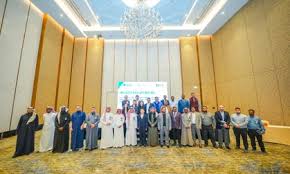
Saudi Arabia is getting its first purpose-built battery energy storage (BESS) manufacturing facility. ZOE Energy Group, a Chinese battery storage specialist, has signed a joint venture with a Saudi partner to erect an 18-gigawatt-hour factory on a 150-acre site engineered specifically for extreme desert conditions.
The deal is notable less for what it builds than for what it signals: the Gulf’s largest economy is moving to manufacture clean energy hardware at home, breaking a dependence on imports that has shadowed its renewable energy programme since it launched in earnest.
Saudi Arabia has committed to hitting 130 gigawatts of renewable capacity, 50 percent clean power generation, and 48 gigawatt-hours of storage. Those are enormous numbers. Meeting them with domestically produced equipment changes the economics — and the geopolitics — of the energy transition in ways that a fully imported supply chain cannot.
Construction Phases
The project builds out in two phases. The first delivers 6GWh of annual manufacturing capacity, with production starting in the first quarter of 2027. The second phase triples that output to 18GWh. For context, 18GWh of storage manufacturing capacity in a single country ranks among the largest concentrations of such infrastructure outside China, where ZOE is headquartered.
The Saudi facility marks ZOE’s second overseas production hub, after an existing plant in Hungary — a pairing that reflects a deliberate strategy of planting manufacturing stakes in regions where storage demand is poised to accelerate fastest. The company plans to certify the Saudi site to European manufacturing standards and pursue “Made in Saudi” accreditation, a designation that carries real procurement weight under the Kingdom’s localisation rules.
“The Middle East is a key engine of global energy transformation,” said Huang Jun, ZOE’s chairman. “This manufacturing base is a decisive step in our global strategy.”
The plant’s market ambitions extend well beyond Saudi borders. ZOE and its partner have named the Gulf Cooperation Council, broader Middle East and North Africa, Central Asia, and sub-Saharan Africa as target export markets — a combined addressable population of several billion people, most of them in climates where conventional storage systems have historically underperformed or simply never seen deployment at scale.
Green Energy Academy
The partners also plan to build a Green Energy Academy on-site to train locally certified technicians. That detail matters: previous Gulf industrial ventures have frequently drawn criticism for importing a workforce wholesale rather than building domestic expertise. Whether the academy delivers meaningful skills transfer is a question the project’s later phases will need to answer.
ZOE and its Saudi partner did not disclose the partner’s identity — an omission common in joint venture announcements but one that raises questions about financial structure and how aligned incentives really are on the localisation mandate.
If the project executes on its timeline, it marks the beginning of an industrial strategy for the energy transition in a region that has until now consumed green technology built elsewhere rather than manufacturing it. Whether ZOE becomes the anchor of that strategy — or simply its opening act — will depend on whether the 2027 production deadline holds.
The companies did not disclose the total investment figure or the specific location within Saudi Arabia where the facility will be built.
Saudi Arabia’s Vision 2030 programme targets 50% clean electricity generation by 2030. The Kingdom currently imports virtually all of its battery storage hardware.
Additionally, Saudi Arabia is also in talks to deliver 10GW of renewables and grid infrastructure for what would be the world’s largest green hydrogen plant, signalling how aggressively the Kingdom is moving to reshape its energy identity.
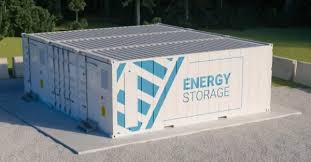
Saudi’s First Large-Scale Battery Storage (BESS) Manufacturing Facility: Key Facts
The deal — ZOE Energy Group has signed a joint venture with an undisclosed Saudi partner to build the Kingdom’s first large-scale battery energy storage manufacturing facility.
The site — 150 acres. Engineered for extreme desert climates. Targeting European manufacturing standards and “Made in Saudi” certification.
Phase I — 6GWh capacity. Production starts Q1 2027.
Phase II — Expands to 18GWh total.
ZOE’s global footprint — This is the company’s second overseas manufacturing hub, after an existing plant in Hungary.
Target markets — Saudi Arabia and the GCC, Middle East and North Africa, Central Asia, and sub-Saharan Africa.
The Saudi context — The Kingdom has pledged 130GW of renewables, 48GWh of storage, and 50% clean power generation under Vision 2030. This plant is designed to supply that build-out domestically.
The localisation play — The facility will pursue “Made in Saudi” certification, unlocking preferential procurement under the Kingdom’s localisation rules.
Skills — An on-site Green Energy Academy will train and certify local technicians.
Leave a Reply