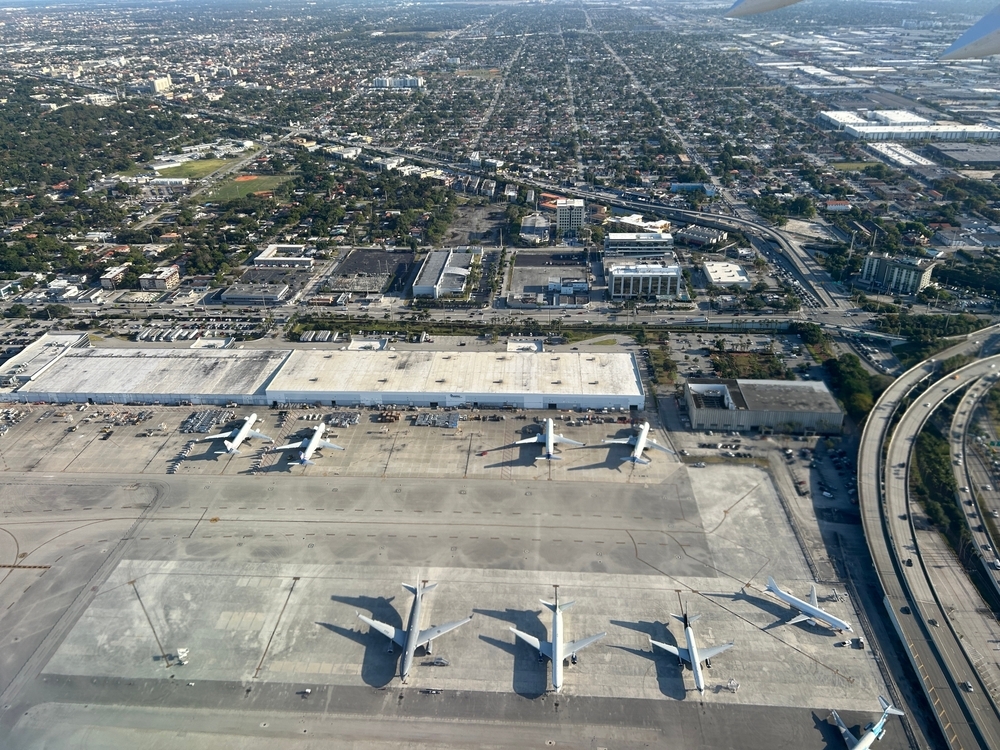
Miami International Airport (MIA) is undergoing a massive, multi-year overhaul valued at up to $14 billion under its ambitious “Future-Ready Modernization in Action” capital plan. Designed to scale the facility to support up to 77 million annual passengers and 5 million tons of freight by 2040, the master plan touches nearly every facet of the airport’s infrastructure from the airside gates to passenger amenities. Key major expansions include a $600 million project to build a brand-new Concourse K in the South Terminal featuring six contact gates, as well as the transformational “D60” expansion in Concourse D, which breaks ground in 2027 to replace outdoor commuter boarding with 17 full-size jet gates equipped with dedicated boarding lounges and direct connections to U.S. Customs.
Parallel to major terminal expansions, MIA is systematically modernizing core operational, safety, and logistical systems to drastically improve the passenger journey. Ongoing interior upgrades include replacing or refurbishing all 126 passenger boarding bridges, fully renovating 194 public restrooms, and modernizing over 600 conveyance units such as elevators, escalators, and moving walkways, throughout the airport. Parking and traffic flow are also receiving immediate tech-driven upgrades, including a automated camera-based parking navigation system, new express exit lanes, and the newly built Ibis Garage. Furthermore, the airport recently unveiled plans for a $33 million, 13,254-square-foot Airport Operations Center set to open in 2027, featuring AI-powered surveillance, 360-degree digital monitoring, and Category 5 hurricane-resistant infrastructure to serve as the facility’s central command hub.
Miami International Airport’s (MIA) $14 billion modernization plan mirrors a broader national trend of megaproject airport transformations across key U.S. international gateways, most notably illustrated by Washington Dulles International Airport’s (IAD) newly unveiled $22 billion capital overhaul. Both multi-billion-dollar initiatives are designed to future-proof critical hub operations by replacing decades-old, temporary, or bottlenecked infrastructure with expansive, state-of-the-art linear facilities, MIA through its $600 million Concourse K and Concourse D expansions, and Dulles via its replacement of its aging Concourses C and D alongside a new 435,000-square-foot Concourse E.
Furthermore, both capital programs prioritize resolving passenger transit and logistical hurdles to drastically streamline the travel journey. While MIA is systematically refurbishing over 600 conveyance units, replacing all 126 passenger boarding bridges, and building an AI-powered Airport Operations Center, Dulles is permanently retiring its legacy 1960s “mobile lounge” shuttle buses in favor of an expanded underground AeroTrain network and direct pedestrian links to a new U.S. Customs facility. Anchored by close coordination with their primary airline tenants, American Airlines at MIA and United Airlines at Dulles. Both mega-developments emphasize expanded gate counts, upgraded premium lounges, and advanced operational technologies to handle surging long-term international passenger volumes.
April 29, 2026
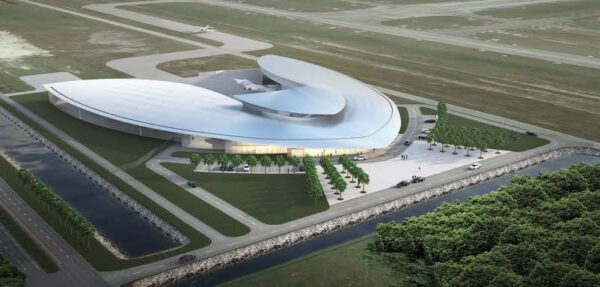
A second commercial airport in Miami is being considered as $9bn Miami International Airport overhaul proceeds. Miami-Dade county officials are evaluating the possibility of building the passenger-focused airport as capacity concerns grow. Currently, Miami International is currently operating at about 80% of its airfield capacity. Moreover, according to a report from the county mayor, the airport is approaching its threshold capacity.
The FAA has recommended officials to consider expanding infrastructure to avoid delays. “Capacity challenges could impact growth, create travel delays, and affect our competitiveness,” Miami-Dade Commission Chair Anthony Rodriguez noted. “We have to act now and plan ahead,” he also added.
County commissioners are considering three primary options. It includes constructing a new airport or expanding existing facilities such as Miami Executive Airport. The other also includes the Miami Homestead General Aviation Airport to incorporate broader commercial operations.
Outlook on the Second Commercial Airport in Miami
The second commercial airport in Miami is marred in various considerations as officials consider the most amicable timeline. The commission has directed the mayor to provide a funding strategy by early June. If approved, officials told local NBC 6 that it could take 12 to 15 years to expand an existing airport. On the other hand, it could take up to 20 years to construct a new facility.
The discussion comes as part of long-term planning efforts highlighted at an annual “State of the Ports” event. Moreover, officials outlined projections of increased passenger and cargo demand. The airport’s $14 billion capital improvement plan aims to accommodate 77 million passengers and 4.2 million tons of cargo by 2040.
According to OAG, Miami International was the tenth-busiest airport in the U.S. last year, with about 32.8 million seats. It is also the second-busiest airport in Florida, behind Orlando, and the fifth-busiest airport in the South. It is a major gateway for flights to and from the Caribbean and South America, especially for American Airlines, its largest passenger carrier. The airport also has one of the longest airport runways in the U.S., the 8R/26L which is 13,000 feet (3,962 meters) long.
Project Overview
- Project Name: Second Commercial Airport / Miami Airport Expansion Plan
- Project Type: Airport infrastructure development
- Value: $9 billion+ (MIA overhaul)
- Purpose: Increase passenger capacity in Miami
- Status: Under evaluation by county officials
Key Stakeholders
- Authority: Miami-Dade County officials
- Existing Airport: Miami International Airport
- Regulator: Federal Aviation Administration
- Key Figure: Anthony Rodriguez
Location
- City: Miami
- State: Florida
- Country: United States
Scope
- Possible new passenger airport
- Expansion of existing regional airports
- Long-term increase in passenger and cargo handling
Funding / Delivery Model
- County-led planning process
- Funding strategy under preparation
- Potential public infrastructure financing
Status
- Capacity review underway
- Options under assessment
- Funding plan expected by June
Key Risks & Challenges
- Long delivery timelines
- High capital costs
- Environmental and land-use approvals
Strategic Significance
- Addresses future airport congestion
- Supports Miami’s regional competitiveness
- Strengthens international air connectivity
Options Under Review
- Build a new commercial airport
- Expand Miami Executive Airport
- Expand Miami Homestead General Aviation Airport
Project Team
New Concourse K Construction : Lemartec-NV2A JV, LLC (General Contractor)
Airport Enabling Facilities: Winmar Construction, Inc. (General Contractor)
Airline Partners: Primary tenant carriers, led by American Airlines (which operates MIA’s major hub in Concourse D), work alongside MDAD on gate sequencing, holdroom redesigns, and terminal workflow integration.

Leave a Reply