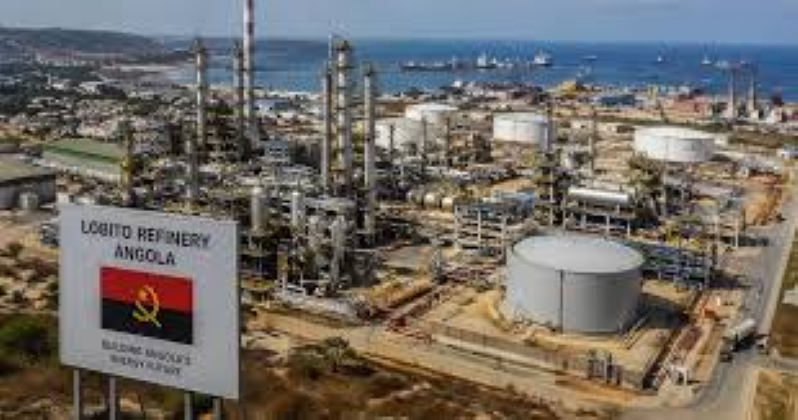
Lobito Oil Refinery project in Angola remains one of Africa’s most strategically significant downstream investments, with construction progressing while sponsors intensify efforts to close a major financing gap ahead of the next build phase. Located in Benguela Province near the Atlantic port city of Lobito, the 200,000 barrels-per-day refinery is designed to transform Angola from a major crude exporter heavily dependent on imported fuels into a more self-sufficient refined products producer.
As of early 2026, physical progress had reached approximately 23%, with first production still targeted for late 2027, while sponsor Sonangol continues seeking approximately US$4.8 billion in additional financing, including talks with Chinese institutions and potential regional equity partners such as Botswana Oil Limited.
Lobito Oil Refinery Project Fact Sheet
Location: Lobito, Benguela Province
Project Type: Greenfield refinery
Capacity: 200,000 barrels per day
Estimated Capex: US$6.2-6.6 billion
Status: Under construction
Physical Progress: 23% completed
Mechanical Completion Target: December 2027
Expected Commercial Operations: 2028
Operator: Sonaref (Sonangol refining subsidiary)
Products:
- Gasoline
- Diesel
- Jet fuel
- LPG
- Naphtha
Project Timeline
2019
- Lobito Refinery formally announced as Angola’s flagship downstream expansion project.
2020-2022
- Early planning, FEED work, and project structuring.
2023
- Construction activities ramp up following renewed state prioritization.
January 2026
- Angolan President Joao Lourenco visits site; government confirms 23% physical progress and reaffirms December 2027 first production target.
February 2026
- Sonangol confirms search for US$4.8bn financing package from Chinese institutions.
April 2026
- Discussions emerge around potential Botswana participation in refinery equity structure.
December 2027
- Planned first production and commissioning of initial process units.
2028
- Expected full commercial operations and ramp-up.
Project Team
Owner
- Sonangol – Angola’s national oil company and lead project sponsor.
Refining Subsidiary
- Sonaref S.A. – Sonangol’s downstream/refining subsidiary managing refinery operations.
EPC Contractor
- China National Chemical Engineering Co., Ltd. (CNCEC) – Lead EPC contractor responsible for engineering, procurement and construction.
Government Stakeholders
- Ministry of Mineral Resources, Petroleum and Gas, Angola
Potential Strategic Partners
- Botswana Oil Limited
- Zambia
Potential Lenders
- Chinese financial institutions (including possible involvement of China Development Bank)
Project Significance
Lobito Oil Refinery is the centerpiece of Angola’s downstream industrial strategy and is expected to materially reduce the country’s dependence on imported fuels, which currently cost billions annually despite Angola being one of Africa’s largest crude producers. Alongside the newly operational Cabinda Oil Refinery, Lobito is intended to anchor Angola’s long-term refining ecosystem while potentially supplying regional markets including Zambia, Botswana, and the DRC.
Its success is also not only industrial but geopolitical. This is because Lobito sits at the intersection of Angola’s fuel security agenda, regional trade ambitions and broader infrastructure integration linked to the wider Lobito Corridor.

Sonangol and CNCEC Break Ground On Construction Of Lobito Oil Refinery
Reported November 16, 2023 – Angola, through its state-owned oil company Sonangol, has initiated the construction of the Lobito Refinery in partnership with the China National Chemical Engineering Company (CNCEC).
The Lobito Refinery, with an estimated investment cost of around $6 billion, will have a daily production capacity of 200,000 barrels of light and high-quality petroleum products. Angola, despite being a significant oil producer, currently relies heavily on imports, spending nearly $2 billion annually on petroleum product imports. The new facility is expected to tap into Angola’s vast untapped crude oil reserves of approximately 9 billion barrels, helping alleviate the country’s reliance on imported gasoline and oil.
Situated strategically near Angola’s 1,000-mile Atlantic coastline, the Lobito Refinery will receive crude oil from offshore platforms, converting it into petroleum products for domestic consumption and export to neighboring countries. It is anticipated that the refinery will supply petroleum products to the Republic of the Congo and Zambia, fostering regional economic growth and reducing the carbon footprint associated with long-distance fuel transportation in south-central Africa.
Operational Date Set for Lobito Oil Refinery
This new petroleum processing facility, slated to be operational by 2025, aims to expand Angola’s crude oil production and reduce its dependence on energy imports. This project is part of Angola’s broader economic development strategy as the country seeks to capitalize on its significant oil reserves. Sonangol is concurrently involved in other major refinery projects, including one in Soyo capable of producing up to 100,000 barrels of crude per day and another in Cabinda set to distill 60,000 barrels of refined oil daily.
Additionally, there are plans to privatize part of Sonangol’s equity by 2026, marking a significant shift in the ownership structure of the state-owned energy company. As Angola positions itself as a key player in the global energy market, these initiatives are expected to contribute to stability and growth in the country’s economy.
Read also MoU Signed for Construction of Lobito Oil Refinery in Angola


Leave a Reply