There is a quiet crisis brewing across America’s electrical grid, and it is being driven by our insatiable appetite for Artificial Intelligence.
Every time you ask an AI chatbot a question, generate an image, or stream data, a massive building somewhere in America—a data center—guzzles a staggering amount of electricity. These digital warehouses are being built at a record pace, and they are threatening to overwhelm our aging power grid. Experts have warned that we might have to build massive, expensive new fossil-fuel power plants just to keep the lights on, a cost that would ultimately be passed down to everyday utility ratepayers.
But today, three major companies announced a radical new plan to solve this problem—and they want to use your living room, your garage, and your thermostat to do it.
The 16-Gigawatt Team-Up
In an official press release issued this morning, June 24,2026, Sunrun, Renew Home, and Tesla announced an unprecedented agreement to band together. Their goal? To cobble together a massive, invisible shield for the power grid capable of delivering 16 gigawatts (GW) of electricity.
To put 16 gigawatts into perspective, that is enough energy to power roughly 12 million homes simultaneously, or equal to the output of several traditional nuclear power plants.
But here is the catch: they aren’t building a single square foot of concrete power plants. They aren’t burning coal, gas, or disrupting acres of pristine land. Instead, they are building a “Virtual Power Plant” (VPP).
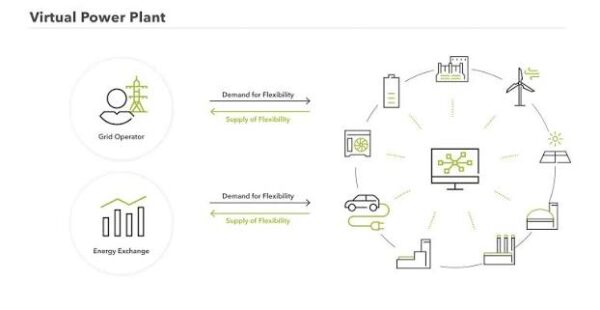
What on Earth is a “Virtual Power Plant”?
Think of a Virtual Power Plant like ridesharing apps, but for electricity. Instead of the city buying thousands of expensive buses, a ridesharing app pools together thousands of everyday citizens who already own cars to move people around.
A Virtual Power Plant does the exact same thing with home energy. This new alliance is going to link together:
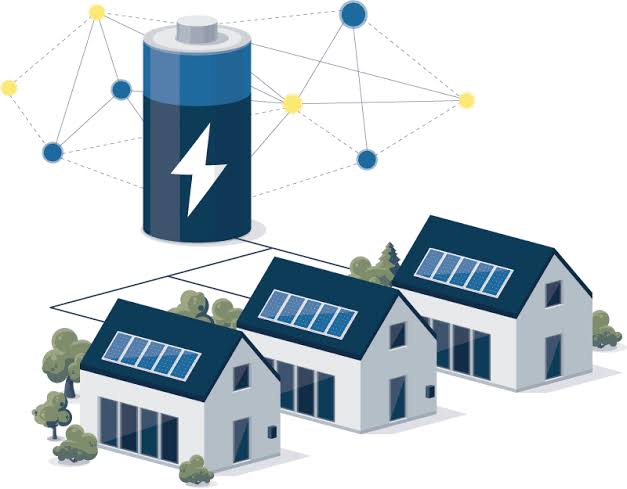
- Hundreds of thousands of existing home solar backup batteries (installed by Tesla and Sunrun).
- Over 8 million smart thermostats (managed by Renew Home).
When the power grid comes under stress—say, on a hot summer afternoon when everyone turns on their AC and local AI data centers draw maximum power—the Virtual Power Plant springs into action behind the scenes.
Instead of forcing a utility company to fire up a dirty “peaker” power plant, the VPP automatically signals millions of smart thermostats to nudge down a single degree for an hour. Simultaneously, it safely siphons a tiny bit of stored, clean solar energy from household batteries back into the local grid.
Why This Matters to You
If you don’t own solar panels or a smart thermostat, you might wonder why you should care. The answer is simple: your wallet.
When power companies have to build new physical infrastructure—new power plants, thousands of miles of high-voltage transmission lines, and new substations—they don’t pay for it out of pocket. They pass those multibillion-dollar bills directly onto everyday consumers by raising monthly electricity rates.
By utilizing the “latent” energy already sitting idle in American homes, this alliance frees up immediate space on the existing grid. A recent analysis by the Brattle Group noted that better utilization of our current grid could save U.S. consumers between $110 billion and $170 billion over the next decade. Furthermore, it allows newly constructed data centers to get the power they need without triggering massive blackouts or causing your electricity bill to skyrocket.
For the families who do participate by allowing their devices to be linked, the benefits are even more direct. They will receive financial rewards, lower energy bills, and better AI-driven tools to manage their home energy.
Coming to a Grid Near You
Virtual Power Plant AI grid: This isn’t a futuristic concept; it is happening right now. In Virginia—the absolute epicenter of U.S. data center development, often called “Data Center Alley”—the coalition already has 300 megawatts of capacity ready to deploy immediately, with plans to scale to 500 megawatts by 2030.
As the race for AI computing power accelerates, tech giants are desperately searching for electricity. Today’s announcement proves that the ultimate savior of America’s high-tech future might not be a new energy breakthrough, but rather the collective power of the appliances already inside millions of American homes.
While pooling household devices creates a brilliant virtual shield, some data centers are taking an even more radical approach: bypassing the public utility system entirely through “Behind-the-Meter” (BTM) power. This booming infrastructure trend flips the script by forcing tech companies to build their own private, self-sufficient utility ecosystems directly on-site. By generating electricity on their own side of the fence, these massive computing hubs cut the public cord completely—allowing them to scale instantly while insulating local communities from power strain and rising utility bills.


Leave a Reply