For decades, the deal between Big Tech and America’s electric utilities was simple: tech companies built the data centers, and utilities plugged them in. But the artificial intelligence boom has officially broken that contract.
AI data centers are so power-hungry that they are swallowing up grid capacity at an unprecedented pace, leaving public utilities overwhelmed and facing multi-year backlogs just to connect new facilities. Faced with the choice of waiting years for electricity or taking matters into their own hands, tech giants are executing a radical infrastructure pivot: they are building their own private power plants directly on-site.
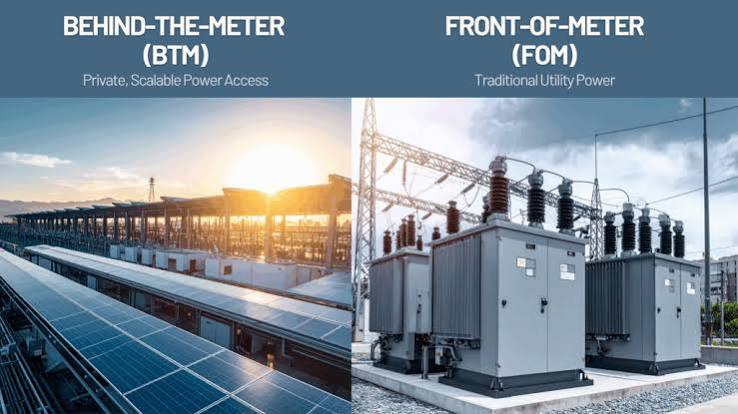
This shifting phenomenon is known as “Behind-the-Meter” (BTM) power, and it is triggering some of the largest, most disruptive construction projects in modern American history.
What is “Behind-the-Meter” Power?
When you buy electricity for your home, that power travels from a distant plant, through high-voltage public lines, and passes through the utility meter on the side of your house. You are buying power from the public grid.
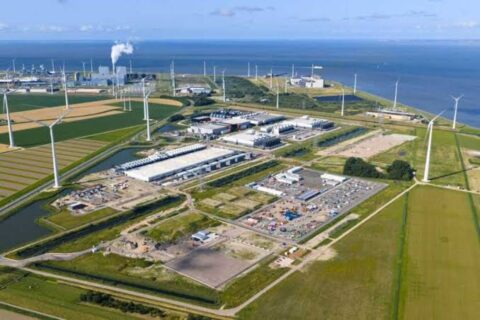
“Behind-the-Meter” means a data center operator completely bypasses that public meter. They construct a utility-scale power plant on their side of the fence, directly next to their computer warehouses. The electricity goes straight from the generators into the server racks. By taking themselves entirely off the public grid, tech companies can bypass regulatory red tape, ignore grid congestion, and bring massive AI compute centers online in months instead of years.
The New Giants of On-Site Infrastructure
This isn’t a pilot program; it is a full-scale industrial shift. Look no further than the massive announcements capturing national headlines:
- The Modular Fuel Cell Fleet: Just today, June 24, 2026, FuelCell Energy and Fit Energy USA announced a massive 380-megawatt (MW) strategic agreement to deploy clean, on-site power solutions specifically for advanced AI computing hubs. Instead of drawing from local grids, Fit Energy is buying modular fuel cell systems that generate electricity on-site via an electrochemical reaction using hydrogen or natural gas. The deal is moving so fast that a deposit has already been paid for an initial 30 MW block of equipment scheduled for delivery later this year.
- The 2-Gigawatt Colocation (Pecos, Texas): Earlier this week, Microsoft and Chevron shocked the energy sector by signing a 2-year-old development framework into a massive 20-year power purchase agreement. Microsoft is constructing a multibillion-dollar AI campus in West Texas, but rather than plugging into the fragile Texas grid, Chevron is building a staggering 2.67-gigawatt natural gas power plant directly on-site to power Microsoft’s servers behind the meter.
- The Co-Located Nuclear Shift (Susquehanna, Pennsylvania): In one of the most famous examples of this trend, Amazon Web Services (AWS) purchased a 960 MW data center campus built directly adjacent to Talen Energy’s Susquehanna nuclear power plant. Amazon is drawing zero-carbon nuclear electricity directly from the plant before it ever touches the public transmission grid.
The Other Side of the Coin: Virtual Power Plants
While companies like Fit Energy, Microsoft, and Amazon are choosing to cut the cord entirely with massive on-site generation, others are looking inside the American home for a solution. An equally massive framework announced today by Sunrun, Tesla, and Renew Home aims to solve the data center power crunch from the opposite direction. Instead of building private power plants for tech hubs, they are aggregating millions of everyday household batteries and smart thermostats into a massive Virtual Power Plant to shield the public grid from AI demand spikes.
Why Private Infrastructure Wins the Public’s Favor
If you don’t work in heavy construction, this shift might seem distant—but it directly impacts your wallet.
When tech companies force traditional utilities to upgrade public substations and high-voltage lines to handle their massive new data loads, regular citizens usually end up footing the bill through increased monthly electricity rates.
By pivoting to behind-the-meter setups, the tech industry is taking the strain completely off the public’s shoulders. These massive AI projects can break ground, scale up, and operate without hogging local energy resources, increasing the risk of summer blackouts, or causing your neighborhood electricity bill to spike.
As the AI boom accelerates, the tech industry is proving it can no longer treat the public power grid like a bottomless well. The rise of behind-the-meter infrastructure proves that the most sustainable, efficient way forward for Big Tech is to become entirely self-sufficient—building the future of computing and the future of energy in their own backyards.


Leave a Reply