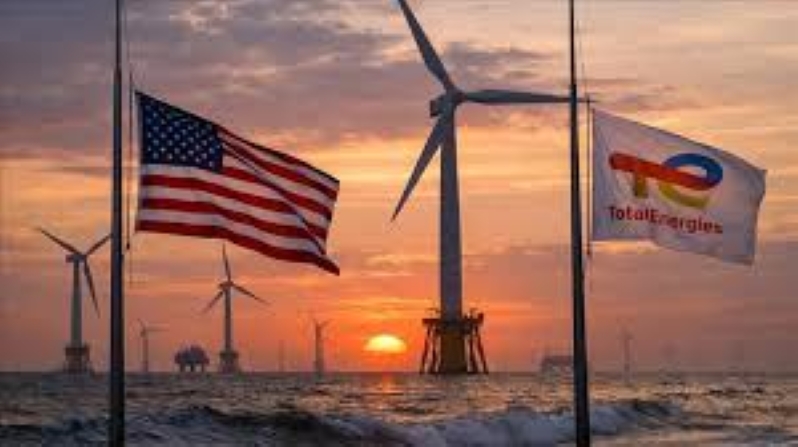
In a dramatic development in U.S. offshore wind business, TotalEnergies has signed settlement agreements with the U.S. Department of the Interior (DOI) under which the French energy giant will relinquish its offshore wind leases in the United States and cease all U.S. offshore wind development. The agreements, finalized on 23 March 2026, cancel two major lease areas – OCS‑A 0538 (New York Bight/Attentive Energy) and OCS‑A 0545 (Carolina Long Bay), both acquired in 2022 – and provide for reimbursement of up to about $928 million for the lease fees TotalEnergies previously paid.
In exchange, the company has pledged to reinvest the refunded capital into domestic oil, natural gas, and liquefied natural gas (LNG) projects, including expansion at the Rio Grande LNG facility in Texas and additional upstream fossil fuel development. The move has been publicly positioned by the DOI and the Trump administration as a step toward “affordable, reliable” energy, but has drawn strong criticism from clean‑energy advocates who see it as a setback for U.S. offshore wind growth and climate policy.
Why is TotalEnergies Signing Agreements with U.S. Department of Interior to End its U.S. Offshore Wind Projects Important?
The U.S. offshore wind sector has been a central component of federal and state clean‑energy goals, particularly during the Biden administration’s push to deploy 30 GW of offshore wind by 2030 and establish long‑term renewable energy capacity off the East Coast and beyond.
However, under the current U.S. federal administration, regulatory and political headwinds have intensified. A series of administrative suspensions and legal challenges froze or challenged multiple major projects – including Vineyard Wind 1, Revolution Wind, Sunrise Wind, and others – even as courts occasionally restored permits or construction rights. Some projects like Duke Energy’s offshore plans off North Carolina stopped due to costs and an indirect push by stringent federal policies. This settlement with TotalEnergies formalizes the withdrawal of two large planned developments, signaling a major policy shift favoring fossil fuel expansion over federal support for offshore wind in federal waters.
Regulators and advocates on both sides frame the agreement differently. DOI and Interior leadership describe the deal as freeing up capital for conventional energy and lowering consumer costs, while environmental groups warn the cancellation of nearly 4 GW of potential offshore wind capacity undermines U.S. clean energy progress, particularly as offshore wind is already more developed globally (and has significant technical potential).
A Look at the Finances as TotalEnergies Signs Agreements with U.S. Department of Interior to End its U.S. Offshore Wind Projects
- Lease Reimbursement Value: $928 million reimbursed by the U.S. government to TotalEnergies for relinquished offshore wind leases.
- Reinvestment Commitment: TotalEnergies to invest an equivalent amount into U.S. fossil fuel projects, including expansion of Rio Grande LNG in Texas, Gulf of Mexico oil fields, and shale gas development.
- Lease Costs Paid (2022): $795 million for New York Bight (Attentive Energy) and $133 million for Carolina Long Bay.
- Policy Framework: Agreement aligns with DOI direction and federal energy policy under current administration but departs from prior offshore wind leasing expansion goals.
Project Team Behind the Cancelled TotalEnergies Offshore Wind Projects in the U.S.
Attentive Energy (OCS‑A 0538)
- Leaseholder: Attentive Energy LLC (TotalEnergies with partners Corio Generation and Rise Light & Power)
- Location: New York Bight (offshore New York/New Jersey)
- Planned Capacity: 3 GW (two separate project segments under development)
- Development Timeline: Aimed for commissioning in the late 2020s (pre‑cancellation)
- Stakeholders: TotalEnergies (majority), Corio Generation, Rise Light & Power
Carolina Long Bay (OCS‑A 0545)
- Leaseholder: TotalEnergies (direct federal lease)
- Location: Offshore North Carolina
- Planned Capacity: 1 GW
- Development Timeline: Aimed for operational status by early 2030s (pre‑cancellation)
U.S. Government and Regulatory Bodies Involved in the Cancellation of TotalEnergies Offshore Wind Projects in the U.S.
- Department of the Interior (DOI): Negotiated and signed the settlement agreements with TotalEnergies.
- Bureau of Ocean Energy Management (BOEM): Federal agency responsible for initial lease sales and permitting of U.S. offshore wind areas.
- U.S. Department of Justice (DOJ): Involved in negotiating federal settlement reimbursements.
Fact Sheets for the Cancelled TotalEnergies Offshore Wind Projects in the U.S.
Attentive Energy
Lease ID: OCS‑A 0538
Location: Federal waters off NY/NJ
Developer: Attentive Energy LLC (TotalEnergies, Corio Generation, Rise Light & Power)
Planned Capacity: 3 GW
Acquisition Year: 2022
Status (March 2026): Cancelled and relinquished
Reason: Lease reimbursement agreement with DOI
Intended Commissioning: Late 2020s
Carolina Long Bay
Lease ID: OCS‑A 0545
Location: Offshore North Carolina
Developer: TotalEnergies
Planned Capacity: 1 GW
Acquisition Year: 2022
Status (March 2026): Cancelled and relinquished
Reason: Lease reimbursement agreement with DOI
Intended Commissioning: Early 2030s

Implications and Outlook as TotalEnergies Signs Agreements with U.S. Department of Interior to End its U.S. Offshore Wind Projects
This settlement effectively removes nearly 4 GW of planned offshore wind capacity from the U.S. pipeline and signals a major pivot in federal energy policy toward prioritizing fossil fuel development over offshore renewable infrastructure. This is a move that industry groups and environmental advocates have sharply criticized as undermining long‑term clean energy goals and job growth potential in the offshore wind sector. Offshore wind – a technology where the U.S. still lags major global markets – now faces renewed uncertainty despite strong state‑level targets, supply chain progress, and federal research initiatives.
At the same time, the reinvestment of capital into LNG and oil projects aligns with current Trump administration and federal strategic emphases on energy security and export capacity, particularly in LNG markets, which have grown significantly in recent years.
The long‑term effects on electricity pricing, grid decarbonization trajectories, and offshore wind investor confidence in the U.S. remain subjects of intense debate.
Leave a Reply