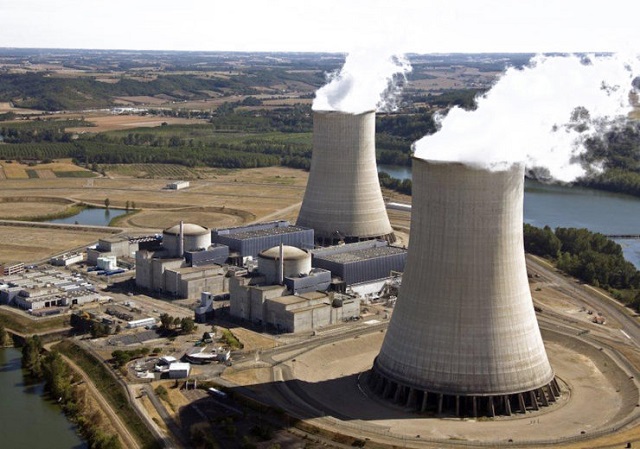
The Uganda Nuclear Plant Project represents a national approach to developing energy resources in that country. As already announced, the country recently embarked on putting in place plans for its maiden nuclear power plant after the Ministry of Energy and Mineral Development declared that it was working closely with the IAEA to develop nuclear energy due to the increasing national demand for power. The Ugandan government is currently prospecting and assessing uranium resources, with support from the IAEA, to ensure the long-term sustainable and reliable supply of nuclear fuel for future power plants and research reactors, according to Irene Batebe, Permanent Secretary at the Ministry of Energy and Mineral Development.
Other than Uganda’s nuclear power plant, East African countries such as Kenya are also advancing their nuclear ambitions. Kenya has selected state-owned KenGen as the owner-operator of the country’s first nuclear power plant. Energy Cabinet Secretary Opiyo Wandayi noted that the planned plant will be developed by Nuclear Power and Energy Agency (NuPEA). Furthermore, it is expected to begin with 2 GW with capacity expected to scale to 6 GW in later phases. “This marks the beginning of Kenya’s nuclear-power era,” Wandayi said. “Assigning KenGen the owner-operator role anchors the programme in technical capability and public trust.”
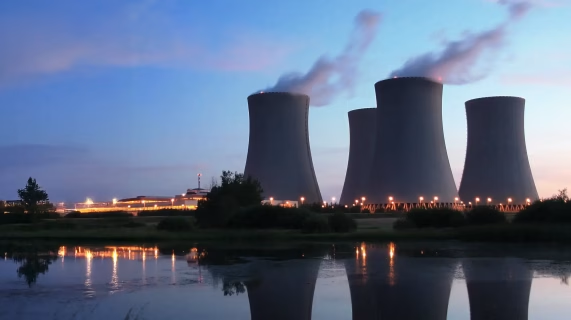
Capacity of the Uganda Nuclear Plant Project
The expected capacity of the nuclear power in this nuclear plant is foreseen to require approximately 4,000 tons of Uranium in a year when it becomes fully operational. This leads to the inevitable need of sustainable sources of Uranium so as to keep the nuclear power plant up and running.
“Uranium is the most widely used mineral as nuclear fuel in nuclear power plants and even in the research reactors. This mineral is required for the nuclear power program of the country,” she mentioned during the opening of the nine-day meeting that was held with the experts from the IAEA.
Current State of Affairs Regarding the Project
Additionally, Irene Batebe revealed that the Ugandan government is currently amending the Atomic Energy Act 2008 which seeks to strengthen and promote the legal framework for the exploration works, mining activities, and also the processing of the nuclear fuel resources. In another scenario, the permanent secretary pointed out the existing source of generating electricity in the country and also measured its total capacity of delivering the long-term energy production targets of Uganda. She stated that the electricity generation potential from the sources of hydropower, biomass, geothermal, and also peat, if developed fully, will not be able to meet the Uganda Vision 2040 targets.
In the previous year, the government of Uganda set up a cabinet that got to adopt the Energy policy for Uganda, 2023 which envisages developing a total of 52, 481MW generation capacity in the long run in order to meet the future energy demands of the country, out of which a total of 24,000MW will be generated from nuclear energy.
Timelines to note Regarding the Project
The government of Uganda has commenced reviewing the country’s Uranium potential ahead of the plan of developing nuclear energy by the year 2031. The review that is being conducted by the Integrated Uranium Production Cycle Review Mission, is set to evaluate the preparedness of Uganda for nuclear energy production in terms of the laws, capacity, reserves, safety, and even the protection of the environment just to mention a few.
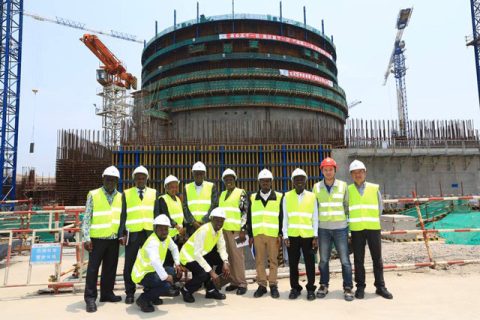
According to Mr. Emmanuel Wamala, who is the Ministry of Energy acting commissioner for nuclear fuel and radioactive waste, stated that the country was currently at the exploration stage of the cycle of production, which will eventually lead to a uranium deposit.
Also read: 1000 Megawatts Kenya Nuclear Power Plant Construction to Commence in 2027
Uganda Nuclear Power Stations to be Built by Russia and Korea