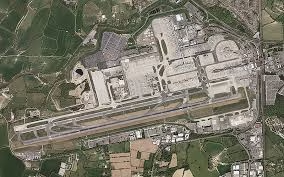
Gatwick second runway project has moved into its delivery phase after the Court of Appeal dismissed the remaining legal challenge. The £2.2 billion expansion will bring the airport’s Northern Runway into routine use. The ruling clears the final major legal obstacle following an eight-year planning process. Gatwick can now advance detailed design and delivery work for the airport construction programme.
The UK Government approved the project’s Development Consent Order on September 21, 2025. However, two campaign groups challenged the approval through judicial review proceedings. The High Court dismissed those challenges in June 2026. The Court of Appeal rejected the remaining challenges on August 4, 2026.
Gatwick second runway project clears final legal hurdle
The Gatwick second runway project will convert the existing Northern Runway for routine operations. Gatwick currently uses the runway mainly for taxiing and contingency operations.
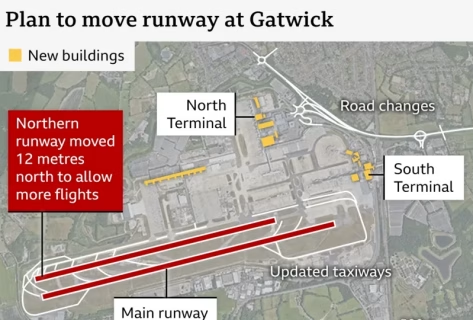
The approved scheme will move the Northern Runway 12 metres north. This adjustment will create the required separation between the two runways. The project will also deliver new taxiways, aircraft stands and associated airfield infrastructure.
Furthermore, the Development Consent Order covers terminal works, hotels, offices, car parking and surface-access improvements. The construction programme will therefore extend beyond the runway itself.
Gatwick now expects the Northern Runway to support its first flights from 2030. The additional capacity could accommodate up to 100,000 more flights annually.
The airport says the expansion could increase passenger capacity to around 80 million annually. Gatwick handled 42.8 million passengers in 2025.
Gatwick second runway project advances into construction delivery
Following the court ruling, Gatwick can now progress detailed design and delivery activities. The airport confirmed that the project has moved from planning toward its implementation phase.
The programme remains one of the UK’s largest privately financed infrastructure developments. Gatwick expects the expansion to create 14,000 jobs across the region. It also forecasts an additional £1 billion in annual economic benefits.
Meanwhile, construction will take place while the airport continues normal operations. Contractors will therefore need to coordinate airfield works with existing passenger and aircraft movements.
The airport will also implement measures covering noise, surface access and environmental impacts. These requirements form part of the conditions attached to the development consent.
The Gatwick expansion comes as the UK advances another major airport construction programme. The Heathrow third runway project is now targeting a 2039 opening under its £49 billion expansion plan.
The Heathrow scheme involves a £49 billion expansion programme covering its proposed Northwest Runway and supporting infrastructure. Its revised timeline contrasts with Gatwick’s move from planning into delivery.
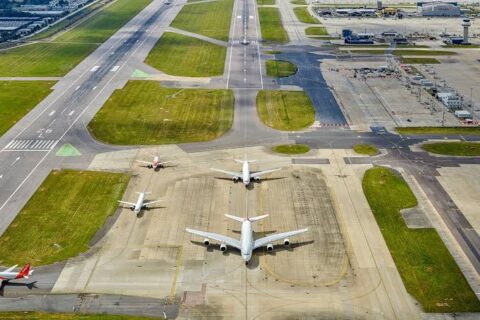
Gatwick second runway project expands UK airport capacity
The Northern Runway programme will allow Gatwick to operate its two runways simultaneously. This change will increase the airport’s capacity without requiring an entirely new runway site.
The development will also support additional airline capacity and passenger connectivity. Government estimates indicate that the project could add 100,000 flights annually from 2030.
Gatwick expects the expansion to generate additional business, tourism and trade activity. The airport also plans an employment, skills and business strategy around the development.
However, delivery will require detailed engineering, procurement and phased construction. The project team must also maintain airport safety throughout the works.
The Court of Appeal ruling removes the remaining legal uncertainty surrounding the development consent. Gatwick can therefore concentrate on turning the approved plans into operational infrastructure.
Updated November 20 2025:
Campaigners from Communities Against Gatwick Noise Emissions (CAGNE) have since filed a judicial review challenge against the government’s approval of Gatwick’s second runway, arguing the decision inadequately assessed greenhouse-gas impacts, noise, and wastewater risk. Meanwhile, Gatwick warns that a proposed 300% rise in business rates, driven by a change in valuation methodology, could make its £2.2 billion runway investment unviable. Local environmentalists also argue that the expansion will significantly worsen emissions and encroach on protected landscapes, intensifying opposition to the project, much as similar concerns were raised during the approval of Heathrow’s new runway and £150 million M25 reroute, which aims to handle 150 million passengers annually.
Published September 22 2025: Transport Secretary Heidi Alexander has signed off on a second runway at London Gatwick Airport, a £2.2 billion ($2.96 billion) project that is one of the country’s biggest infrastructure projects in years. The privately funded project is only one piece of the government’s broader strategy to promote economic growth. Gatwick is UK’s second busiest airport.
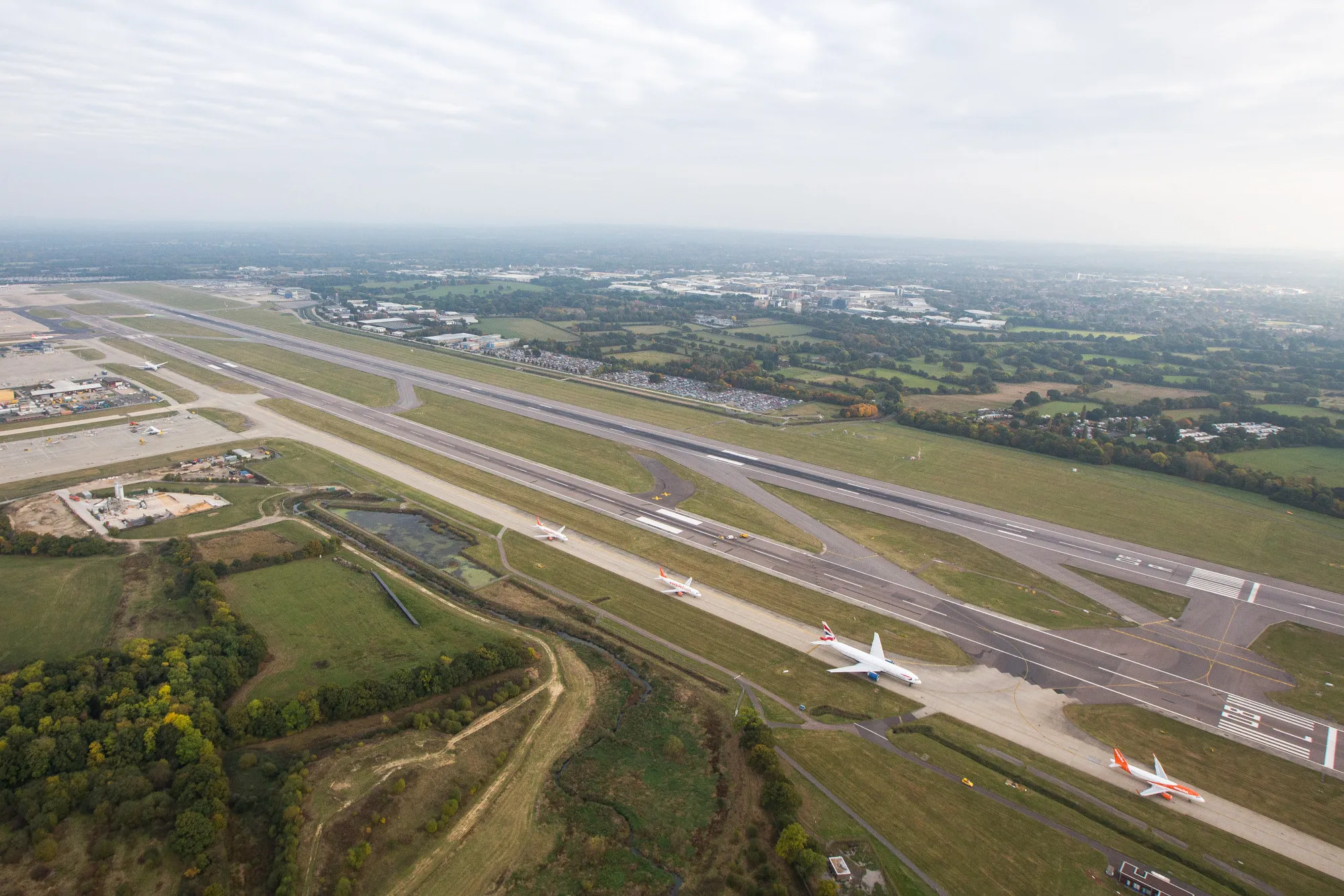
The project includes the Northern Runway currently in use by Gatwick being moved 12 metres to be within the safety rules so that it can operate side by side with the main runway. Terminal and improvement work are included in the project. Currently the runway is used taxiing or reserve purpose only, could be fully operational by the end of the decade.
Jobs and Growth at the Forefront
Chancellor Rachel Reeves said the expansion would generate “thousands of jobs and billions in investment,” framing it as a cornerstone of the government’s “get Britain building again” agenda. Gatwick estimates the scheme will support 14,000 new jobs, boost trade and tourism, and increase its flight capacity from 280,000 annually to nearly 389,000 by the late 2030s. Passenger numbers could eventually double to 80 million a year.
The second runway could be operational in 2029.
The second runway project at London Gatwick Airport comes alongside Heathrow’s ongoing and planned multi-billion-pound efforts to upgrade existing infrastructure and lay the groundwork for a future third runway.
Environmental and Local Concerns
While the project has strong political backing, environmentalists opposed it. The announcement was described by the Green Party as a “disaster,” according to the impact of increased air traffic and emissions. Planning inspectors raised noise, congestion, and other local effects concerns earlier this year.
To address these issues, Gatwick has pledged to stricter conditions, including louder noise controls, insulation grants for homes in the area, and an assurance that at least 54% of passengers use public transport on the runway’s opening day. The airport must also contribute towards triple-glazing for residents that are bothered as well as stamp duty and part-moving expenses for people who relocate.
Transport Commitments
Reaching the target for public transport will depend on third-party collaboration, including that of the Department for Transport. Gatwick has included restoring the entire Gatwick Express service, reduced from four trains an hour before the pandemic to two since 2022, as an important part of the scheme, which complements broader initiatives like the £6.7 billion East West Rail project linking Oxford and Cambridge.
Europe’s Busiest Single-Runway Airport
Handling over 40 million passengers every year, Gatwick is already the busiest single-runway airport in Europe. The addition of the second runway in the future will reshape its position in the UK air transport system to accommodate more short-haul flights from the Northern Runway, reserving the main runway for higher long-haul operations.
Project fact sheet
Project: Gatwick Northern Runway Project
Location: London Gatwick Airport, West Sussex, United Kingdom
Value: £2.2 billion
Type: Airport expansion and infrastructure construction
Development: Northern Runway brought into routine use
Existing Northern Runway: Primarily used for taxiing and contingency operations
Runway adjustment: Northern Runway centreline moved 12 metres north
Proposed runway operation: Dual-runway operations
Additional annual flights: Up to 100,000
Potential passenger capacity: Around 80 million annually
2025 passenger traffic: 42.8 million
Expected regional jobs: 14,000
Estimated annual economic benefit: £1 billion
Development consent approval: September 21, 2025
High Court ruling: June 23, 2026
Court of Appeal ruling: August 4, 2026
Current status: Design and delivery phase
Expected first Northern Runway flights: 2030
Main construction works: Runway, taxiways and aircraft stands
Supporting works: Terminal, surface-access and airport infrastructure
Financing: Privately financed
Project team
Project promoter: Gatwick Airport Limited
Airport operator: Gatwick Airport Limited
Airport shareholders: VINCI Airports and Global Infrastructure Partners
Government authority: UK Department for Transport
Development consent authority: Secretary of State for Transport
Planning authority: Planning Inspectorate
Aviation regulator: Civil Aviation Authority
Northern Runway development: Gatwick Airport Limited
Airfield infrastructure: Gatwick Airport Limited
Terminal infrastructure: Gatwick Airport Limited
Surface-access infrastructure: Gatwick Airport Limited and relevant authorities
Development consent process: Development Consent Order
Legal challenge: Peter Barclay and Communities Against Gatwick Noise Emissions
High Court: Planning Court
Final appeal court: Court of Appeal
Target first operations: 2030



Leave a Reply