
The Democratic Party’s sweeping victory in the 2026 US midterm elections is raising questions about the future of data center construction across the country. With Democrats taking control of both chambers of Congress and winning several key gubernatorial races, the results could usher in a more restrictive policy environment for the rapidly expanding AI infrastructure industry.
The November 3 elections delivered Democrats control of the US House of Representatives and Senate, while Republicans retained the White House under President Donald Trump. The outcome sets up a divided federal government in which Democratic lawmakers will have greater influence over congressional investigations, legislation and regulatory oversight.
For the data center construction industry, however, the most immediate concern is the growing political opposition to new facilities, particularly those designed to support artificial intelligence (AI) computing.
Data centers have become increasingly controversial in the US as communities raise concerns over their enormous electricity requirements and water consumption. The data centers also raise concerns on environmental impacts and the potential effects on residential electricity bills.
The 2028 US midterm election results have given political momentum to candidates who campaigned on restricting the industry’s expansion. This potentially changes the conditions under which data center developers secure land, obtain permits and connect new facilities to the electricity grid.
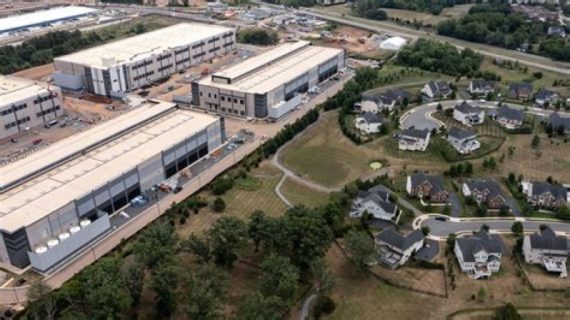
Data Center Construction Faces Greater Regulatory Scrutiny
One of the most significant implications of the Democratic victory is the possibility of increased congressional scrutiny of the data center industry.
With control of both chambers, Democrats will have the opportunity to influence legislation and congressional committee priorities concerning AI development. The Dems will also have greater say in matters energy infrastructure, environmental protection and the incentives available to technology companies.
This could also revive proposals seeking to introduce stricter conditions on new data center developments. This includes requirements for greater community consultation, environmental disclosures and stronger protections for electricity consumers.
A nationwide moratorium on new data center construction has also featured in the political debate. Earlier in 2026, Senator Bernie Sanders and Democratic Representative Alexandria Ocasio-Cortez introduced legislation seeking to temporarily halt new data center development until stronger safeguards governing AI infrastructure are established.
The proposal seeks to address concerns over electricity costs, environmental impacts and the limited involvement of local communities in decisions concerning large-scale developments.
Although Democratic control of Congress could give such proposals greater legislative visibility, their passage is not guaranteed. President Trump retains veto authority, meaning that significant disagreements between the White House and Congress could prevent sweeping federal restrictions from becoming law.
Nevertheless, increased congressional investigations and hearings could put additional pressure on technology companies and data center developers to demonstrate the economic and environmental benefits of their projects.
Texas and Georgia Emerging as Key Battlegrounds
The election outcome could have particularly significant implications for Texas and Georgia, two important markets for data center construction.
In Texas, Democratic gubernatorial candidate Gina Hinojosa defeated incumbent Republican Greg Abbott, ending three decades of Republican control of the governor’s office.
Hinojosa campaigned on introducing a moratorium on new data center approvals until state lawmakers establish legislation providing stronger protections for communities and electricity consumers.
The development is particularly significant because Texas has become one of the country’s leading destinations for data center investment. The state has also attracted major technology companies including Google, Meta and Microsoft. Anthropic is also planning a $50 billion US data center buildout across US states, including Texas.
Additionally, Texas accounts for approximately one-quarter of US data center capacity expected to come online by 2030, based on estimates from GLJ Research.
The state’s appeal has historically included relatively inexpensive land, energy availability and a business-friendly investment environment. However, these advantages are increasingly being weighed against electricity demand, grid capacity and environmental concerns.
Even before the election, Abbott had introduced measures to scrutinize the data center industry’s expansion. These included a comprehensive audit of data center projects, restrictions affecting new grid connections and temporary restrictions on certain air permits.
Hinojosa’s proposed moratorium could extend those restrictions. It could also create further uncertainty for developers with projects awaiting approvals or electricity connections.
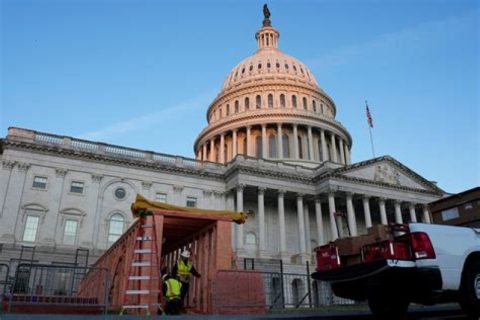
Democratic Win in Georgia
In Georgia, Democrat Keisha Lance Bottoms also won the gubernatorial election, ending more than two decades of Republican control.
The victory is significant for the construction industry because Atlanta has emerged as one of the most active data center construction markets in the US. Goldman Sachs has also warned that Democratic gains could contribute to construction delays in Georgia and Texas.
Other states, including Ohio, also face potential policy changes. Democrat Amy Acton’s gubernatorial victory has raised concerns over the future of major proposed developments, including a 10-gigawatt data center project involving Nvidia.
Local Opposition Could Lead to Construction Moratoriums
Beyond the federal and state-level political changes, the 2026 US midterms demonstrate that opposition to data center construction has become a significant local political issue.
According to Ballotpedia, voters in 10 states considered 41 ballot measures affecting local data center development on November 3. Of these, 28 proposed restrictions such as construction bans or moratoriums, while the remaining 13 sought to facilitate development through measures such as zoning changes.
After the election, voters rejected data center expansion measures in all but one of the contests. This points toward the strength of opposition to large-scale facilities in several communities.
The outcome could also encourage additional municipalities and county governments to introduce temporary construction freezes. This is while reviewing the effects of proposed developments.
For contractors and developers, this could translate into longer planning and approval processes. This could also lead to additional environmental assessments and greater uncertainty surrounding construction schedules.
Local governments could also reconsider zoning regulations and development agreements. This is particularly to where residents have raised concerns about noise, land use, water consumption and the visual impact of large industrial facilities.
The growing opposition is also likely to increase the importance of community engagement during the early stages of project development.
Electricity Costs and Grid Infrastructure to Become Major Policy Issues
Another major issue likely to shape future data center construction policies is who pays for the electricity infrastructure required to support these facilities.
The rapid expansion of AI computing has created unprecedented demand for electricity. This is forcing utilities and grid operators to plan substantial investments in generation, transmission and distribution infrastructure.
Furthermore, communities and consumer advocacy groups have increasingly questioned whether residential and commercial electricity customers should bear any portion of the costs associated with connecting large data center developments to the grid.
Consequently, the new political environment could accelerate efforts to require developers to finance dedicated power infrastructure and grid upgrades. They would also need to cover other improvements needed to accommodate their electricity demand.
One proposal attracting attention is the GRID Savings Act, introduced by Senator Martin Heinrich. The GRID Savings Act seeks to prevent the costs of grid infrastructure associated with large AI data center developments from being passed on to ordinary electricity consumers.
The new Congress could also revisit the proposed Ratepayer Protection Act and other legislative measures aimed at ensuring that large electricity consumers pay their fair share of the infrastructure costs they generate.
For developers, these requirements could significantly affect project economics. This is especially true for facilities requiring hundreds of megawatts of electricity.
Projects incorporating dedicated power generation, battery energy storage systems and other independent energy solutions could also consequently become more attractive as developers seek to reduce dependence on constrained public electricity networks.
Data Center Developers Could Shift Investments to More Favorable Markets
The changing political environment could also influence where technology companies and infrastructure developers choose to build their next facilities.
Developers facing uncertainty over permitting, tax incentives and grid connections in traditional data center markets may increasingly consider states offering more predictable approval processes and favorable investment conditions.
This could redistribute investment across the US rather than necessarily bring the country’s data center construction boom to an end.
According to Reuters, analysts at HSBC have identified increased regulatory oversight and the relocation of projects from states such as Texas to other markets as possible outcomes of the election.
Goldman Sachs has also estimated that temporary project halts resulting from Democratic gains at state and local levels could put approximately 45% of planned US data center capacity expansion at risk.
However, analysts have cautioned that delays in construction do not necessarily indicate weakening demand for AI computing infrastructure.
Technology companies also continue to require substantial computing capacity. This means that projects capable of demonstrating reliable power supply, regulatory compliance and meaningful community benefits could retain their investment appeal.
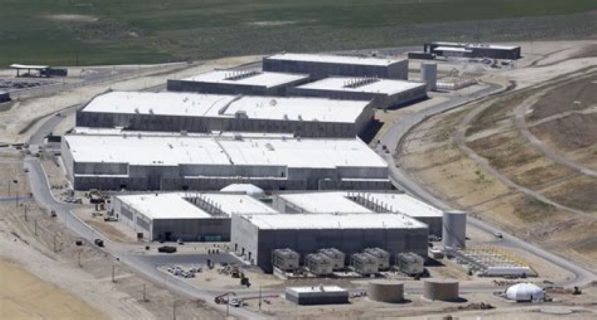
What the Democratic Midterm Victory Means for US Data Center Construction
The 2026 midterm elections represent a significant political turning point for the US data center construction industry.
Although the outcome does not automatically introduce nationwide restrictions on new data center developments, it strengthens the position of lawmakers seeking greater oversight of the industry’s expansion.
The immediate implications are likely to be felt through state-level permitting decisions, local zoning restrictions, electricity connection requirements and the review of tax incentives.
For construction companies, engineering firms, energy developers and technology investors, the changing environment could make project planning more complicated. This is all the more likely in states where incoming administrations have explicitly promised to restrict new development.
At the same time, the growing emphasis on dedicated power generation, grid modernization, energy storage and environmental compliance could create additional opportunities for companies providing supporting infrastructure.
Ultimately, the direction of US data center construction will depend on how the new Congress and state administrations work on legislations and policies.
The underlying demand for AI infrastructure remains strong. However, developers may increasingly have to demonstrate that their projects can deliver economic benefits without placing disproportionate pressure on electricity consumers, water resources and surrounding communities.
Key Facts on the Outlook of US Data Center Construction after Democratic Victory in the November 3, 2026 Midterm Elections
Federal government: Democratic control of the House of Representatives and Senate. Republican President Donald Trump remains in office.
Key affected states: Texas, Georgia, Ohio, among others
Key policy concerns: Construction moratoriums, permitting, zoning, electricity costs, grid connections, water consumption and environmental compliance.
Potential industry impact: Project delays, additional regulatory requirements, higher development costs and relocation of planned investments.
Estimated capacity at risk: Goldman Sachs estimates that temporary halts could affect 45% of planned US data center capacity expansion.
Industry outlook: AI infrastructure demand remains strong, but development faces increased political and regulatory uncertainty.
Expected policy developments: Greater congressional oversight. Possible changes to tax incentives are also expected. stronger ratepayer protections and increased community participation.
Who is Involved?
US Congress – Federal legislation, oversight and AI infrastructure policy.
Senate Committee on Commerce, Science and Transportation – Technology, telecommunications and related policy oversight.
House Committee on Energy and Commerce – Energy infrastructure, environmental policy and technology legislation.
US White House – Federal executive policy and approval or veto of legislation.
Gina Hinojosa – Texas governor-elect. Campaigned on a proposed data center development moratorium.
Keisha Lance Bottoms – Georgia governor-elect. Her administration will influence the state’s development and energy policy.
Amy Acton – Ohio governor-elect. Her election introduces uncertainty for the state’s data center investment pipeline.
Data Center Coalition (DCC) – Industry association representing data center developers and operators.



Leave a Reply