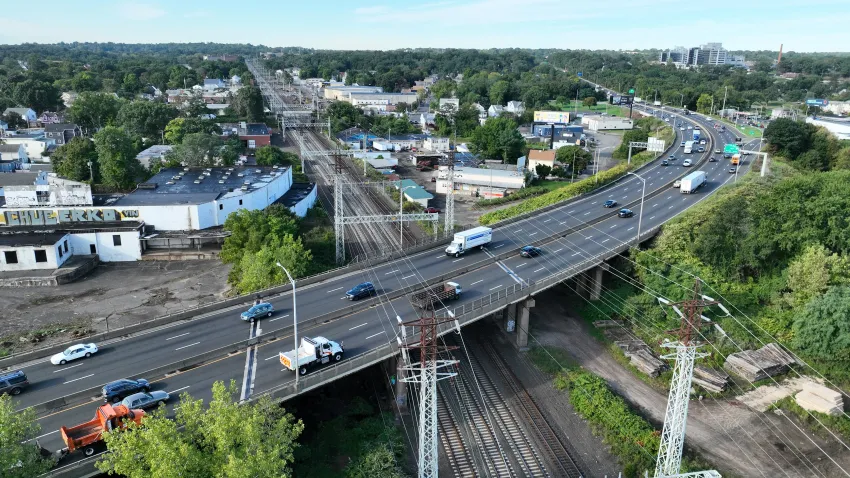
The Interstate 95 bridge replacement and traffic flow improvement project in West Haven continues to advance as a long-term infrastructure upgrade aimed at replacing aging highway structures and easing one of Connecticut’s busiest commuter corridors. The $136 million initiative is led by the Connecticut Department of Transportation in partnership with contractor The Middlesex Corporation, with substantial federal and state funding supporting the effort.
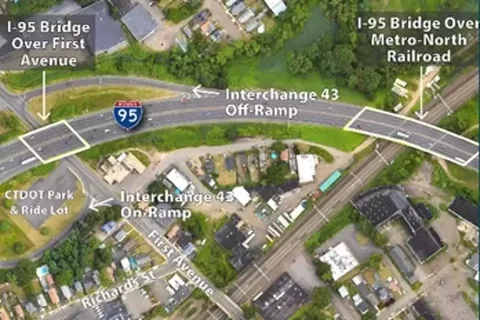
Two major bridges carrying I-95 traffic over 1st Avenue and the Metro-North Railroad tracks are being fully reconstructed, replacing structures that have served the region for more than 70 years. Once complete, the new bridges are expected to provide a service life of at least 75 years, significantly improving safety, durability, and long-term reliability along the corridor.
The project sits on a critical stretch of Interstate 95 in West Haven, where daily traffic volumes exceed 140,000–145,000 vehicles, often resulting in severe peak-hour congestion.
Project scope and long-term improvements
Beyond bridge replacement, the work includes a broader redesign of the highway geometry to improve traffic flow and reduce chronic bottlenecks. Key upgrades include:
- Reconstruction of two aging bridge structures over 1st Avenue and the Metro-North rail line
- Expansion of southbound capacity between Exit 44 and Exit 43 through an added auxiliary lane
- Redesign of merge areas to improve on- and off-ramp efficiency
- Drainage, lighting, and roadside infrastructure upgrades along more than 2,000 feet of approach roadway
State officials, including Governor Ned Lamont and U.S. Senator Richard Blumenthal Richard Blumenthal, have described the project as both a safety investment and a long-term economic infrastructure upgrade supporting regional mobility and construction employment.
Local leaders, including West Haven Mayor Dorinda Borer Dorinda Borer, have emphasized the importance of the project in addressing persistent congestion and improving daily travel reliability for commuters.
Construction staging and traffic management
To keep I-95 operational throughout construction, the project is being delivered in carefully sequenced phases. Traffic management measures are designed to maintain flow even during peak work periods:
- Three travel lanes are maintained in each direction during daytime operations
- Nighttime lane shifts and intermittent closures are used for demolition and structural work
- The Exit 43 northbound on-ramp closure and detours were introduced to support major bridge and median construction activities
- Traffic patterns are continuously adjusted to balance safety and mobility across the corridor
These measures are intended to limit disruptions while allowing major structural components to be rebuilt safely over active highway and rail corridors.
Speed cameras introduced in active work zone
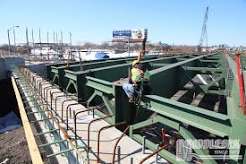
A notable recent development is the activation of automated speed enforcement cameras at the Exit 43 work zone. Introduced on June 1, 2026, the system is designed to improve safety for both motorists and construction crews during active construction phases.
Drivers exceeding the posted speed limit by 10 mph or more may receive automated warnings during the initial rollout period, followed by enforceable citations beginning in July 2026. Officials describe the system as a targeted safety measure rather than a revenue initiative, focused on reducing speeding-related risks in narrowed work zones.
Outlook through 2027
The project remains on track for substantial completion by late 2027. As construction continues, the corridor is expected to experience ongoing lane shifts and periodic ramp modifications, but overall capacity will be preserved to maintain traffic flow.
Once completed, the upgraded I-95 corridor in West Haven is expected to significantly improve reliability, reduce congestion at key merge points, and provide a more resilient infrastructure backbone for one of New England’s most heavily traveled highway segments.
The West Haven I-95 corridor upgrade is part of a wider set of major transportation investments across Connecticut aimed at modernizing heavily used interstate networks and reducing long-standing congestion points. A similar large-scale effort is currently underway in Meriden, where work has begun on the $721 million I-91/I-691/Route 15 interchange improvements project, designed to overhaul a complex highway junction, improve traffic flow between multiple routes, and enhance overall regional connectivity.
Read also: Kiewit Hired as Construction Manager for $800M I-55 Bridge Replacement
I-95 Bridges Replacement Project — West Haven: Factsheet
Project Overview
- Location: West Haven, Connecticut
- Corridor: Interstate 95 (over 1st Avenue & Metro-North Railroad)
- Project Type: Full bridge replacement + traffic flow improvements
- Agency: Connecticut Department of Transportation Connecticut Department of Transportation
- Contractor: The Middlesex Corporation
- Total Cost: $136 million
- Funding Split: 90% federal / 10% state
- Completion Target: Late 2027
Infrastructure Scope
- Replacement of two 70+ year-old bridges
- New structures designed for 75+ year service life
- Widening and reconfiguration of key highway segments
- Extension of southbound auxiliary lane between Exit 44 and Exit 43
- Improved merge geometry at ramps and chokepoints
- Drainage, lighting, and roadway modernization upgrades
- Over 2,000 feet of approach roadway improvements
Traffic & Usage
- Part of Interstate 95
- Approx. 140,000–145,000 vehicles daily
- One of the most congested commuter corridors in Connecticut
Construction Phasing & Traffic Management
- Project delivered in multi-phase construction sequence
- 3 lanes maintained in each direction during daytime
- Nighttime lane shifts and intermittent closures expected
- Exit 43 northbound ramp closure implemented for median and structural work
- Detours routed via nearby state highways
- Continuous traffic pattern adjustments throughout construction
Safety Enhancements
- Automated speed enforcement cameras activated at Exit 43 work zone
- Activation date: June 1, 2026
- Warning phase followed by citation enforcement starting July 2026
- Speed threshold: 10 mph over posted limit triggers enforcement
Key Benefits
- Replaces structurally obsolete bridges
- Reduces long-standing congestion bottlenecks
- Improves merging safety and traffic flow efficiency
- Strengthens long-term regional mobility and freight movement
- Supports construction jobs and local economic activity
Read also: NASA Breaks Ground on New Causeway Bridge in Wallops Island, Virginia
Read also: Updates on the new Howard Frankland Bridge construction




Leave a Reply