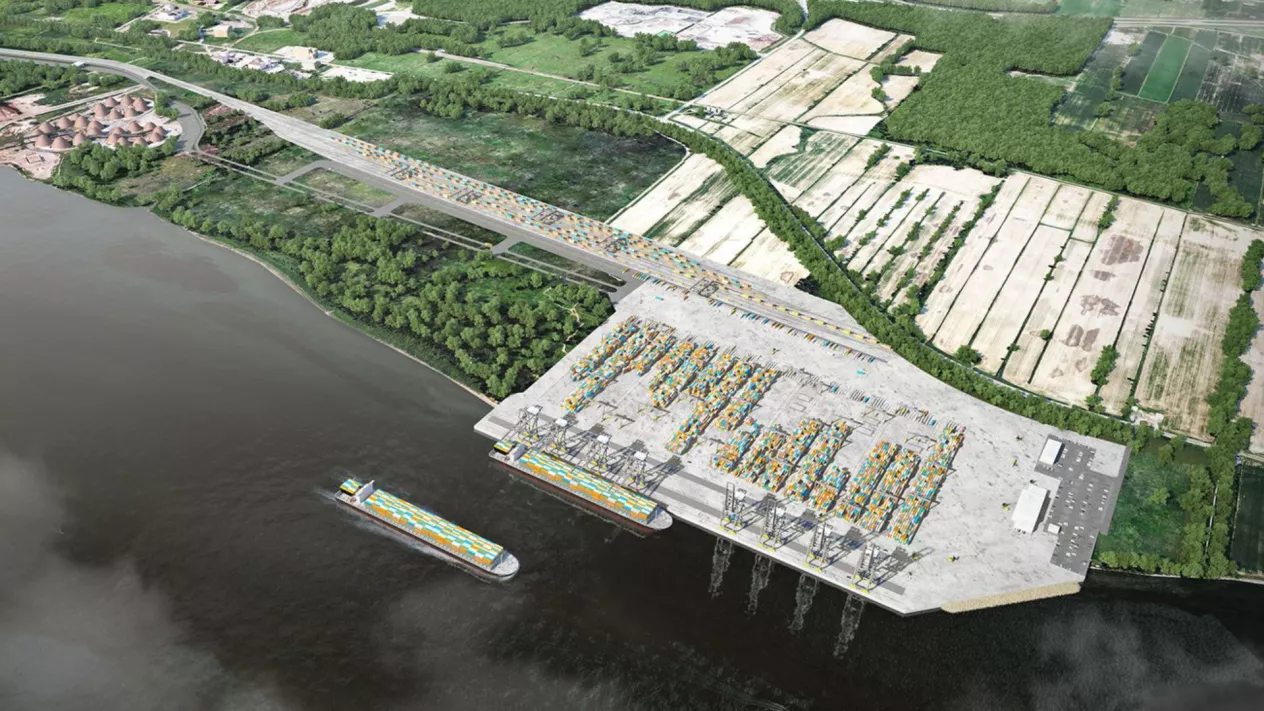
The Port of Montreal has officially launched construction works on its long-awaited Contrecœur container terminal expansion, a major infrastructure project expected to significantly increase container handling capacity and strengthen Canada’s maritime trade competitiveness.
The project, which commenced on April 9, 2026, is set to expand port operations downstream along the St. Lawrence River, approximately 40 km from Montreal, and is being positioned as one of the most strategic port development initiatives in Canada.
Once completed, the new terminal will add roughly 1.15 million TEUs (twenty-foot equivalent units) annually, representing an estimated 60% capacity increase for the Port of Montreal’s container operations.
Contrecœur Terminal Project Overview
The Contrecœur expansion is designed to address growing congestion and future container demand by expanding cargo throughput capacity beyond the Port of Montreal’s current footprint.
The development will include key marine and landside infrastructure, including:
- A 675-metre wharf
- Two new berths to accommodate larger container vessels
- An expanded container yard and logistics zone
- A new intermodal rail yard
- Truck gates and support infrastructure for road freight movement
This development is expected to improve efficiency across the Canadian supply chain by increasing capacity for imports and exports moving through Quebec and into inland North American markets.
Funding and Financing for the Port of Montreal Expansion
The Contrecœur terminal expansion is backed by major public-sector financing, led by the Canada Infrastructure Bank (CIB).
The financing package includes:
- CA$1.16 billion loan from the Canada Infrastructure Bank
- CA$150 million contribution from Transport Canada
- CA$130 million investment from the Government of Québec
This funding model is aimed at accelerating delivery while strengthening Canada’s long-term trade and logistics resilience.
Construction Timeline and Key Contractors
Construction is expected to proceed in phases.
Initial works began in October 2025, with the first major construction packages focused on marine infrastructure preparation, dredging, and quay development. The project’s early-stage construction is being delivered by a joint venture between Aecon and Pomerleau, two major Canadian construction contractors.
The second phase of works is expected to begin in 2027, with the focus shifting to terminal superstructure development, equipment installation, and intermodal connectivity.
Full operations at the expanded terminal are currently targeted for 2030.
Project Team
- Project Owner / Developer: Montreal Port Authority (Port of Montreal)
- Lead Financing Partner: Canada Infrastructure Bank (CIB)
- Government Funding Partner: Transport Canada (Government of Canada)
- Provincial Funding Partner: Government of Québec
- Main Construction Contractors (Marine Works Joint Venture): Aecon Group Inc. and Pomerleau (JV)
- Project Location: Contrecœur, Québec (St. Lawrence River corridor)
Why the Contrecœur Expansion Matters for Canadian Trade
The Port of Montreal is a critical container gateway linking Canada to major international markets in Europe and beyond. However, rising container volumes, increasing vessel sizes, and evolving global supply chain pressures have pushed existing facilities closer to their limits.
The Contrecœur terminal expansion is expected to:
- Reduce congestion in the Montreal port corridor
- Improve freight reliability and supply chain resilience
- Expand Canada’s container capacity and export competitiveness
- Strengthen rail-linked access to inland markets
- Increase efficiency for shipping lines, logistics firms, and importers
With global container demand expected to continue growing, the project is seen as essential for maintaining Canada’s competitiveness against other North American ports. As trade volumes on the West Coast are projected to rise significantly over the next decade, the ability to handle larger vessels and higher throughput is critical for avoiding supply chain bottlenecks that could stifle national economic growth. This expansion is part of a broader trend of port modernization across the Pacific, where facilities from Long Beach to Prince Rupert are racing to automate and expand capacity to meet the demands of an increasingly globalized and time-sensitive logistics network.
This drive for global trade resilience is being spearheaded in British Columbia, where the Vancouver Fraser Port Authority has officially advanced the $3.5 billion Roberts Bank Terminal 2 project. Moving into its procurement phase in July 2025, the project involves constructing a massive 100-hectare marine landmass and a 1,300-metre wharf to increase the West Coast’s container capacity by more than 30%. Beyond its logistics impact, the terminal is a landmark for environmental and Indigenous collaboration, with 27 First Nations signing mutual benefits agreements and plans for dedicated salmon-friendly fish passages. With full-scale construction set to begin in 2028, the terminal is projected to contribute $3 billion annually to Canada’s GDP and create over 18,000 jobs, securing the country’s position as a primary gateway for international commerce.
Economic Impact and Long-Term Benefits
The Contrecœur expansion is projected to deliver major economic benefits to Quebec and Canada as a whole.
In addition to thousands of construction jobs generated during the build-out phase, the expanded terminal is expected to create long-term employment through terminal operations, trucking, warehousing, and rail logistics services.
The terminal will also support industrial growth in surrounding regions by improving the movement of raw materials, manufactured goods, and consumer products.
Outlook: A Strategic Infrastructure Upgrade for the St. Lawrence Trade Corridor
As construction progresses, the Contrecœur terminal is expected to become a cornerstone project for Canada’s maritime infrastructure strategy.
With modern berths, expanded intermodal rail capacity, and increased container throughput potential, the Port of Montreal is positioning itself to become a more resilient and globally competitive logistics hub by the end of the decade.

Leave a Reply