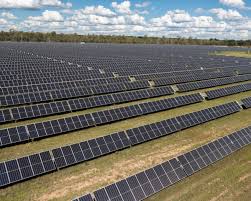
SunCable’s Australia-Asia PowerLink (AAPowerLink) is a $22+ billion project aiming to build one of the world’s largest solar farms (17-20 GWp) and battery storage (36-42 GWh) in the Northern Territory, transmitting up to 6GW of renewable energy to Darwin and Singapore via a 4,300km subsea cable. The project is backed by Mike Cannon-Brookes’ Grok Ventures and is expected to reach a Final Investment Decision (FID) in 2027, with electricity supply starting in the early 2030s.
Construction cost
Regulators indicated green-light for US$24bn SunCable project that will supply power to three million homes in Australia’s distant north. The project, which will involve a series of panels, batteries, and a later cable connecting Australia with Singapore, is sponsored by the tech billionaire and climate change campaigner Mike Cannon-Brookes. ‘It will be the largest solar precinct in the world – and puts Australia on the map as the world’s renewable energy powerhouse,’ said Tanya Plibersek, Minister for the Environment. It is also hoped that energy production will start from 2030.
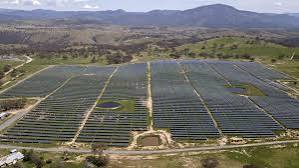
The project will cover an area of 12 000 hectares (29 650 acres) and supply four gigawatts of energy per hour for domestic uses. Another two gigawatts transmitted through undersea cable to Singapore will meet approximately 15% of demand of this Southeast Asian country. Batteries would be able to store about 40 gigawatts of power. The Reuters report quoting SunCable Australia managing director Cameron Garnsworthy remarked this was the approval as being a landmark in the project journey. Thus, numerous approval processes stay ongoing starting from Singapore’s energy market authority, the Indonesian government, and Australian Aboriginal.
Challenges
SunCable shall now redirect its endeavours towards the subsequent level of planning with the intention of moving the initiative further along the development process towards reaching a final investment decision with an aim to achieve the said goal by 2027,’ added Garnsworthy. – It is referred to now as the ‘clean energy powerhouse’ –Australia remains one of the world’s largest exporters of coal and gas today but has also suffered the ill-impacts of climate change ranging from heatwaves and floods to bushfires. While individuals in the country are some of the most proactive when it comes to installing household solar panels, a series of governments have been lackluster in their approach to renewables. The latest data from the government shows that in 2022, the renewables comprised 32% of Australia’s total electricity generation while the coal contributed only 47%.
Australia has over the last five years invested relatively well in solar and wind, however it has to double or triple that investment if it is to reach it’s trajectory towards 2050 net zero goal. He further said that by the year 2030, Australia will require about a hundred GW of solar and wind power – and the SunCable project will deliver only four of that capacity.
Significance of the World’s Largest Solar Power Plant in Australia
Amanda McKenzie, Climate Council’s chief executive stated that the new solar hub signified a strong shift in vision towards transforming Australia into a clean energy economy and that such projects were critical in ‘achieving affordable energy and cutting climate pollution. “As coal fired power stations close, Australia needs to move quicker on the supply of solar and storage from rooftop solar to utility scale,” she said. It would also be a major shift for Cannon-Brookes, who has moved from being the co-founder of a software firm, Atlassian, to investing in renewable energy, particularly as the latest major stakeholder in AGL Energy.
Dr Ken Baldwin, Director of the Energy Change Institute at the Australian National University said, ‘This is the first time that a country has attempted to export renewable electricity from solar and wind on such a scale’. ”Australia has some of the best solar and wind resources of any country, and as a result, is installing solar and wind at one of the fastest rates of any country in the world on a per capita basis,” he told AFP. However, Baldwin said that this momentum must be sustained, especially if Australia is to achieve the set net zero targets by the year 2050.
Other Projects
Other than the world’s largest solar power plant, Australia is also advancing a much anticipated solar project, the Blind Creek solar farm project. Octopus Australia has broken ground on the Blind Creek Solar Farm and Battery project in Bungendore, North South Wales. The groundbreaking ceremony was attended by NSW Premier Chris Minns. The development combines 300MW of solar generation with a 243MW, 486 megawatt-hour battery system. The facility is also designed to supply electricity to the grid by storing energy produced during daylight hours for use when there is peak demand in the evening.
It will connect to the main transmission line between Sydney and Canberra via a new substation. During peak construction period, the project is expected to create up to 300 full-time equivalent jobs. Moreover, around half of these positions are intended for workers from Bungendore and the Monaro region. Construction is under way under the direction of engineering, procurement and construction contractor GRS. On the other hand, Wärtsilä Energy Storage will provide the battery component.
Project Factsheet: World’s Largest Solar Power Plant in Australia
- Project Name: Australia–Asia PowerLink (AAPowerLink)
• Location: Northern Territory, Australia to Singapore
• Estimated Investment Value: $22–$24 Billion
• Project Type: Utility-scale solar farm, battery storage, and subsea power transmission system
Timeline
- 2020s: Project development and regulatory approvals underway.
• 2027: Target Final Investment Decision (FID).
• Early 2030s: Expected start of electricity supply.
Site & Scale
- Solar Generation Capacity: 17–20 GWp.
• Battery Storage Capacity: 36–42 GWh.
• Solar Precinct Area: About 12,000 hectares.
• Transmission Cable Length: About 4,300 km subsea cable.
• Total Energy Export: Up to 6GW electricity.
• Domestic Supply: 4GW to northern Australia.
• Export Supply: 2GW to Singapore (~15% of demand).
Key Developers / Partners / Authorities
- SunCable – Project developer.
- Grok Ventures – Major investor.
- Mike Cannon-Brookes – Backer through Grok Ventures.
- Energy Market Authority – Regulatory authority in Singapore.
Infrastructure Components
- World-scale solar power precinct.
• Large-scale battery energy storage system.
• High-voltage subsea electricity transmission cable.
• New grid infrastructure in northern Australia.
Strategic Objectives
- Export renewable electricity from Australia to Asia.
• Supply clean power to northern Australia and Singapore.
• Position Australia as a global renewable energy exporter.
• Support regional decarbonization and energy transition.
Current Status
- Regulatory approvals progressing.
• Planning and development phase ongoing.
• Target FID scheduled for 2027.
• Power supply expected to begin in the early 2030s.
Read also Queen’s Wharf Brisbane: A $3.6 Billion Transformation of Australia
Read also An Extension Project in West Australia Advances with the Launch of 2 New Bridges

Leave a Reply