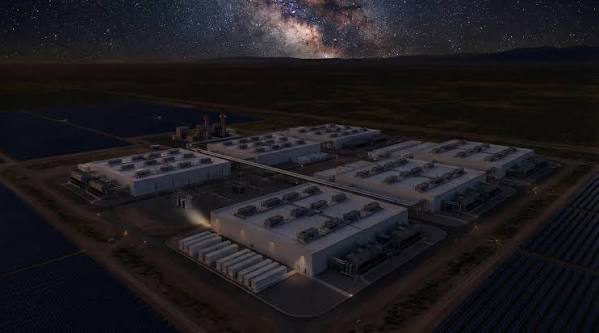
Creekstone Energy is building what it claims is the world’s largest data center campus in rural Millard County while pursuing an unprecedented water recovery technology. Therefore, the Delta Gigasite project (10 gigawatts) could generate up to 4,000 acre-feet of water vapor a year from natural gas combustion condensation. The Creekstone Energy Data Center campus filed a patent application for “Project Oasis,” which uses technology that recovers water generated during natural gas combustion. The company hired the University of Utah’s Energy and Geoscience Institute to test the novel method in the interim.
It will take 2 acre-feet per 100 megawatts per year from the Creekstone Energy Data Center, with a closed-loop cooling system. In particular, the plant would use up to 200 acre-feet per build-out, and the potential recovery from combustion condensation is up to 4,000 acre-feet per build-out. As a result, the Creekstone Energy Data Center will be able to return a significant amount more water than it uses, solving a major water shortage issue in Utah. Another related data center infrastructure is Intel Ohio. It is a semiconductor facility that is meant to fuel the propagation of such data centers and more.
Creekstone Energy Data Center Technology Mirrors Vehicle Exhaust Condensation at Scale
Creekstone Energy Data Center’s water recovery resembles exhaust dripping from car tailpipes that’s being performed on a massive industrial scale, CEO Ray Conley said. In particular, natural gas burning generates water vapor which would cause it to condense into underground rock formations before it is harvested into pools. In addition, the water would be collected in tanks and later sold for a variety of purposes.
Based on their results, the technologies could revolutionize the way the data center industry views water, said Milind Deo of the University of Utah’s Energy and Geoscience Institute. Also possible applications include as irrigation water, geothermal energy cycles, and maybe even drinking water with the right filtering.
Creekstone Energy Data Center Undergoes Independent Scientific Validation
Independent research by the University of Utah will be used to determine water quality characteristics and the viability of Project Oasis. In particular, the acidity of the water will be determined and the best ways of utilising the recovered condensation water will be investigated. Additionally, Conley hopes to have initial results from the university by the summer of 2027.
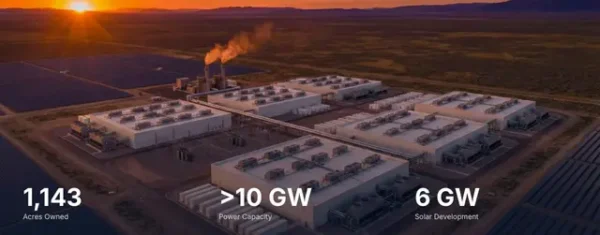
In summer 2025, Millard County granted zoning changes and conditional use permits for the Creekstone Energy Data Center campus, located at 1,143 acres in the county. However, Conley said that the data center project would continue even if the results of Project Oasis were not successful, but if the water recovery effort is successful, the data center would be more sustainable.
Project Overview
- Project Name: Creekstone Energy Data Center (Delta Gigasite)
- Capacity: 10 gigawatts
- Location: 9 miles southeast of Delta, Millard County, Utah (U.S. Route 50)
- Developer: Creekstone Energy
- Status: Permits approved summer 2025, natural gas infrastructure construction underway
Scope
- World’s largest data center campus (claimed)
- 1,143-acre campus site
- Closed-loop cooling system
- Natural gas-powered generation
- Project Oasis water recovery technology
- Underground rock formation condensation system
Highlights
- Up to 4,000 acre-feet annual water vapor recovery
- Water consumption: 200 acre-feet at full capacity
- Net water production potentially exceeds consumption
- Patent-pending water reclamation technology
- University of Utah independent validation partnership
Key Developments
- Millard County zoning approval summer 2025
- Conditional use permit issued summer 2025
- Natural gas infrastructure construction ongoing
- University of Utah research partnership established
- Project Oasis validation results expected summer 2027
Key Challenges
- Project Oasis technology unproven at commercial scale
- Water quality characteristics uncertain (acidity, composition)
- Optimal recovered water use applications undetermined
- University validation could reveal technical limitations
- Balancing water recovery promise with operational uncertainty
Outlook
- University of Utah research results targeted summer 2027
- Water recovery technology validation within two years
- Recovered water applications to be determined post-research
- Data center construction regardless of water project success

Leave a Reply